


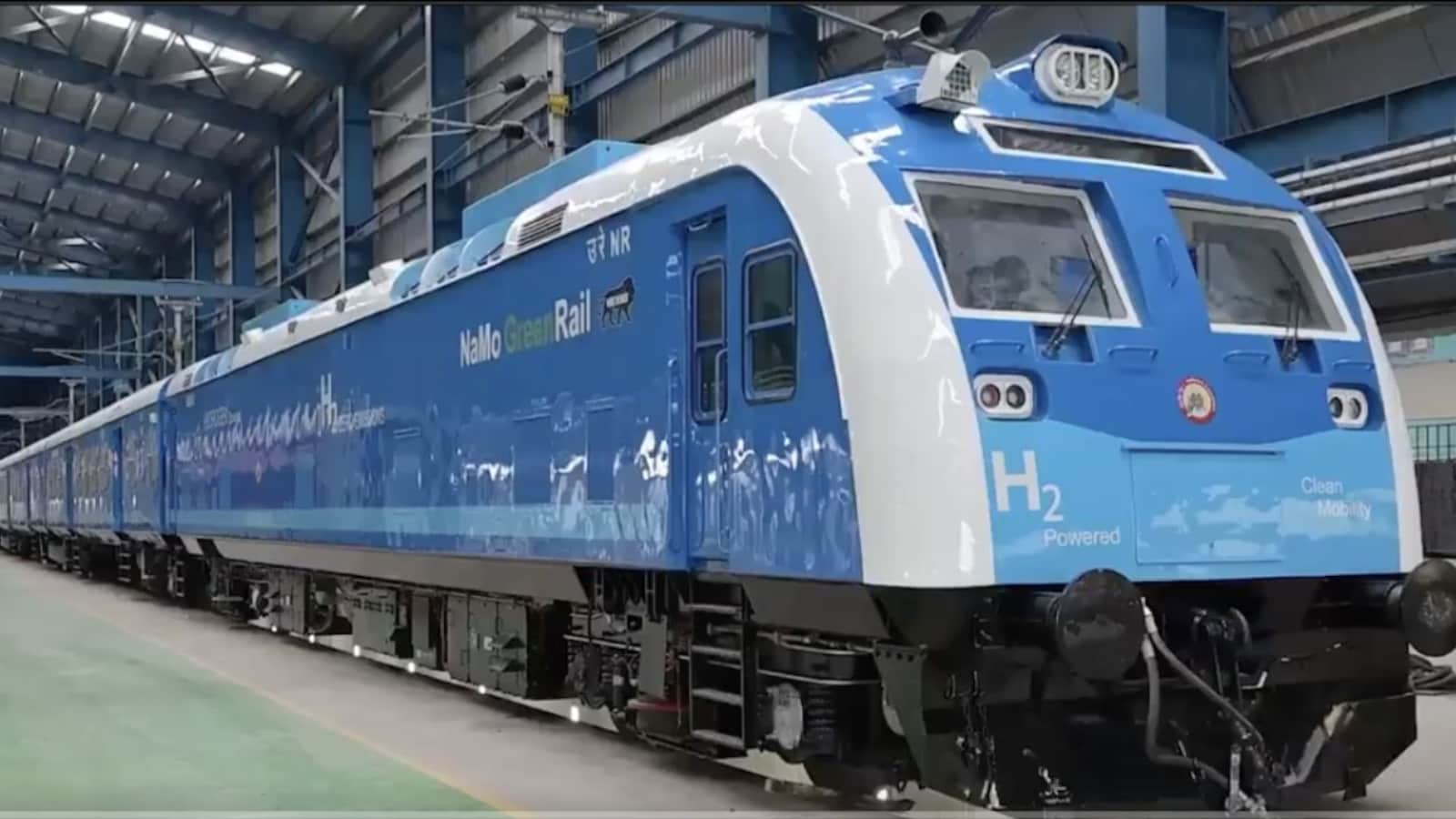
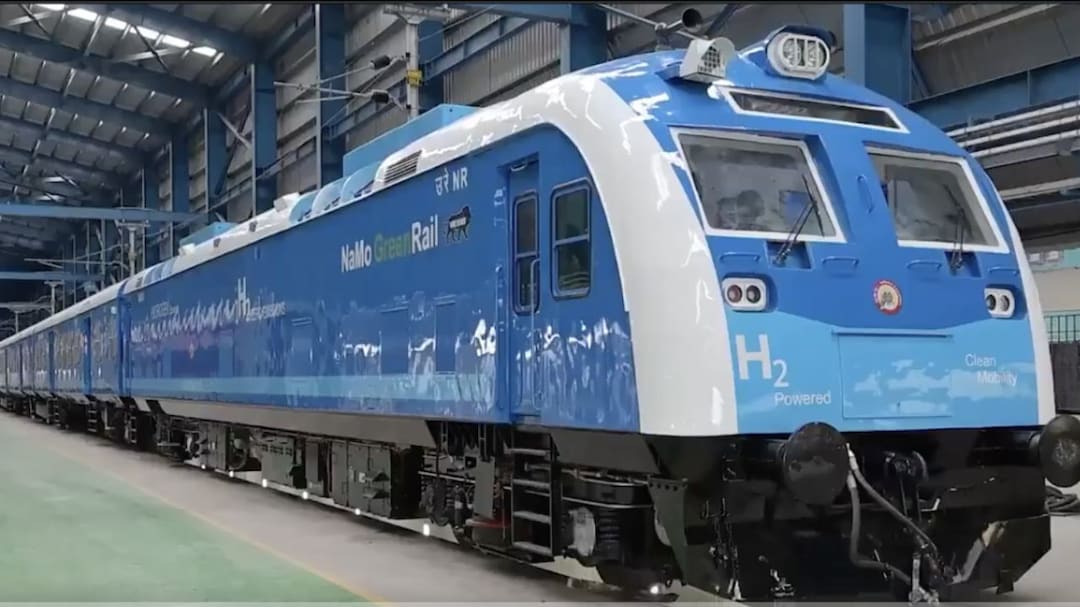
Indian Railways has approved the Jind-Sonipat section in Haryana for pilot operations of India’s first hydrogen-powered passenger train. The nearly 90-kilometre route under the Northern Railway zone has been designated for testing the green mobility project, marking a key step in the country’s clean energy transition in rail transport.
This zero-carbon system is part of the government’s “Hydrogen for Heritage” initiative, aimed at decarbonising heritage and diesel-heavy railway routes and reducing dependence on fossil fuels.
ALSO READ | Bail And A Bash: Pune Porsche Crash Accused Celebrates, Ignites Outrage | Watch
The 10-coach DEMU train operates on hydrogen fuel cell technology, where hydrogen and oxygen generate electricity, producing only water vapor as emission.
According to an official letter dated May 22 from Railway Board Director of Civil Engineering Kishan Rawat, the rolling stock sanction for India’s first hydrogen train has been processed exclusively for operations over the dedicated Jind-Sonipat section and the scheduled maintenance for the specialized trainset has been planned at the Shakurbasti depot in Delhi.
Infrastructure and Fuel Supply Setup
To support operations, India’s first hydrogen production and refueling station has been installed at Jind railway station. The facility includes dedicated storage and dispensing infrastructure. Hydrogen for the train will be produced through electrolysis, a process aligned with green hydrogen production, with the plant having a storage capacity of around 3,000 kg.
Greener & More Energy Efficient; First Indigenous Hydrogen Train All Set to Start
✴️10-Car Train with 1200 KW Engine Approved by Indian Railways to Operate at a Maximum Speed of 75 kmph on Jind-Sonipat Section
✴️With this, India Joins Elite Club of Nations Using Hydrogen Fuel… pic.twitter.com/4wzGjRt4fB
— PIB India (@PIB_India) May 27, 2026
Performance and Design Features
The train can reach speeds of up to 75 kmph and generates around 1,200 kilowatts of power using Distributed Power Rolling Stock technology. It has been indigenously designed and manufactured at the Integral Coach Factory (ICF) in Chennai.
Officials said commercial operations will begin only after final compliance checks and operational clearances are completed. During the initial phase, trained technical staff will accompany the train for monitoring and troubleshooting.
Indian Railways has described the initiative as a pilot project aimed at reducing emissions and advancing India’s broader goal of achieving net-zero carbon emissions by 2030.
Essential Business Intelligence,
Continuous LIVE TV,
Sharp Market Insights,
Practical Personal Finance Advice and
Latest Stories — On NDTV Profit.



