


When will British travellers to the European Union and wider Schengen Area need to apply in advance for an online permit? The short answer is: not before 2027.
The European Travel Information and Authorisation System (Etias) is the next stage in the EU’s plan for greater border security: an online permit that third-country nationals such as the British must obtain ahead of travel to the Schengen area.
The system is being implemented by Frontex: the European Border and Coast Guard Agency. But Etias depends on the EU entry-exit system (EES) being fully operational. This digital border scheme involves every UK traveller entering or leaving the Schengen Area to be registered on a central database. Fingerprints and facial biometrics should be collected.
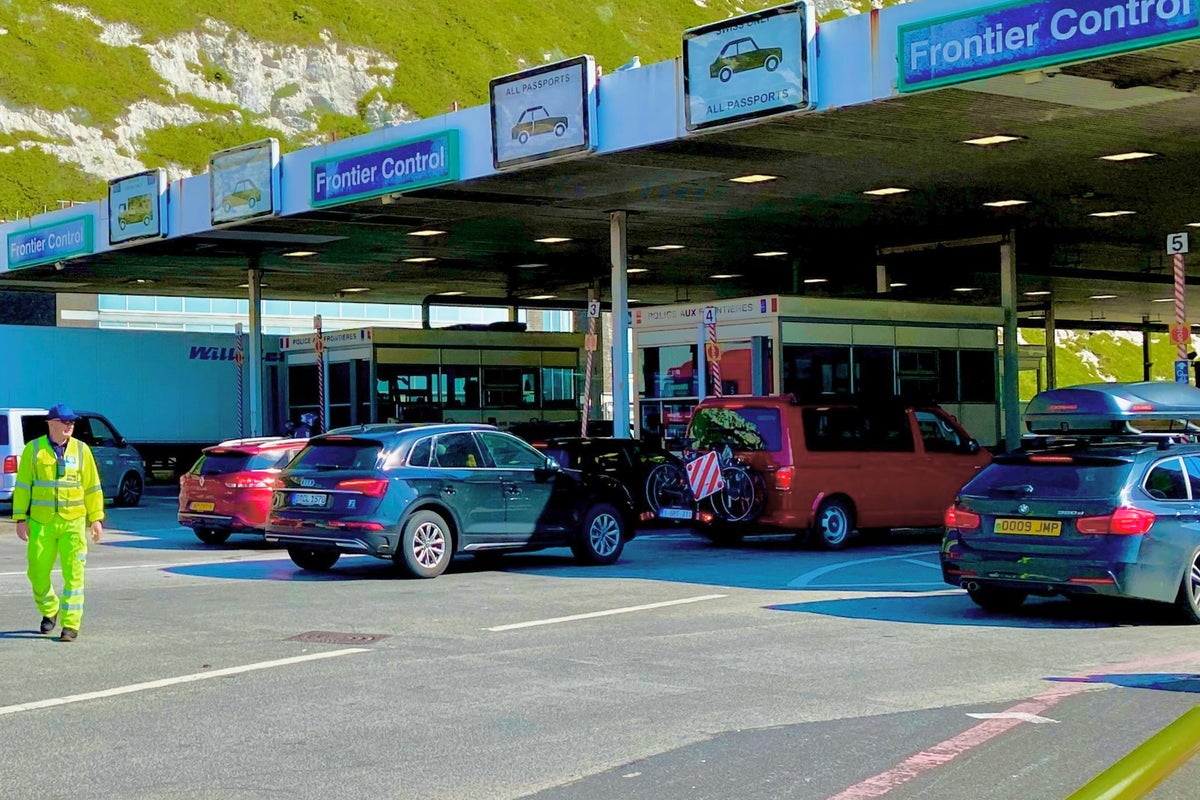
EES was due to be 100 per cent complete from 10 April 2026. But there have been, to put it politely, significant teething problems. The rollout has proved extremely inconsistent and has triggered multiple problems: from more than 100 passengers left behind in Milan Linate airport due to long delays at passport control, to gridlock in Dover as the May half-term holiday got underway.
All the key questions and answers are here.
What is Etias?
British travellers and those from all other “third-country visa-free nations” (as the UK chose to become after Brexit) will need provide information in advance so that frontier officials know more about them on arrival – and to identify people who the EU wants to keep out. The new permit will apply to around 1.4 billion people from 59 visa-exempt countries and territories.
Etias, the next step in tightening frontier controls, is a online permit system that is similar to the US Esta scheme. It will cost €20 (£17) and is valid for three years, or until the passport reaches three months to expiry, whichever comes first.
“UK nationals are required to have a valid Etias travel authorisation if they travel to any of the European countries requiring Etias for a short-term stay (90 days in any 180-day period),” says the EU.
“Its key function is to verify if a third-country national meets entry requirements before travelling to the Schengen Area.”
The zone covers almost all of the EU apart from Ireland, plus Iceland, Norway, Switzerland and Liechtenstein. British travellers will also need an Etias to visit Gibraltar.
When will the system start?
The long-standing plan is for Etias to be launched six months after the successful roll-out of EES. Even so, the European Commission insists: “Etias will start operations in the last quarter of 2026.” The statement adds: “The European Union will inform about the specific date for the start of Etias several months prior to its launch.”
So, we must assume Etias will launch in the final quarter of 2026 – some time from October to December. But for at least another six months beyond that, the permit will be optional. So you will not need one before April 2027 at the earliest.
The reason is: the EU says third-country visa-free nationals will be “required to have a travel authorisation to enter most European countries”. But “required” is not exactly correct. Etias will be only on a voluntary basis initially. The European Union says the launch of the permit will be followed by “a transitional period of at least six months”.
The EU says: “For travel during this time, travellers should already apply for their Etias travel authorisation, but those without one will not be refused entry as long as they fulfil all remaining entry conditions.”
Those conditions are basically the existing requirements for passport validity:
- Issued no more than 10 years earlier on the day of entry to the European Union
- Valid for at least three months on the intended day of departure from the EU
The earliest, therefore, that any British traveller or other “third-country national” will need an Etias is April 2027.
Once the “transitional period” is over, a further “grace period” of at least six months will apply on a one-time only basis to British travellers who turn up without an Etias.
The European Union says: “Those coming to Europe for the first time since the end of the transitional period will be allowed to enter without an Etias provided they fulfil all remaining entry conditions.
“All other travellers will be refused entry if they do not hold an Etias travel authorisation.”
Assuming that you have not already used up your one-time only opportunity, that means you could travel without an Esta up to 1 October 2027 at the very earliest.
How will I apply for an Etias?
At the heart of the system will be an Etias app and website. This is the closest that the European Union can offer at present. An app will follow. Websites or apps currently claiming to sell you an Etias are likely to be scammers.
Once the system is live, travellers will be required to submit personal information including name, address, contact details in Europe and passport data. They must also state an occupation (with job title and employer). Students must give the name of their educational establishment.
The applicant must give details of any serious convictions in the past 15 years (or 25 years in the case of terrorism). EU red tape expert Dr Nick Brown has listed 29 such offences, which include murder, rape, armed robbery, arson, fraud and corruption.
Travellers must also provide the reason for their journey (holiday, business, visiting family, etc), specify the Schengen area country where they intend to enter the zone, and provide the address of their first night’s stay. That looks as though it could pose a problem for tourists who like to make plans as they go along. In fact, the European Union helpfully points out that you are not bound to stick to that nominated location: “Once you have your travel authorisation in hand, you can change your plans.”
As with the US Esta, after you have been admitted once and have returned home, you can enter again without updating such information online.
The fee is €20 (£17) for all applicants aged 18 to 70. While those under 18 or over 70 will still need to apply for and hold an Etias, they need not pay.
What happens to the information?
Every application will be checked against EU and relevant Interpol databases, as well as “a dedicated Etias watch-list”.
The system will be tuned to pick out individuals suspected of being involved in crimes including terrorism, child pornography, money laundering, cybercrime, people-smuggling, trafficking in endangered animal species, counterfeiting and industrial espionage.
In a case of mistaken identity, will I be able to appeal?
Yes. If you are suspected of one or more of the above offences, but in fact have led a blameless life, you will be allowed to argue your case. Details of how to appeal will be included with the notice of rejection.
How far in advance must I apply?
The aim is for an Etias to be granted in most circumstances within minutes, though even a straightforward application could take up to four days.
If an application is flagged (ie there is a “hit” with one of the databases) the prospective visitor may be asked to provide additional information. Alternatively, says the EU, the applicant may be asked “to participate in an interview with national authorities, which may take up to additional 30 days”.
The European Union says: “We strongly advise you to obtain the Etias travel authorisation before you buy your tickets and book your hotels.”
If I get an Etias, must I print anything out?
No. The frontier guard will call up the information they need based on the data of the passport you used to apply for your Etias.
Will my Etias be checked before departure to the EU?
Yes. Most British travellers to Europe will have their Etias status checked by the airline, as currently happens with travel to the US (Esta), Canada (eTA) and many other countries.
Airlines are obliged to ensure passengers comply with the immigration rules of the destination. A couple of carriers made a complete mess of it when the post-Brexit passport regime took effect, and invented their own rules.
To try to avoid a repeat, I have written to the airlines’ representative body to try to ensure that they are fully aware of the “optional” nature of Etias during the transitional and grace periods before it becomes mandatory.
Is Etias a visa?
This answer to this common question depends on your interpretation of semantics. Officially, it is the opposite of a visa. Europe says that Etias is “a pre-travel authorisation system for visa-exempt travellers”. It is a similar concept to the UK ETA, the US Esta and Canadian eTA, which are not technically visas.
But Etias requires visitors to:
- Apply in advance
- Provide substantial personal information
- Pay money
- Be issued with a permit to cross a border
So I contend it amounts to a normal person’s understanding of a visa.
Once I have an Etias, am I guaranteed admission to the Schengen Area?
No. “Mere possession of a travel authorisation does not confer an automatic right of entry,” says the EU.
“All travellers arriving at the border are still subject to border checks and border guards will refuse entry to those who do not meet the entry conditions.”
As with the US, travellers can be turned away for any reason, with the Etias permission rescinded.
Must I apply for an Etias every time I travel to Europe?
No. The permit will be valid for three years, or until your passport reaches three months before expiry, whichever is the earlier. (Note also that British passports must not be over 10 years old on the day of entry to the European Union.)
Will I need an Etias to travel to Ireland?
No. Ireland is not in the Schengen Area, and the Common Travel Area – incorporating the UK, Ireland, the Isle of Man and the Channel Islands – transcends European Union rules.
I am travelling on a visa for study or work. Must I also obtain an Etias?
No. The same applies if you have a long-stay permit from one of the EU nations.
How are people without internet access supposed to apply?
They will be expected to get a friend, a family member or a travel agent to make the application for them, in the same way as the US Esta and similar schemes.
Just remind us about the 90/180 day rule?
This rule, to which the UK asked to be subject after leaving the European Union, means that British travellers cannot stay more than 90 days in any stretch of 180 days.
As an example of what it means: if you were to spend the first 90 days of 2027 (January, February and almost all of March) in the Schengen area, you would not be able to return until late June.
Is the UK being punished because of Brexit?
No. Work on strengthening the European Union’s external border was already under way before the UK referendum on membership in June 2016. Initially British officials participated in plans for the entry-exit system.
Neither the EES nor Etias would be relevant if the UK was still in the EU. But the nation voted to leave the European Union and the UK government negotiated for British travellers to be classified as third-country nationals – triggering extra red tape.
Will Etias be the next online scam?
Yes. As with other online travel permits, commercial intermediaries are allowed. But even before the system comes into existence, there are many scam sites out there that are likely to apply fees way above the basic €20 (£17).
Any current site other than europa.eu/etias is unofficial and should not be trusted. One “imposter” site claims to have processed 671 applications already; this is impossible since no applications have been processed anywhere.
Another site offers a 40 per cent discount for early applications. Some use the EU logo, which is illegal. Frontex also warns about the risk of identity theft if personal information is provided to imposter sites.
This piece was first published in August 2025 and is kept updated with the latest information
Read more: New ‘euro-visa’ will be rolled out this year despite EU entry-exit chaos, predicts expert



