


New Delhi:
The era of chief ministers keeping a low profile may finally be over.
For decades, Indian politicians carefully cultivated simplicity. White kurta. Rubber slippers. Minimalism. Even luxury, when present, stayed hidden behind closed doors.
Not anymore.
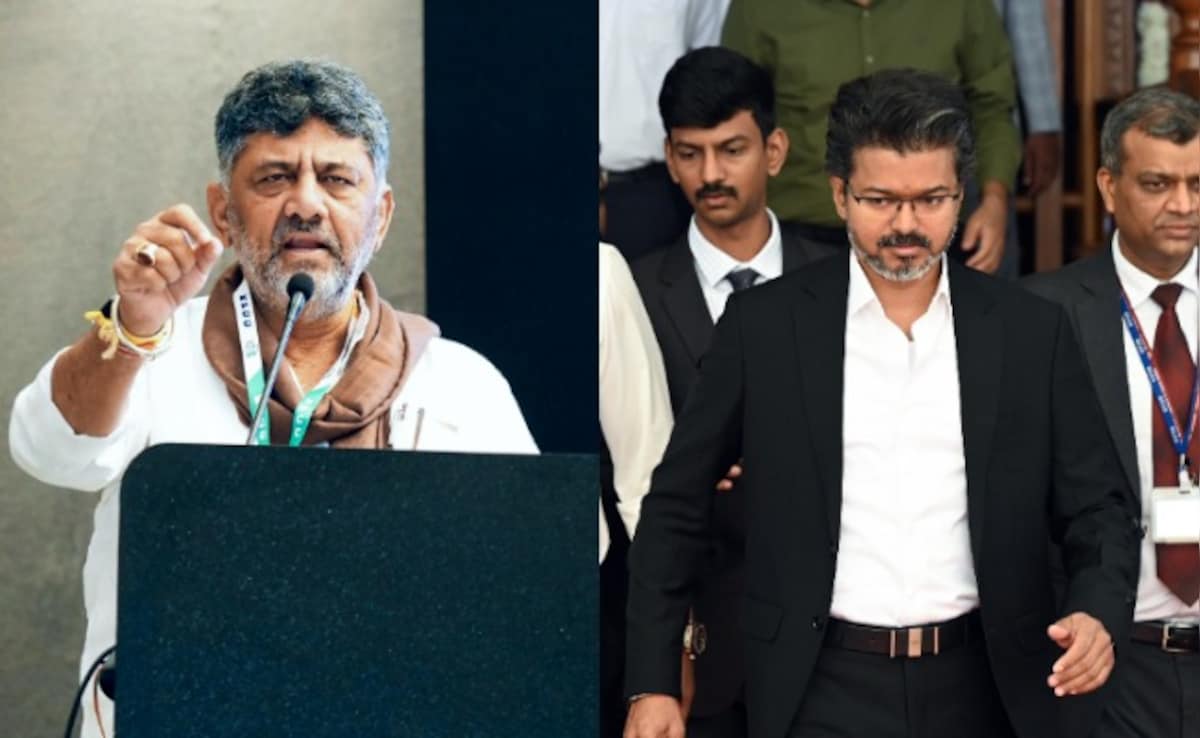
Less than a month ago, Tamil Nadu stunned the country by electing actor-turned-politician Vijay — who has a declared fortune of Rs 624 crore, luxury cars worth over Rs 13 crore, and hundreds of crores quietly parked in bank accounts.
Now, Karnataka could be preparing to hand over power to another heavyweight: DK Shivakumar.
And if Vijay represents quiet wealth, Shivakumar represents something else entirely — visible luxury.
The Congress troubleshooter, widely expected to become Karnataka’s next chief minister after Siddaramaiah’s resignation, has never pretended to be a minimalist politician. He wears luxury watches openly. Designer scarves casually. And unlike many politicians who downplay expensive tastes, Shivakumar rarely apologises for his.
“Do I not have the right to wear a watch of my choice?” he once said after criticism over his Rolex and Cartier watches.
That one line probably explains the new political era better than anything else. India’s chief ministers are no longer hiding wealth. Some are wearing it.
DK Shivakumar’s luxury image has become part of his political identity over the years. Gucci scarves. Louis Vuitton stoles. Ferragamo wraps. Cartier watches. Rolex Daytonas. His public appearances often look closer to a luxury catalogue than a traditional political roadshow.
Among the pieces associated with him are a Gucci jacquard wool scarf worth around Rs 54,000, a Louis Vuitton Reykjavik scarf priced above Rs 1 lakh, and Rolex Cosmograph Daytona watches that can cost anywhere between Rs 15 lakh and Rs 1.4 crore.
Political opponents have repeatedly targeted him for this lifestyle. Shivakumar, however, has remained unfazed.
And perhaps he can afford to (pun intended).
According to his 2023 election affidavit, Shivakumar declared assets worth Rs 1,413.80 crore. That includes immovable assets worth Rs 1,140 crore and movable assets worth Rs 273 crore. Even after liabilities of over Rs 265 crore, he remains among the richest politicians in the country.
His wealth comes from multiple businesses — real estate, infrastructure, quarrying, and education.
He also runs a large educational ecosystem through trusts linked to his family, including engineering colleges, pharmacy institutes, public schools and management institutions across Karnataka.
Beyond politics, Shivakumar is also seen as a key force behind the proposed Greater Bengaluru Integrated Township in Bidadi — a massive 9,000-acre project pitched as India’s first AI-powered township.
But while Shivakumar embraces visible luxury, Vijay’s wealth story is different.
The Tamil superstar-turned-politician, whose party TVK emerged as the single largest force in Tamil Nadu, appears deeply conservative with money despite his massive fortune.
His election affidavit reads less like a celebrity portfolio and more like the balance sheet of an old-school businessman obsessed with safety.
Out of his declared Rs 624 crore net worth, Vijay has parked more than Rs 313 crore in bank deposits and savings accounts alone.
One figure especially stood out: Rs 213 crore sitting in a single savings account. Not mutual funds. Not aggressive equity bets. Just cash sitting in the bank.
His stock market exposure is tiny relative to his wealth — less than 0.04 per cent of his net worth. Instead, Vijay prefers land.
His real estate portfolio, valued at around Rs 220 crore, stretches across Tamil Nadu, including properties in Neelankarai, Saligramam, Mylapore and Sholinganallur.
Then comes the car collection.
A Rs 13.5 crore garage featuring a BMW i7, Lexus 350, Toyota Vellfire and even a customised Tata Caravan. It is luxury, but carefully curated luxury.
So, while one leader wears his wealth loudly. The other stores it quietly. But both signal the same larger shift.
India’s political class is changing. The new-age power politician no longer feels compelled to perform austerity all the time. Luxury brands are entering political imagery.
In another era, a politician wearing a Rolex could trigger outrage. Today, it becomes part of the brand.



