
















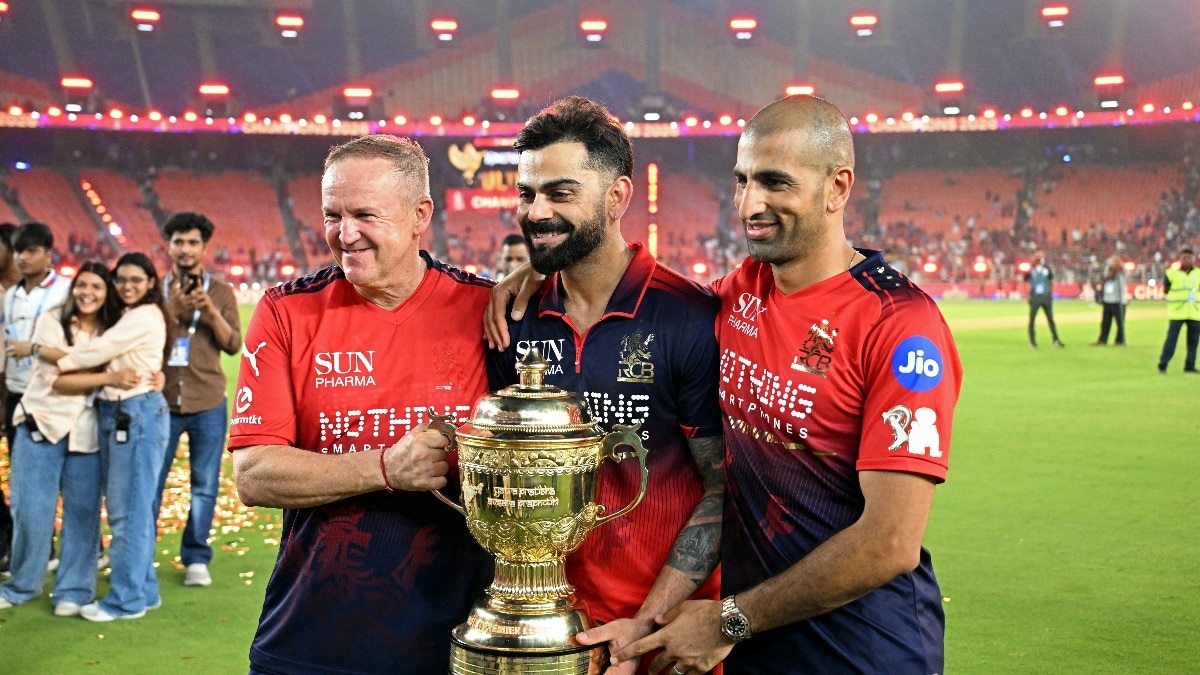
For eighteen long years, Royal Challengers Bengaluru (RCB) chased a singular, elusive dream. Throughout that era, they were famously top-heavy, brilliant in flashes, but notoriously brittle under pressure. They possessed the glamour, the screaming fan base, and the individual superstars, but lacked the foundational grit required to conquer the league. Yet, in the span of just twelve months, they have completely rewritten their legacy. Standing tall as back-to-back IPL Champions, they have finally shed their tag of perennial underachievers.
While the celebratory fireworks are still settling over the skies of Ahmedabad, the real story of this burgeoning cricket dynasty was not written on the boundary ropes. It was engineered in the boardroom during the IPL mega-auction. By prioritising brutal squad depth over a glamorous, fragile starting XI, RCB’s management built a bulletproof machine capable of surviving the grueling marathon of the modern IPL.
IPL 2026 Final, RCB vs GT: Highlights | Scorecard
THE STRATEGY OF ‘QUALITY REPLACEMENTS’
A tournament as long and demanding as the IPL inevitably tests a franchise’s structural integrity. Injuries, fluctuating form, international commitments, and sudden player departures usually derail title charges. For the RCB of old, losing a key player to injury meant hitting the panic button and watching the entire campaign rapidly unravel. For the modern RCB, however, it simply meant pulling a different lever.
Speaking on JioHotstar after the historic defence of their crown, former skipper Dinesh Karthik perfectly captured this philosophical shift:
“Like you said, Irfan, a lot of planning goes into it. It’s one thing to have a good starting XI or XII, but in a tournament this long, you know there will be injuries, players arriving late, or even personal issues at times. You need to be prepared for all those situations.”
“We try our best. Across skill sets, we’ve had some really good backups. When Salt left, Bethell came in. When Bethell got injured, another player stepped up. When Josh Hazlewood wasn’t around, we had Duffy, who was the world No. 1 bowler. We had quality replacements available.”
BLUEPRINT OF A BULLETPROOF SQUAD
The sheer luxury of tactical options available to captain Rajat Patidar over these two championship seasons is a testament to the masterclass executed by Andy Flower and Mo Bobat. The squad composition stands out as an absolute marvel of modern cricket scouting and squad building.
At the top of the order, Virat Kohli and Phil Salt served as the explosive, go-to opening combination that terrorised bowling attacks. Yet, the team never had to sweat about form or availability, knowing they had the versatile Jacob Bethell and Venkatesh Iyer waiting patiently in the wings as primary secondary options.
Further down the order, Devdutt Padikkal and Rajat Patidar were the designated anchors and enforcers for positions 3 and 4. If the match situation demanded a tactical pivot, Krunal Pandya proved more than capable of stepping up to anchor or accelerate alongside Bethell and Iyer. The management even held the option of deploying Jitesh Sharma to counter early wickets and keep the powerplay scoring rate high.
When it came to the death overs, Tim David and Romario Shepherd provided the raw, muscle-bound power as the chief finishers, supplemented beautifully by Jitesh Sharma and Swapnil Singh on the bench. Swapnil also doubled as an invaluable extra spin option, building on his highly impressive performances from previous seasons.
The bowling unit was equally relentless and balanced. While Josh Hazlewood remained the crown jewel of the pace battery, RCB casually subbed in New Zealand’s Jacob Duffy, who had recently crested the T20I rankings as the World No. 1 bowler. Partnering them was Bhuvneshwar Kumar, whose veteran presence and swing were vital to the team’s fortunes. The spin department relied heavily on the street-smarts of Suyash Sharma and Krunal Pandya, with Swapnil offering a third dependable finger-spin option to squeeze opposing line-ups.
THE UNCAPPED HEROES
The true hallmark of a mega-auction success story is not just buying international stars; it is the meticulous scouting of domestic talent and giving them absolute structural clarity. Beyond their established international stars, RCB possessed an untouched goldmine of uncapped resources in the all-rounders and bowlers list, featuring the likes of Mangesh Yadav and Abhinandan Singh.
But the ultimate poster-boy for this revolutionary system was Rasikh Salam Dar. After sitting on the sidelines without playing a single game the previous season, Rasikh was thrown into the deep end this year. Instead of drowning under the weight of expectation, he turned into RCB’s ultimate defensive weapon, constantly executing tough, high-pressure overs.
As Karthik noted, this seamless, plug-and-play success is entirely down to the culture created behind the scenes:
“Rasikh Salam didn’t get a game for us last year. But this season, the way he has performed under pressure, constantly bowling the tough overs and standing up to the challenge, has been outstanding. He’s got character.”
“A lot of that comes from the way we practise and the clarity of roles that Andy Flower and Mo Bobat have given the players. Everyone knows exactly what they need to do when they step into the RCB dressing room, and that keeps us in good stead.”
THE VERDICT
When asked about the mechanism that made this consecutive title run possible, Karthik smiled. “I don’t think they would mind that. Ideally, we probably wouldn’t want a mega auction, but let’s leave that discussion for another day.”
They might not want another mega-auction to tear this specific group apart, but RCB have officially cracked the tournament’s hardest code. By replacing the old culture of individual reliance with an army of high-quality backups and absolute tactical clarity, RCB did not just win back-to-back titles. They built an empire.
IPL 2026 | IPL Schedule | IPL Points Table | IPL Player Stats | Purple Cap | Orange Cap | IPL Videos | Cricket News | Live Score
– Ends