


New Delhi:
Obesity is rising steadily among Indian women, with the surge far sharper in urban areas where lifestyle shifts are accelerating weight gain. The concern is alarming as excess body weight increases the risk of several non-communicable diseases, including diabetes, hypertension, heart disease and stroke.
Obesity On The Rise
The National Family Health Survey (NFHS-6) 2023-24 classifies obesity and overweight if the Body Mass Index (BMI) is 25 kg per square metre or above, among people aged 15-49 years.
The share of women aged 15-49 years, who are overweight or obese, increased from 24 per cent in NFHS-5 (2019-21) to 30.7 per cent in NFHS-6, a rise of 6.7 percentage points. Among men, the prevalence increased from 22.9 per cent to 27.3 per cent during the same period, up by 4.4 percentage points.
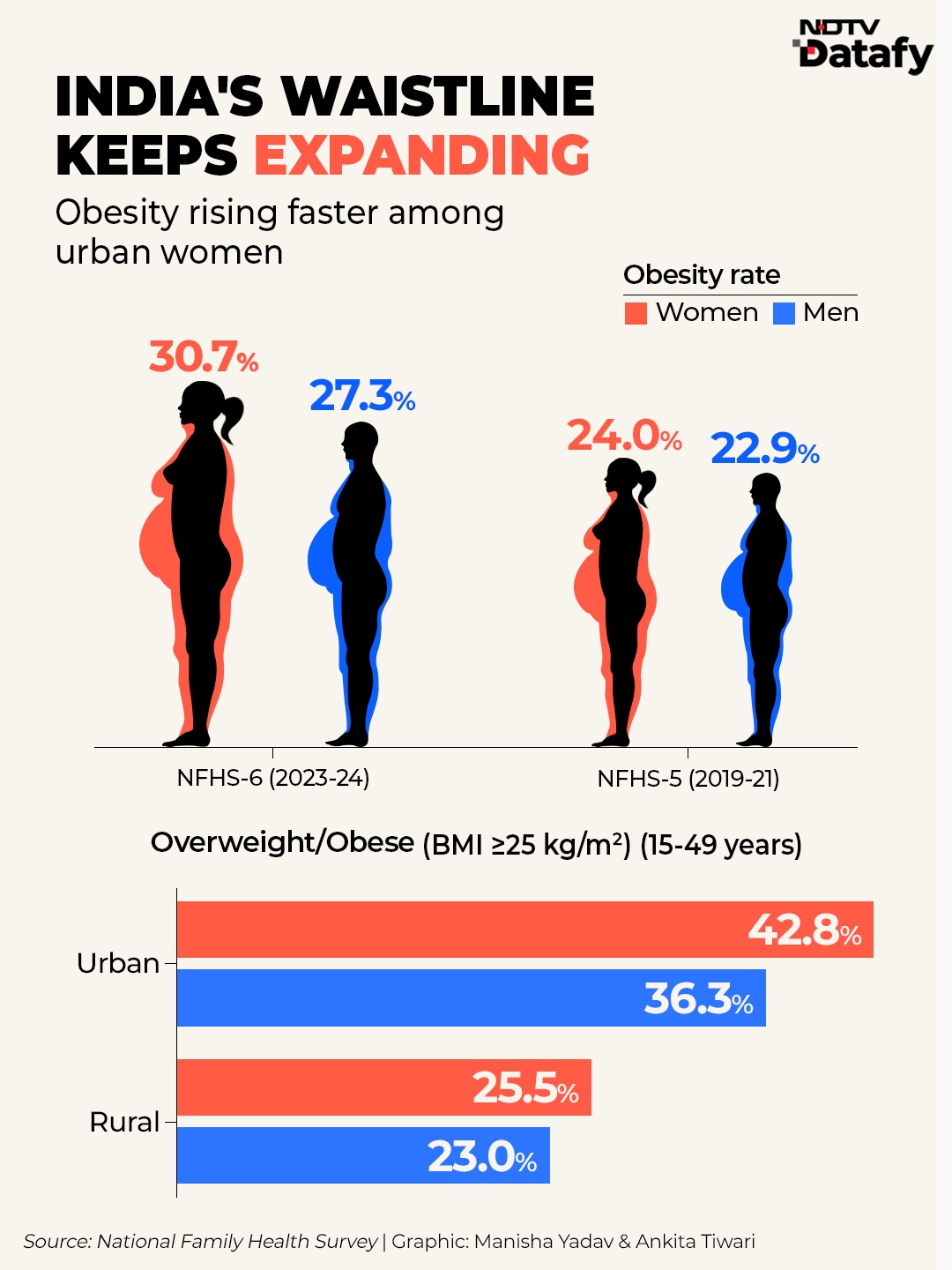
The national average of obesity levels among women continues to remain higher than that of men. The latest survey shows that 30.7 per cent of women aged 15-49 years are overweight or obese compared to 27.3 per cent of men.
Urban India Records Higher Obesity
Obesity is significantly more common in urban areas than in rural India.
Among women, 42.8 per cent of urban residents are overweight or obese, compared to 25.5 per cent in rural areas. Among men, the prevalence stands at 36.3 per cent in urban areas and 23 per cent in rural areas.
The higher prevalence in cities is often linked to changes in lifestyle, reduced physical activity, sedentary work patterns and greater consumption of calorie-dense foods.
The Health Ministry said the rise in non-communicable diseases, lifestyle-related health risks, and the simultaneous burden of undernutrition and increasing overweight and obesity among adults underscores the need for preventive healthcare, behavioural changes, and balanced nutrition.
What About Children?
While obesity is rising among adults, the trend among children under five is different.
NFHS tracks overweight children using the World Health Organisation (WHO) growth standards.
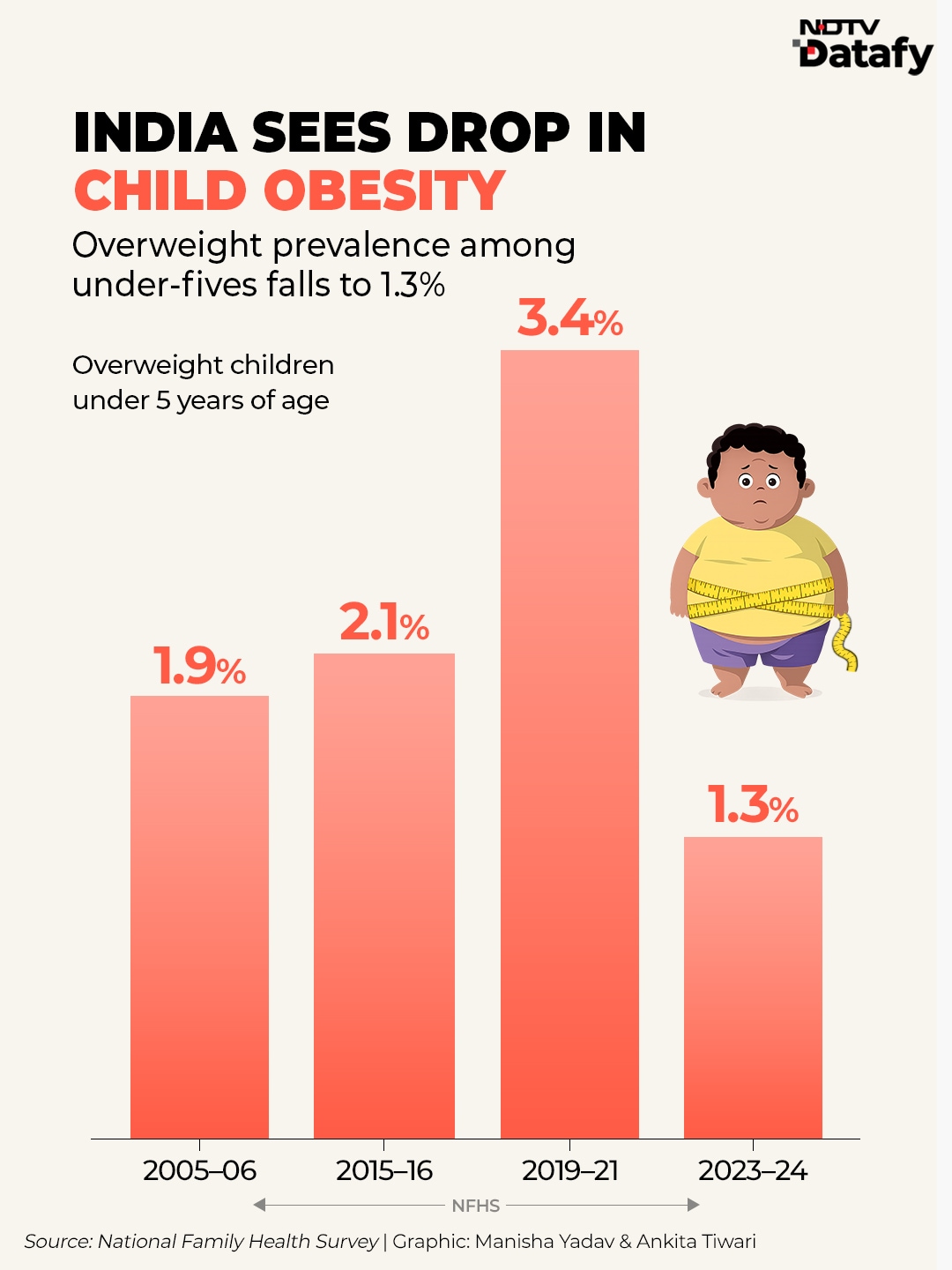
Nationally, the share of overweight children under five increased from 1.9 per cent in NFHS-3 (2005-06) to 2.1 per cent in NFHS-4 (2015-16) and further to 3.4 per cent in NFHS-5 (2019-21). However, the prevalence declined to 1.3 per cent in NFHS-6 (2023-24).
Southern States Dominate The Rankings
Several southern states and Union Territories report some of the highest obesity levels among women aged 15-49 years.
Puducherry recorded the highest prevalence, with 51.3 per cent of women classified as overweight or obese. It was followed by Lakshadweep (50.1 per cent), Andhra Pradesh (47.9 per cent), Sikkim (47.5 per cent) and Kerala (46.7 per cent). Other states and UTs with high prevalence include Goa (45.1 per cent), Punjab (44.7 per cent), Andaman and Nicobar Islands (44.5 per cent), Tamil Nadu (44.2 per cent) and Delhi (42.7 per cent). The concentration of several southern states in the top ranks points to a regional pattern in obesity prevalence.
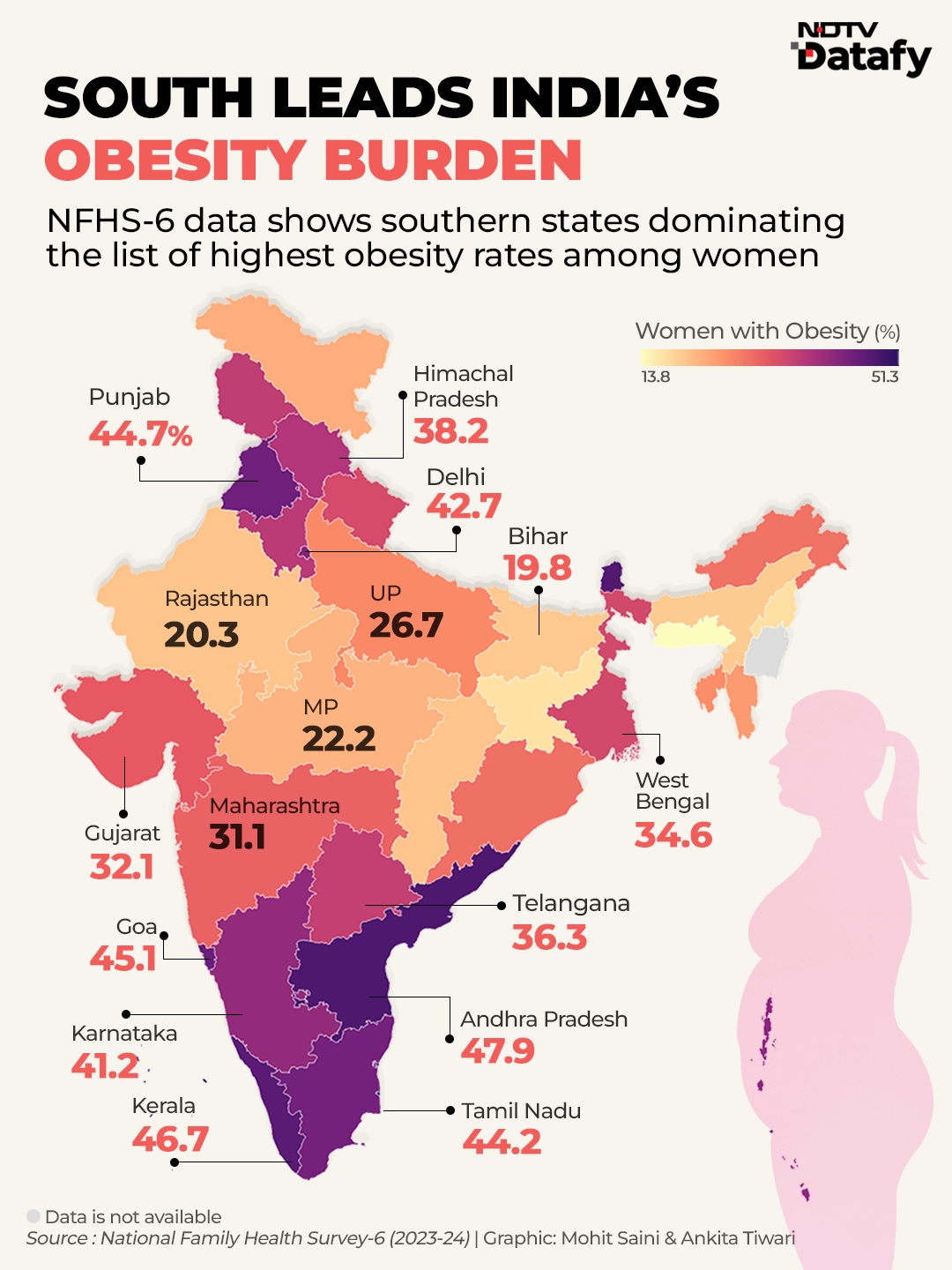
At the other end of the spectrum, Meghalaya recorded the lowest prevalence of overweight and obesity among women at 13.8 per cent. It was followed by Jharkhand (16.9 per cent), Nagaland (17.2 per cent), Assam (19.6 per cent) and Bihar (19.8 per cent).
Experts Flag Lifestyle-Related Risks
“Changing lifestyles and food habits are among the key reasons behind the rise in obesity,” according to Dr Naveen Prakash Verma, Sr. Consultant & Head, Emergency Medicine at Yathartha Hospital, Greater Noida. Increased consumption of fast food, packaged foods and meals eaten outside the home, especially among younger people, has contributed to weight gain over the years, he added.
The doctor said many children and teenagers develop unhealthy eating habits early in life, which often continue into adulthood. Reduced physical activity, sedentary routines and lack of regular exercise further add to the problem.
Among women, factors such as hormonal changes, pregnancy and lower focus on personal health due to household responsibilities may also contribute to higher obesity levels. The doctor noted that obesity is linked to an increased risk of several health conditions, highlighting the need for healthier diets, regular exercise and greater awareness about preventive healthcare.



 2023-24 classifies obesity and overweight if the Body Mass Index (BMI) is 25 kg per square metre or above, among people aged 15-49 years.)