


Washington:
Frisco City in the US state of Texas has been in the headlines for all the wrong reasons. The city’s council meetings have been targeting the Indian community with claims of an “Indian invasion” and job displacement. In a recent video, a man is seen tearing the Indian national flag in front of a crowd, who cheered and clapped for him.
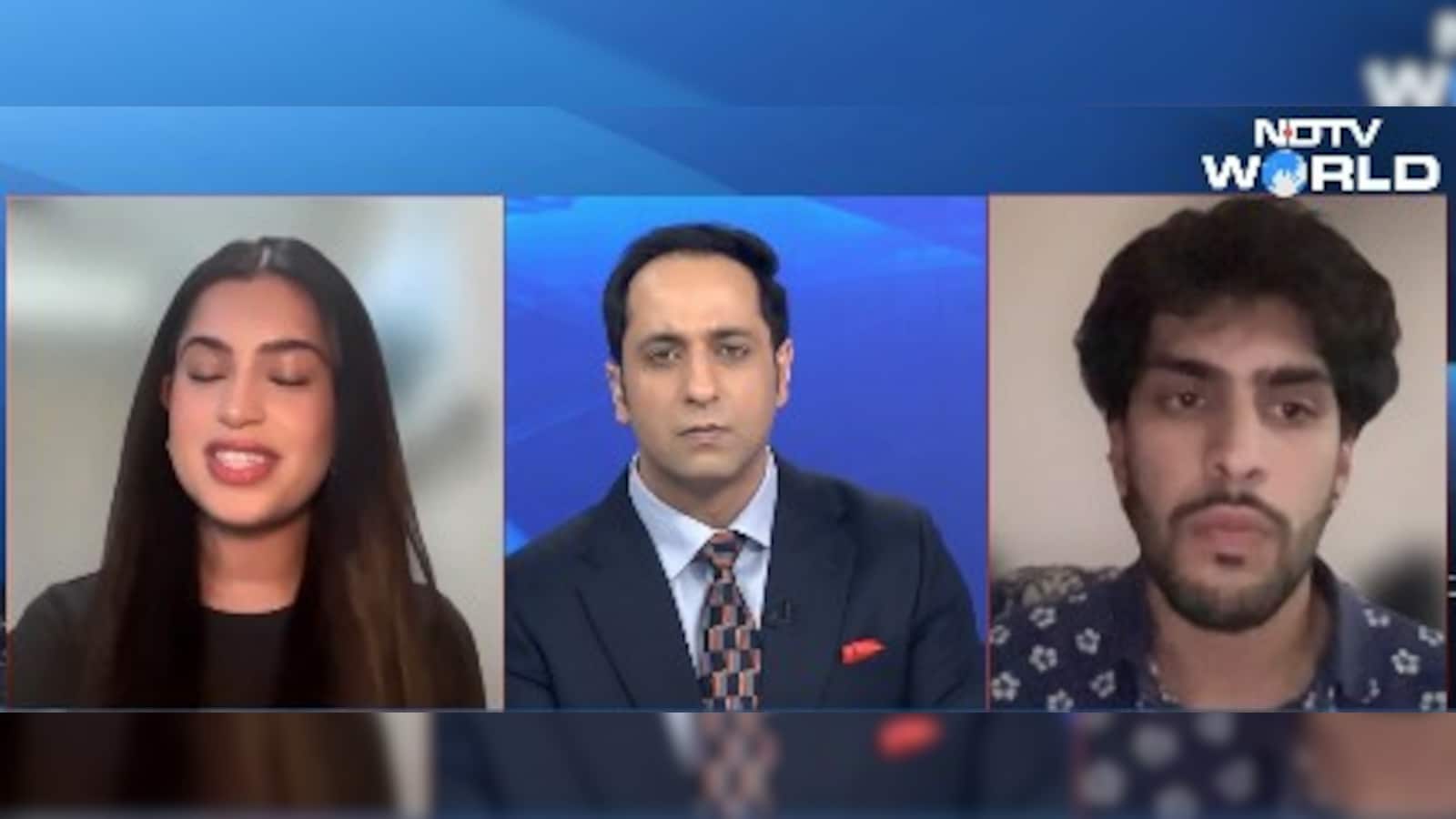
However, Neha Suratani and Sahaas Kaul, two Indian-Americans born and raised in Frisco, have dismissed the rhetoric in the city council meetings and said that it seems to be happening for social media and “just for their clicks”.
Speaking to NDTV, 22-year-olds Neha Suratani and Sahaas Kaul said the city’s growing Indian population is the result of the expansion of the technology sector.
Frisco City Council Anti-India Hate Campaign: Neha & Saahas Demolish Propaganda @NewshoundArjun pic.twitter.com/VLAl39JcK6
— NDTV WORLD (@NDTVWORLD) June 2, 2026
In May, a shocking incident at a Frisco City Council meeting showed a local resident mocking Indians with a racist impersonation. He used a fake accent and made offensive remarks about Indian culture.
Neha said claims that Indians are taking over the city are unfounded. “Frisco has seen an increase in its Indian population because of the growth of technology companies. Indians are heavily represented in the tech industry, and that has naturally led to demographic changes,” she said.
She added that Indians have contributed positively to the local economy. “People are seeing a boost in the economy backed by individuals who pay taxes, support the government and contribute to the community. The idea of some kind of takeover is simply not true,” she said.
Citing an example, Neha said, “If a company wanted to hire cheaper labour, the solution would just be to outsource and build factories and companies in other countries where they would get cheaper labour. But in reality, these companies do need the talent, especially from India, since tech is such an expanding sector.”
Sahaas Kaul said many of the recent anti-India comments at city council meetings seemed to be for online attention. “It’s almost just for their social media, just for their clicks. They want everyone to think that they’re speaking to someone who can do something about it, but the Frisco City Council really has no power,” he said.
According to Sahaas, Frisco’s Indian population has grown from roughly 10 percent to more than 30 percent over the past 15 years. “I’ve lived in Frisco my entire life, and this growth has happened over many years. What is unusual is that these anti-India speeches have all appeared recently and seem to come from a very small group of people,” he said.
Responding to questions on why the Frisco City Council continues to allow anti-India remarks during public meetings, Neha said Texas law requires city councils to set aside time for public comments and does not restrict participation based on where a speaker lives.
She said individuals from outside Frisco can also attend and speak during the public comment period. According to her, many of the remarks would fall under hate speech, which is generally protected under the First Amendment in the United States.
“Hate speech is generally protected under the First Amendment unless it crosses into direct threats. The city council cannot simply stop people from speaking because they disagree with them,” Neha said.
Both Neha and Sahaas rejected claims that Indian immigrants and H-1B visa holders are taking jobs away from Americans. Neha said studies have shown that companies hiring skilled immigrant workers continue to create jobs and expand their businesses without displacing native-born graduates.
Neha also spoke about concerns among some Indian-Americans amid immigration enforcement actions in the US. She said her mother had advised her to carry her passport while travelling because of reports of immigration raids in the area. “My mother told me to carry my passport because I am a person of colour and there have been incidents where people of colour have been targeted,” she said.
When asked whether they had personally faced threats after their speeches went viral, Neha said most of the backlash had come online through anonymous social media accounts, but added that they have not experienced direct harassment in person.
“We haven’t really been confronted face-to-face. Many of these people make extreme statements online or at council meetings, but then avoid any direct interaction afterwards,” Sahaas said.
On reports of similar anti-India incidents emerging in other parts of the US, including New Jersey and California, Sahaas said such rhetoric was not new and had historically targeted different immigrant communities at different times.
“We’ve seen these kinds of hate campaigns against various groups throughout American history. Today, Indians appear to be one of the communities being targeted,” he said.
Despite the recent controversy, both maintained that Frisco remains a welcoming city. Most of our neighbours are supportive and care about the community,” Sahaas said. “The loud voices online and at some meetings do not represent the majority.”



