MBW Explains is a series in which we dig behind the headlines, via data and context, to improve your understanding of key stories. Only MBW+ subscribers have unlimited access to these articles. MBW Explains is supported by Reservoir.
Who controls the machinery of copyright in the United States, and what happens to music if that control shifts?
A bill moving through Congress would change the answer.
H.R. 6028,the Legislative Branch Agencies Clarification Act, would remove the US Copyright Office from the supervision of the Library of Congress and change the way the Register of Copyrights is appointed.
Music attorney Kevin Casiniflagged the bill in a LinkedIn post, citing an earlier report from creative industry journalist Emmanuel Legrand. Casini argues that the music industry is not paying close enough attention. “The quiet restructuring of copyright governance is happening in plain sight,” wrote Casini, a Quinnipiac University law professor who advises rightsholders and trade groups.
Here’s what H.R. 6028 would do, why it has landed now, and why, as AI reshapes the economics of recorded music, the leadership of the US Copyright Office matters to the music business.
What H.R. 6028 would actually do
At present, the Register of Copyrights is appointed by the Librarian of Congress and answers to that office.
H.R. 6028 would break that link.
The bill would remove the US Copyright Office from the Library of Congress‘s supervisory authority.
The Register would instead be nominated by the President and confirmed by the Senate, serving a term of 10 years with the option of reappointment.
Before any appointment, the bill says, the chairs and ranking members of the House and Senate Judiciary Committees would “jointly recommend 3 individuals whom the President may consider.”
It also requires the Register to be “a citizen of the United States with a background and experience in copyright law.”
Two other senior officials would move in the opposite direction: the Librarian of Congress and the head of the Government Publishing Office.
Both are currently appointed by the President and confirmed by the Senate.
Under H.R. 6028, they would instead be selected through Congress.
Bipartisan nominees would be recommended by the chairs and ranking members of the House Administration Committee and the Senate Rules Committee, with congressional leadership making the appointment.
Those officials could be removed only by a majority vote of the majority and minority leaders of the House and Senate.
The bill was introduced by Representative H. Morgan Griffith (R-VA) in November 2025.
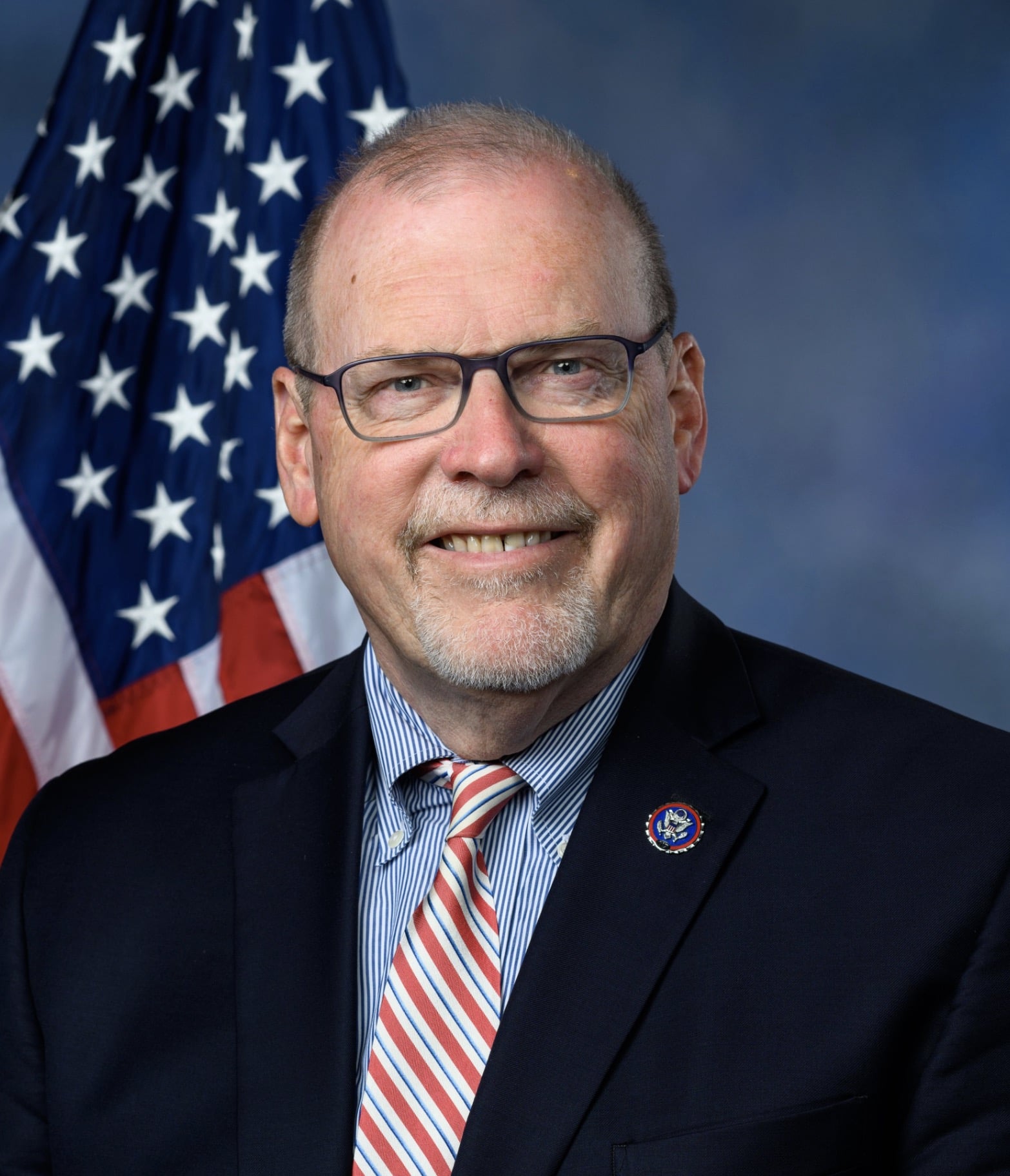
At a House Administration Committee markup on May 14, Griffith (pictured inset) said the legislation was about returning legislative-branch functions to Congress.
“Despite being legislative branch agencies, their leadership is currently and has been for over 100 years, appointed by the President and then confirmed by the Senate,” Griffith said.
Griffith said the approach mirrors how the Architect of the Capitol is appointed, after Congress moved that role to a bipartisan commission in 2023.
On the US Copyright Office, Griffith said the opposite logic applied.
Because the Office “performs executive-like functions” such as administering copyright registrations and issuing regulations, he argued, the Register should be a presidential appointee.
The committee advanced the bill at the markup, ordering it reported to the full House, where it has yet to receive a vote.
Why the bill has landed now
The bill arrives in the middle of an ongoing fight over the US Copyright Office and the firing of its director.
In May 2025, the Trump administration fired top copyright official Shira Perlmutter, a day after her office released a report concluding that training AI on copyrighted works qualifies as fair use in some circumstances but not others.
The administration had first removed Carla D. Hayden, the Librarian of Congress, and installed Deputy Attorney General Todd Blanche as acting Librarian, who then moved to replace Perlmutter with Department of Justice official Paul Perkins.
Perlmuttersued the administration, arguing that only the Librarian of Congress, not the President, has the power to appoint or remove the Register of Copyrights.
That fight turns on the same question Griffith‘s bill addresses: whether the Register of Copyrights is an executive or a legislative officer.
The court that reinstated Perlmutter treated the role as a legislative one, beyond the President’s power to remove.
H.R. 6028 would recast it in statute as a presidential appointment.
Why this matters for music
Much of the US Copyright Office‘s influence is exercised through registration decisions, rulemakings and policy reports rather than headline legislation.
That covers the nearly $4 billion in royalties The MLC has distributed to songwriters and publishers since 2021.
The Office also weighs in on whether AI companies can train on copyrighted works without a license.
That was the question at the center of the report that preceded Perlmutter‘s firing, and it remains contested.
Who leads the US Copyright Office, and whom that leader answers to, shapes how it approaches those questions.
“A lot of what matters in copyright never shows up in headline statutes,” wrote Casini on LinkedIn. “It shows up in how the Office interprets edge cases, handles registration standards, and thinks about authorship when the fact patterns are non-standard.”
That discretion carries more weight while the rules around generative AI and copyright are still being written.
Not everyone wants it fast-tracked
A coalition of library, technology and public-interest groups, including the Re:Create Coalition, the Library Copyright Alliance and the Center for Democracy & Technology, has urged Congress not to fast-track the bill, arguing that separating the Copyright Office from the Library of Congress warrants full hearings.
In response to reports that House leaders are working to push H.R. 6028, the Legislative Branch Agencies Clarification Act, to passage through a rushed markup process “without stakeholder input”, Re:Create Executive Director Brandon Butler issued the following statement:
“We urge Congress to halt the rushed passage of H.R. 6028, which risks serious unintended consequences by separating the U.S. Copyright Office from the Library of Congress. This move would have serious effects on technological innovation and on all Americans’ free speech rights, creative freedoms, and educational opportunities.
“As such, the bill must proceed through regular order with careful deliberation and input from all impacted communities, not through a fast track process.”
“We urge Congress to halt the rushed passage of H.R. 6028, which risks serious unintended consequences by separating the U.S. Copyright Office from the Library of Congress.”
Brandon Butler, Re:Create Coalition
Re:Create and a broad cross-section of groups dedicated to balanced copyright and a free and open internet raised these concerns in a letter to the House Administration Committee.
The US Copyright Office has operated as part of the Library of Congress since the 19th century.
What happens next
The bill has cleared committee but not the full House, and its backers are reportedly seeking a fast-track to the floor.
Its critics want hearings before any House vote.
Running alongside the legislation is the unresolved Perlmutter case.
The Supreme Court declined to act on her firing in late 2025, leaving Perlmutter in place while it weighs related disputes over the President’s power to remove officials.
Both the bill and the lawsuit circle the same question – whether the Register answers to the President or to Congress.
Griffith says a Senate-confirmed Register with a fixed term would give the office steadier leadership and clearer oversight.
Critics counter that a presidential appointee would politicize copyright and AI policy, and could disrupt the registration and deposit systems the Library of Congress depends on.
Reservoir (Nasdaq: RSVR) is a publicly traded, global independent music company with operations across music publishing, recorded music, and artist management.Music Business Worldwide