















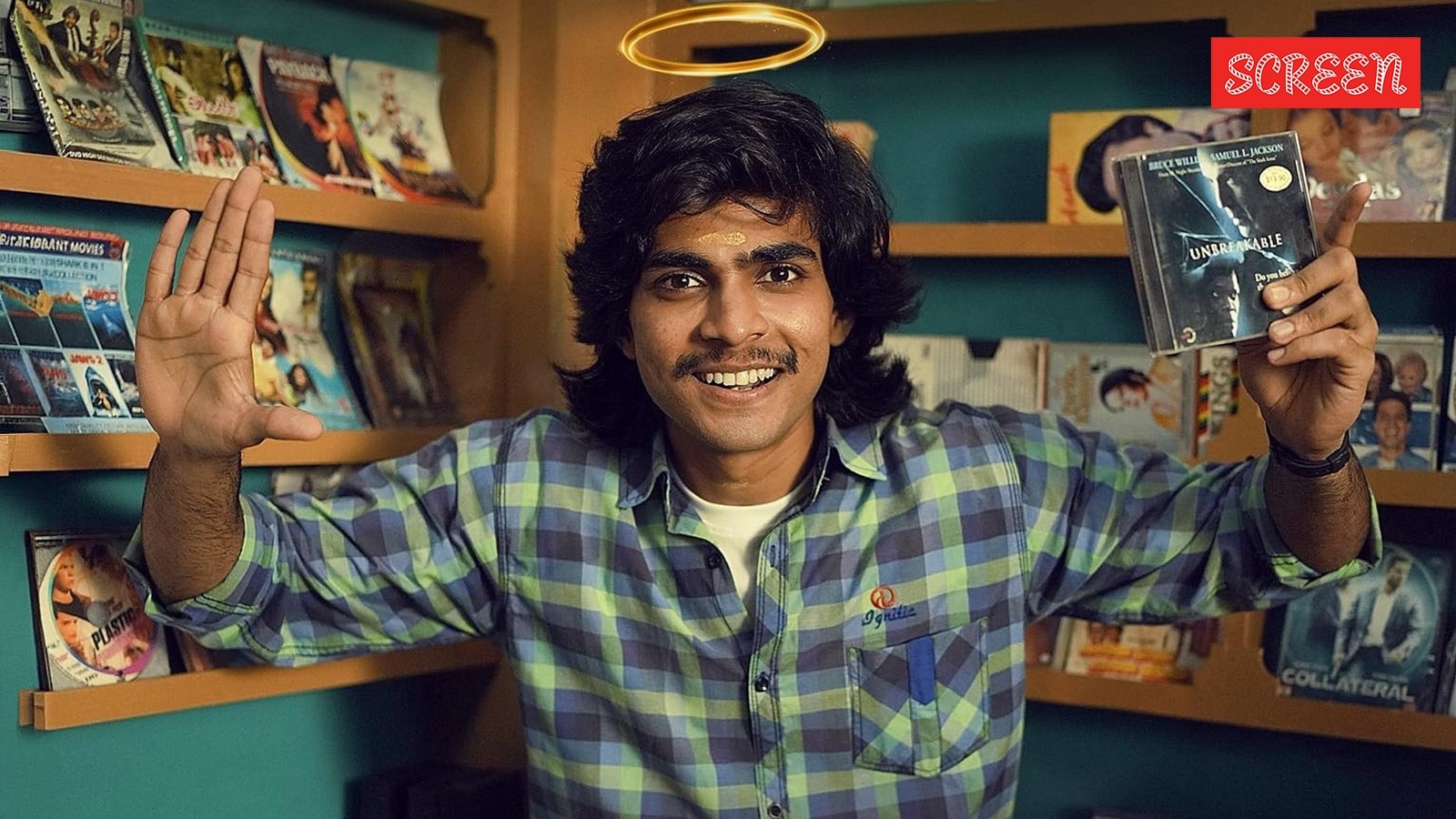
Mollywood Times Movie Review & Rating: Trust me here; Mollywood Times indeed had the potential to be a masterpiece. There are several moments in the movie where director Abhinav Sunder Nayak and writer Ramu Sunil’s sheer brilliance knock our socks off. The movie’s core ideas, as well as the way they are presented at various junctures, are nothing short of spellbinding. However, just as Vineeth Madhavan’s (Naslen) obsession with becoming “the best” filmmaker in his field leads to his downfall, Mollywood Times’ obstinacy in being a one-of-a-kind film might have cost the dark comedy dearly, as its focus shifts solely to this mission after a point, overlooking its soul.
Pretty much everything one needs to know about Mollywood Times is already there in its teaser. Vineeth Madhavan is obsessed with becoming a filmmaker. An ardent fan of M Night Shyamalan, Ram Gopal Varma, and Vinayan, among others, Vineeth’s ambition is not just to break into show business but to do so with a bang. “The first will always be recorded and remembered in history. I want my first film to be remembered forever,” he keeps asserting. Owing to his stubbornness, he isn’t ready to settle for anything less. What follows is an intense battle between Vineeth and the rest of the world, where quite a few among the latter are just as determined as he is — but to pull him down.

Cinema Anatomy | Unrivalled GOAT of comedy: Why it’s almost impossible to match Urvashi’s comic brilliance
As its tagline implies, Mollywood Times is “a hate letter to cinema,” and a pretty strongly worded one that doesn’t shy away from pulling out all the stops to achieve what it set out to do. Unlike movies such as Om Shanti Om (2007), Udayananu Tharam (2005), and The Dirty Picture (2011), which romanticised cinema and tried to attribute the rot within the industry to a select few, Mollywood Times takes a path reminiscent of KG George’s Lekhayude Maranam Oru Flashback (1983). Both films, in a way, assert un/consciously that the grey within the insiders cannot be dissociated from the art itself, as the allure of cinema maybe what instigates them to act the way they do.
A close look at Mollywood Times reveals that Vineeth’s obsession with cinema wasn’t always present. He chose this path only when pushed to set an aim for himself, making one wonder whether cinema is genuinely his passion or if his chilling fixation is merely a reflection of the chaos within him.
Watch Mollywood Times teaser here:
The movie opens by showing the life of veteran Malayalam horror novelist Vaikom David (Jagadish), who made a fortune by selling the works of his ghostwriters as his own. He lives by the philosophy, “chase reputation, greatness will follow,” and instils this belief in his son, Sachin (Sharaf U Dheen), as well.
In contrast, Vineeth is confident in his talent and wishes to make a name for himself in a dignified way. However, fame and success only go seeking his archrival, Arjun Haridas (Sangeeth Prathap), who established himself in the industry by copying Vineeth’s filmmaking style, which he learned by watching Vineeth’s short films.
Story continues below this ad
Must Read | Zarin Shihab explains why Mohanlal’s tragic role in Patriot wasn’t a ‘betrayal’
Much as in his directorial debut, Mukundan Unni Associates (2022), Abhinav Sunder Nayak ridicules the concepts of karma and manifestation here as well, underscoring that only the most cunning and the least moral emerge victorious in a dog-eat-dog world. Although Mollywood Times isn’t as dark as Mukundan Unni Associates, Abhinav employs certain narrative and filmmaking techniques that worked in his favour back then this time as well, with the most notable being voice-overs, cutaways to emphasise points with random elements, and the repeated use of certain dialogues.
While Mukundan Unni Associates’ absolute focus on the protagonist highlighted the latter’s narcissistic behaviour, this strategy proves counterproductive here, as neither Vineeth Madhavan nor Naslen can hold the audience’s undivided attention for long. Another major factor contributing to this issue is Ramu Sunil’s cluttered screenplay, which fails to fully develop the intriguing story. After a certain point, plot devices, dialogues, and even instances begin to repeat themselves, adding little of value to the movie as a whole.
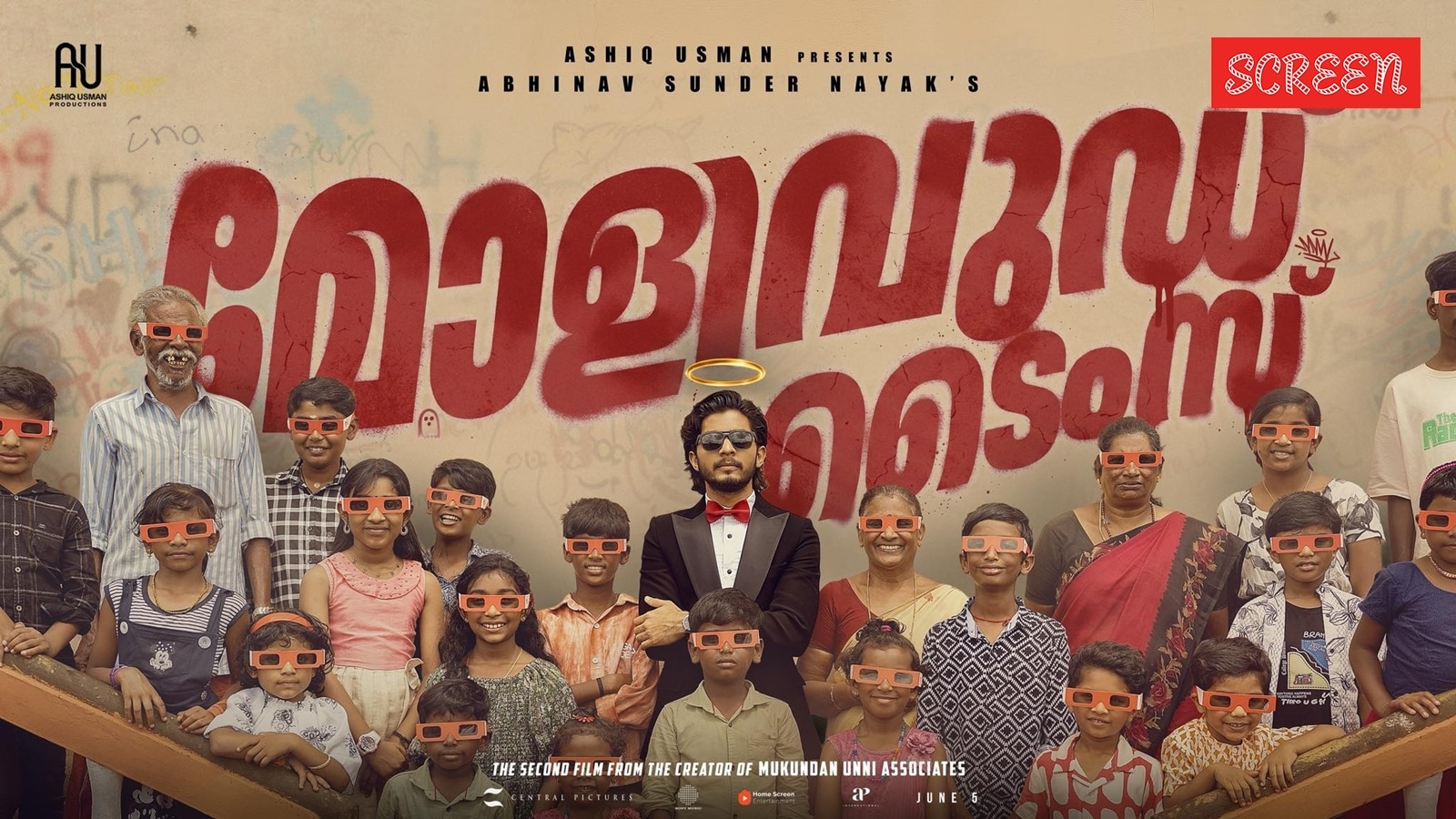 Although Naslen shines in certain moments, his overall performance in Mollywood Times never truly impresses.
While Mollywood Times becomes instantly impressive once it shifts gears after Vineeth slowly realises that his entry into show business is solely his dream and nobody else’s, the almost one-hour journey to this point is nothing short of tiring, as the script doesn’t contain much that keeps one hooked. Scene after scene, the same concepts that have already been established and explored thoroughly are presented again and again, and even the visuals don’t help alleviate the weariness.
Story continues below this ad
Since Abhinav had already shown us pretty much everything about the movie in the teaser itself, the treatment definitely had to be much more than impressive to offer an immersive experience. However, this only happens occasionally, particularly when there are too many things happening. In the uneventful moments, Mollywood Times struggles. Amid the monotony, all that keeps the movie afloat is Ashik S’ impressive art direction, which doesn’t seem desperate to showcase itself by packing the frames with too many props, and instead keeps things at the right level, sharply establishing the bygone eras.
ICYMI | Bandar movie review: Bobby Deol anchors Anurag Kashyap’s strongest film in years
One of the strengths of Mollywood Times is that it isn’t just another homage to Indian cinema or the craft of filmmaking. Rather, it tries to assert that cinema and those within it could be just as petty and morally ambiguous as anyone else, thus pulling artistes down from the moral high ground they’ve been occupying. We even hear one producer say, “This isn’t anyone’s life; it’s just show business,” rejecting the notion that cinema is some sort of service, thereby placing the responsibility for its “inevitable” success on the masses. The film also exposes certain malpractices in the industry, with the most notable being certain big-shot producers purposefully making flops solely to evade taxes.
Even amid such in-depth explorations of Tinseltown, Abhinav and Ramu keep the meta-references to a minimum and instead strive for authenticity. However, by crafting Vineeth as a semi-autobiographical character, Abhinav even questions the concepts of authenticity and originality, as Vineeth, who initially advocates these ideals, is shown to be un/knowingly inspired by his favourite filmmakers, thus emulating their stories and styles. As the movie progresses, we see him, a victim of his intellectual property being stolen, engaging in a similar act shamelessly. In these areas, Abhinav and Ramu expose the hollowness of so-called artistic integrity and even humanity.
Story continues below this ad
Also Read | Mammootty, Shaji Kailas broke down after finding TS Krishnan dead: ‘He was ice-cold’
At a crucial juncture, Vineeth’s best friend (a solid Roshan Shanavas) tells him, “Mediocrity is the new greatness.” In retrospect, I don’t know whether director Abhinav was indirectly commenting on every mediocre movie hailed as great, or foretelling that a “mediocre” Mollywood Times might get similar praise. Either way, I wouldn’t call Mollywood Times mediocre; rather, it’s a misfired masterpiece that tried to be so much and aimed to excel in various aspects, ultimately crushed by the probable pressure to perform greatly.
No filmmaker needs to be concerned about their work’s runtime as long as the length is justified, whether it is longer or shorter than typical feature films. However, that’s where Mollywood Times struggles. Its 2.48-hour length feels excessive, as the movie fails to make the best use of this. Instead, we are bombarded with the same plot devices repeatedly, one of the most notable being its unnecessary take on caste-based reservation, which appears liberal but carries undertones that suggest otherwise and is highly problematic.
Must Read | Hai Jawani Toh Ishq Hona Hai movie review: David Dhawan’s 90s-style comedy is plain cringe
Story continues below this ad
Although Naslen shines in certain moments — particularly when depicting Vineeth’s childlike obsession with cinema and his heartbreaks — his overall performance never truly impresses. His voiceover/narration detracts from the experience at times, as his delivery feels rather artificial, as if he is being forced to say these lines at gunpoint. Sharaf U Dheen, meanwhile, excels as Sachin, impressing the most during the caricatured comedic moments. On the other hand, Sangeeth Prathap’s performance is, at best, simply better than the abomination he delivered in Baby Girl.
While Jakes Bejoy’s music isn’t extraordinary, he manages to impress with his experimentation in several instances, creating unusual tunes for moments that are emotionally contrary to the essence of the tracks. Viswajith Odukkathil’s immersive cinematography is undoubtedly one of the most significant attractions of Mollywood Times. Without adhering to a predetermined visual language from start to finish, Viswajith has approached each moment individually, breathing more life into them.
Nidhin Raj Arol and director Abhinav deserved significant praise for their editing, which further elevated the visuals and maintained a unique pace at several points; however, the decision to keep pretty much everything they shot (or was there more?) significantly impacted Mollywood Times.
Mollywood Times movie cast: Naslen, Sharaf U Dheen, Sangeeth Prathap, Roshan Shanavas
Mollywood Times movie director: Abhinav Sunder Nayak
Mollywood Times movie rating: 2.5 stars