


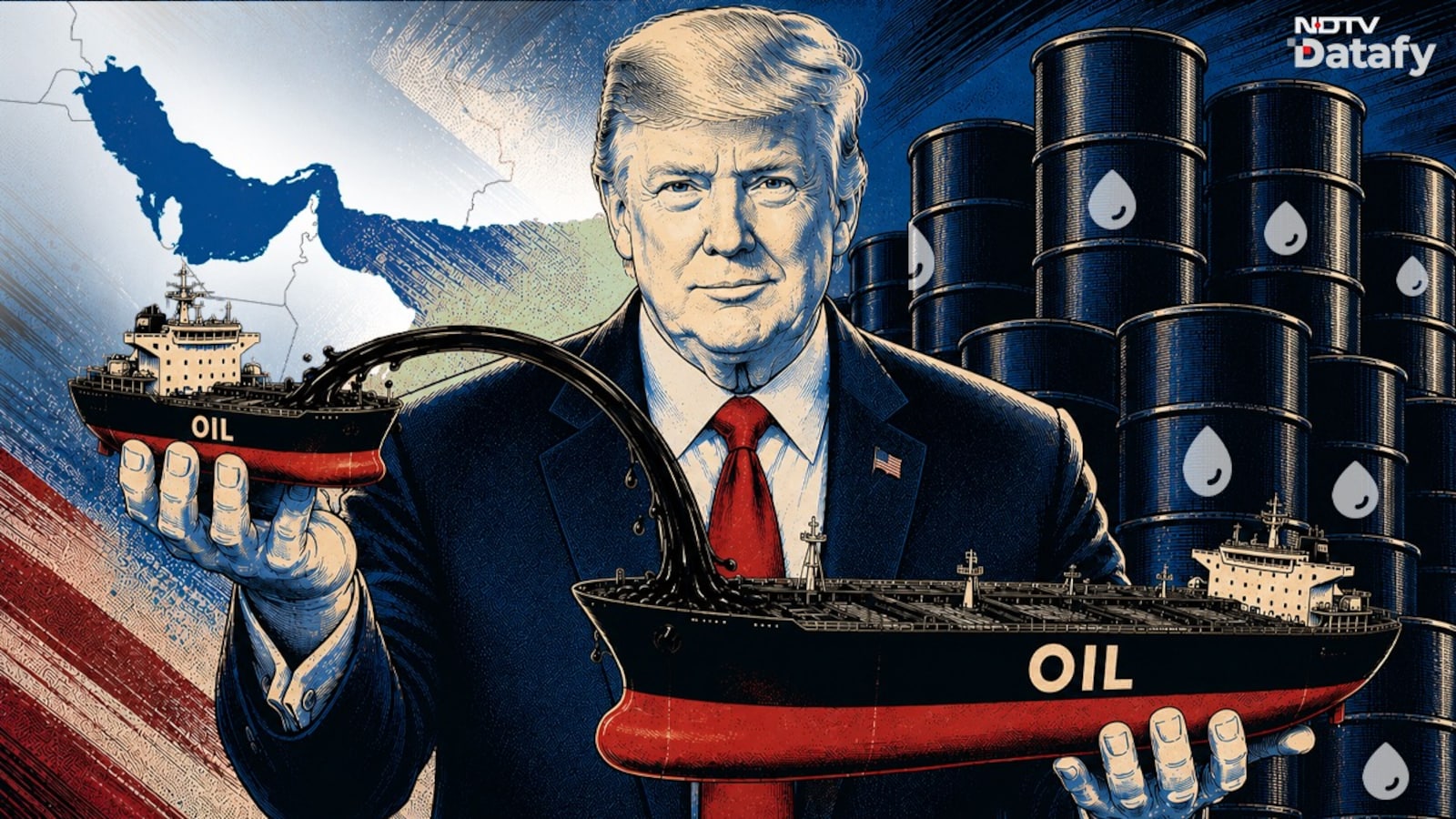
On June 10, President Donald Trump announced that a US military mission had enabled the flow of over 100 million barrels of crude oil through the contested Strait of Hormuz since May. However, he didn’t provide any operational details.
Evidence analysed through OSINT (Open-Source Intelligence) research by NDTV Datafy, along with inputs from maritime analysts and media reports, suggests that the US military and its regional allies operated a “dark fleet” of vessels to send oil to the international market.
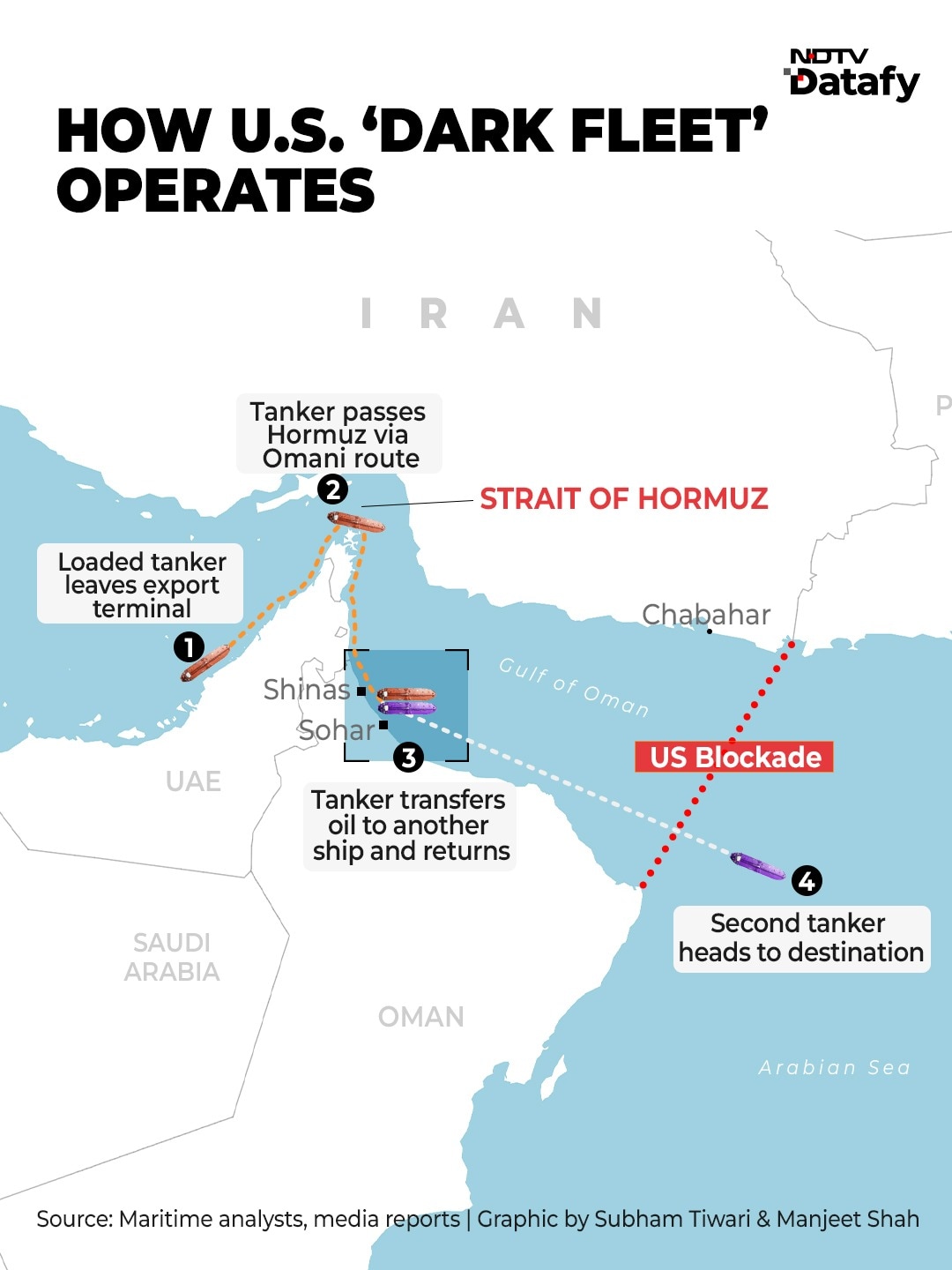
‘Dark Fleet’ refers to commercial vessels that don’t relay information about their identity, position and speed while transiting.
The movement of oil appears to have taken place in two stages. In the first phase, tankers owned by state-run companies in Gulf nations like Kuwait, the UAE, and Saudi Arabia loaded oil from export terminals in the Persian Gulf for a short voyage through the Strait of Hormuz. These transits were likely under the protection of US jets, helicopters, and warships.
These ships took a narrow and risky route in the waterway that was opened by the US military while keeping their voyage signals off, effectively going “dark” to avoid detection. They used a narrow route hugging the Omani coastline, in some stretches just 800 metres wide.
In the second phase, these tankers transferred their cargo to other commercial ships near at least two ports of Oman – Sohar and Shinas. Since mid-March, the US military has deployed a large number of warships and fighter jets in the Gulf of Oman. The US military Apache helicopter that was downed by Iran near the Strait earlier this week may have been involved in the same shipping operation.
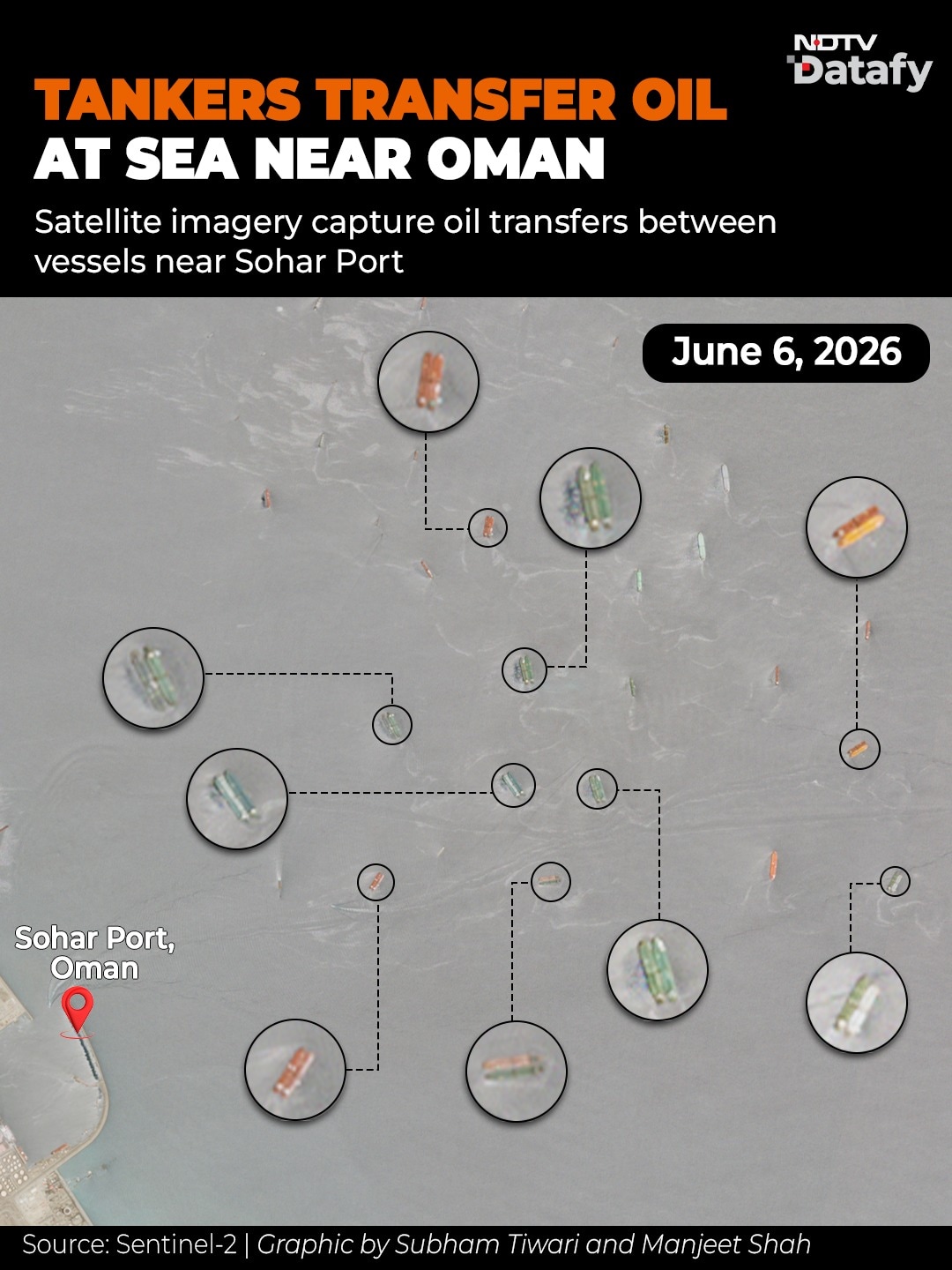
The transfer of oil took place within Omani territorial waters, which likely would have been another layer of deterrence against any potential Iranian attacks. Oman is the only Gulf nation that has remained friendly to both Iran and the other Gulf nations, positioning it as a safer region during the ongoing war that began on February 28 this year.
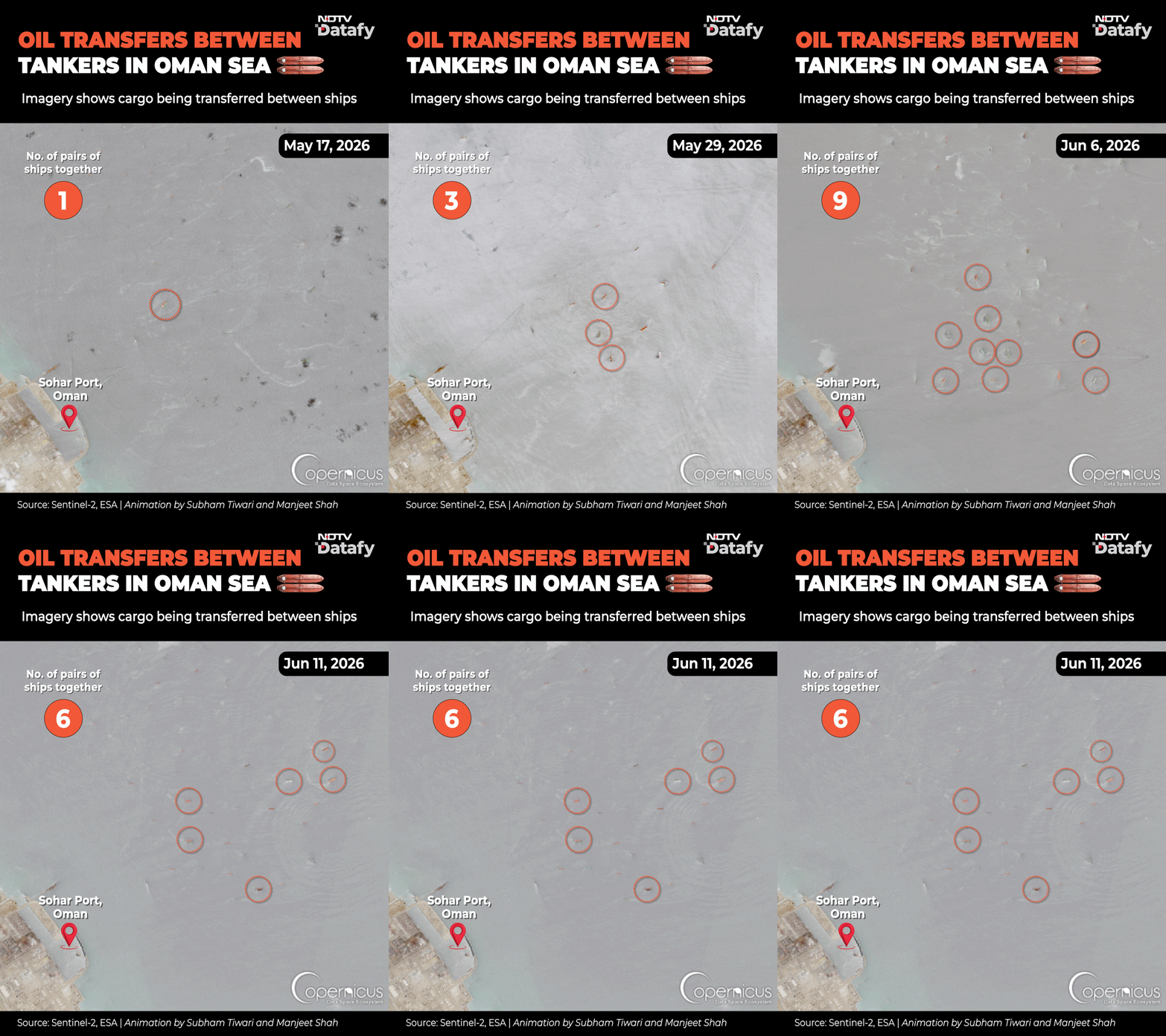
Satellite imagery analysed by NDTV Datafy shows that ship-to-ship transfer of oil began early in May but increased significantly in June. An image captured by the European Space Agency on June 6 shows at least nine offshore transfers involving Very Large Crude Carriers (VLCCs) about 10 km from Sohar Port.
Oil Flow Via Hormuz Rises
On the night of June 10 (IST), Trump tweeted, “Last month, I directed our Great US Military to execute a secret mission to support Oil Tankers and other Commercial Ships through the Strait of Hormuz. Today, I am pleased to announce that this effort has resulted in more than 100 MILLION Barrels of Oil making its way through the Strait, and into the Open Market.”
He added that more than 200 commercial ships passed through the waterway during this period to underscore that the US controlled the Strait of Hormuz, not Iran.
Meanwhile, US Energy Secretary Chris Wright told a Congress committee that “things were going well” with the US operation to ensure oil flow out of the Persian Gulf.
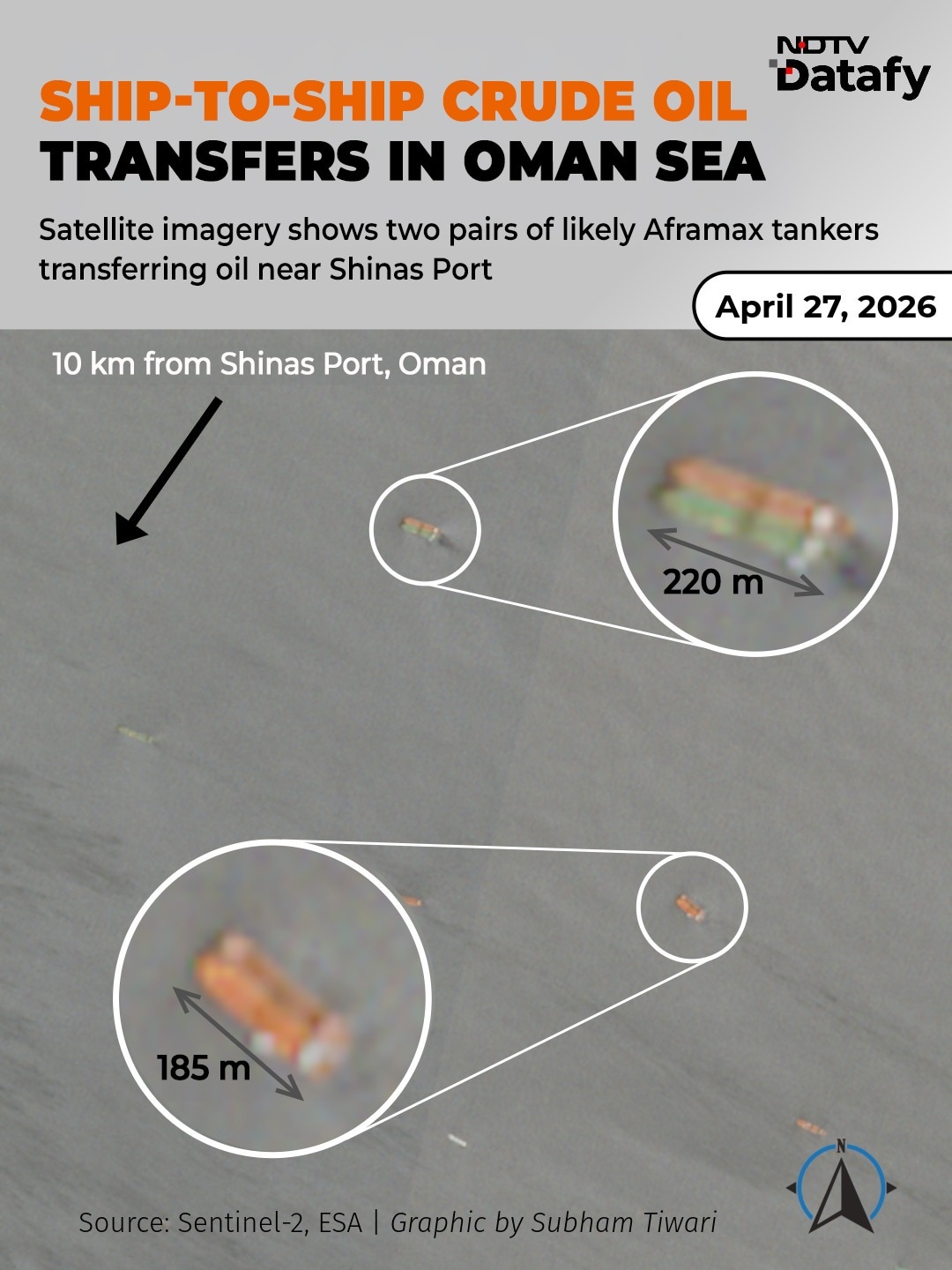
Trump said he ordered the US military to launch the shipping operation in May. However, at least two pair of tankers can be seen transferring oil near Shinas Port, Oman in this satellite image captured on April 27, 2026.
The official US statements are consistent with independent commercial shipping data and media reporting. According to Bloomberg, non-Iranian oil flows through the Strait of Hormuz surged by about 50 per cent so far this month.
According to Financial Times, about 15 ships, mostly oil tankers, were going in and out of the Persian Gulf via the Omani route every day.
However, tracking services relying on ships’ own data reporting systems show hardly any movement of the oil tanker through the waterway. That is because ships are going dark when transiting the waterway. According to Lloyd’s List Intelligence and Windward, daily “dark” transits rose from 2 to 6 over the past week. Before the war started, more than 100 ships transited through Hormuz each day.
Describing the challenges associated with transiting the Omani route, a tanker executive told FT, “We are talking a single-lane route with two-way traffic on it with loaded ships who do not have the manoeuvrability, like driving down a country lane at night without your lights on. We will most likely have an accident.”



