


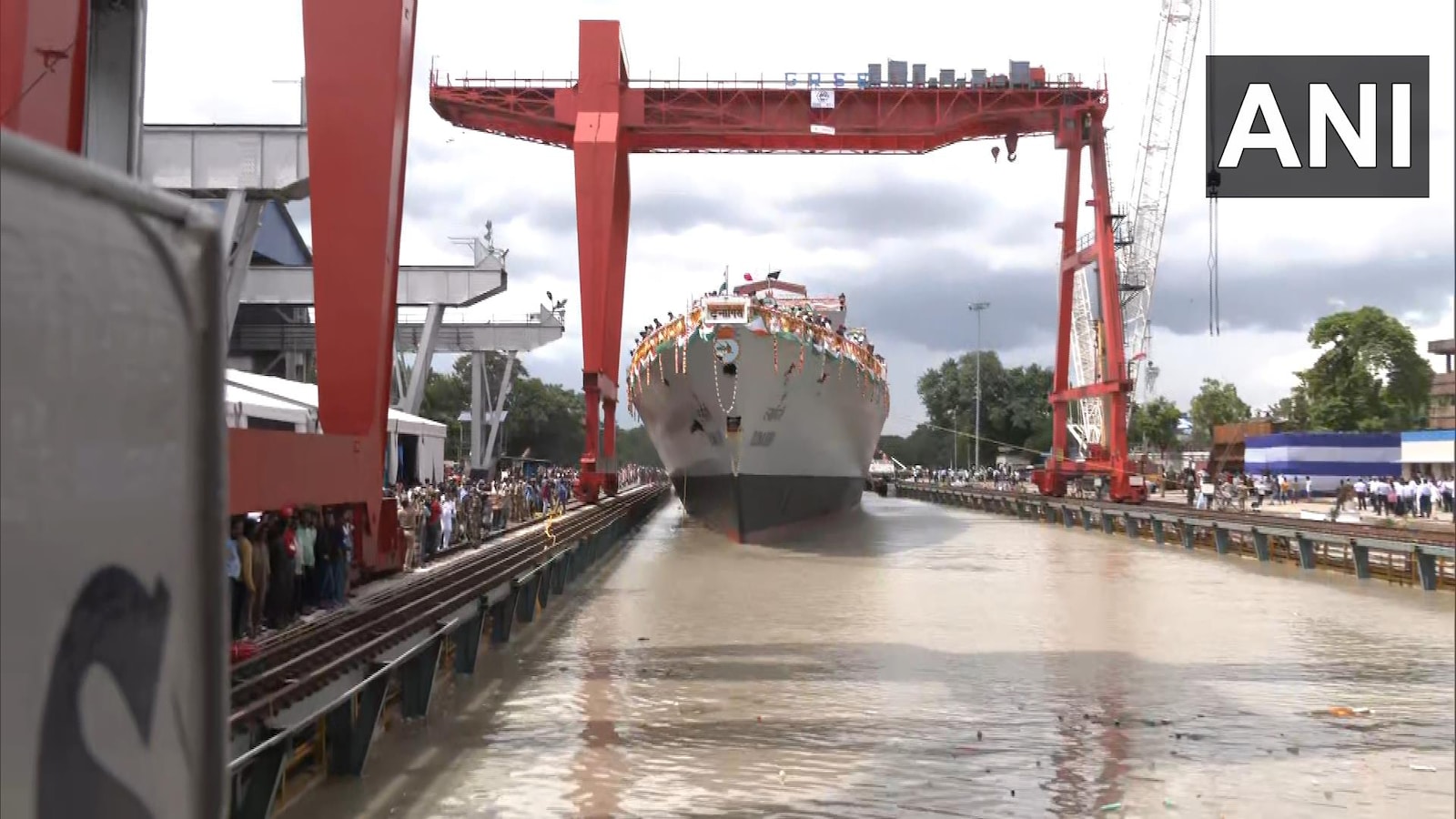
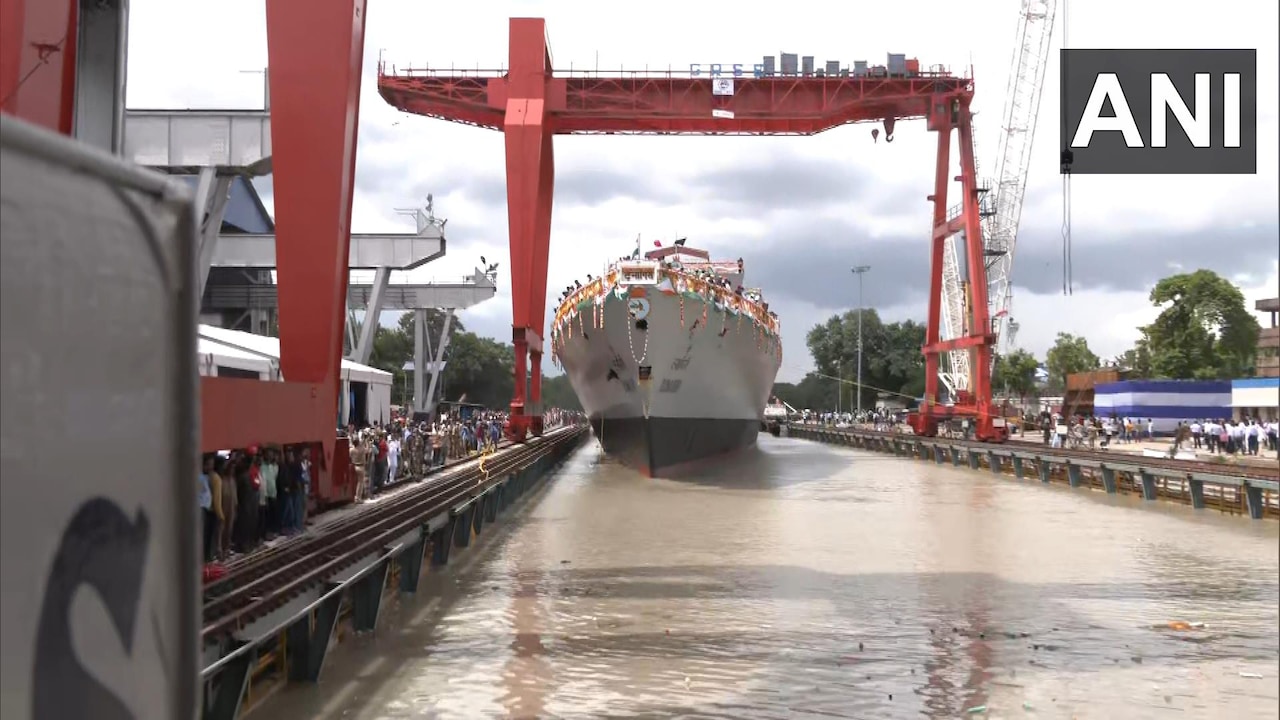
Indigenous stealth frigate ‘Dunagiri’, endowed with state-of-the-art weapons and sensors, including BrahMos surface-to-surface missiles, as well as two other frontline naval platforms are set to be commissioned into the Navy on June 21 in the presence of Prime Minister Narendra Modi.
The tri-commissioning of ‘Dunagiri’ – the fifth ship of Nilgiri-class (Project 17A) frigates, Anti-submarine Warfare Shallow Water Craft ‘Agray’ and Survey Vessel (Large) ship ‘Sanshodhak’ is scheduled to take place at the Syama Prasad Mookerjee Port in Kolkata.
Designed by the Navy’s Warship Design Bureau and constructed by Garden Reach Shipbuilders & Engineers (GRSE), Kolkata, the vessels represent key operational capabilities across maritime combat, hydrographic surveying, and anti-submarine warfare, the defence ministry said.
“Together, they reflect the Navy’s balanced approach to capability development, strengthening blue-water operations, enhancing maritime domain awareness, and securing coastal waters against evolving threats,” it said.
‘Dunagiri’ is equipped with advanced weapons and sensors, including BrahMos surface-to-surface missiles and the Medium Range Surface-to-Air Missile system, significantly enhancing the Navy’s combat capabilities.
Ahead of the commissioning, the Navy, in a video posted on YouTube, had said, “Precision. Power. Agility. Power packed with state-of-art weapon and sensor suites, engineered for long sea legs, sustained operations and equipped with indigenous stealth technology, Dunagiri is built for multi-dimensional dominance and lethality. Dunagiri: Decisive Dauntless Dominant”.
On June 11, the Navy unveiled the crest of ‘Dunagiri’, a name that carries forward the legacy of the former INS Dunagiri (F-36), which served the nation with distinction from May 1977 until October 2010, and earned a proud place in the annals of the Indian Navy.
Featuring the Osprey taking flight from a mountain peak, the crest symbolises the “valiant spirit of a combatant to soar, swoop and strike in all three dimensions”.
With its motto ‘Victory is my Profession’, Dunagiri will strengthen the Navy’s combat capability and serve as a “potent force multiplier” in safeguarding India’s maritime interests, the force earlier said.
The new ‘Dunagiri’ carries forward a legacy of dedication, courage and operational excellence. Blending the spirit of her predecessor with cutting-edge indigenous technology, “she represents a new era of maritime power for India”.
INS Taragiri, the fourth potent platform of the Project 17A class endowed with cutting-edge weapon suite, including supersonic missiles, was commissioned into the Navy in the presence of Defence Minister Rajnath Singh at Visakhapatnam, Andhra Pradesh, on April 3.
Designed by the Warship Design Bureau and overseen by the Warship Overseeing Team (Mumbai), P17A frigates reflect a “generational leap” in indigenous ship design, stealth, survivability and combat capability.
P17A ships are fitted with an advanced weapon and sensor suite as compared to the P17 (Shivalik-class).
INS Nilgiri, the lead ship of P17A frigates, was commissioned on January 15, 2025.
INS Udaygiri and INS Himgiri were commissioned into the Navy on August 26, 2025.
It was the first time that two frontline surface combatants indigenously constructed by two different shipyards — Mazagon Dock Shipbuilders Limited (MDSL), Mumbai (INS Udaygiri), and GRSE Kolkata (INS Himgiri) — were commissioned simultaneously.
The ministry on Friday said ‘Sanshodhak’, the fourth Survey Vessel (Large), is designed for coastal and deep-water hydrographic surveys and collection of oceanographic and geophysical data for defence and civil applications, and is equipped with advanced survey systems, including Autonomous Underwater Vehicles and Remotely Operated Vehicles.
‘Agray’, the fourth of the Arnala-class Anti-Submarine Warfare Shallow Water Craft, is equipped with lightweight torpedoes, indigenous rocket launchers, and shallow-water sonar systems to detect and engage underwater threats in littoral waters, it said in a statement.
“The three platforms demonstrate the growing maturity of India’s indigenous shipbuilding ecosystem, with indigenous content exceeding 75 per cent. Their construction involved extensive participation by Indian industry, including more than 200 MSMEs, and generated substantial direct and indirect employment,” the ministry said.
The commissioning of these vessels highlights the collaborative efforts of the government, the Indian Navy, public sector shipyards, private industry and MSMEs in advancing the objectives of Aatmanirbhar Bharat and strengthening India’s maritime capabilities, it added.
(Except for the headline, this story has not been edited by NDTV staff and is published from a syndicated feed.)



