


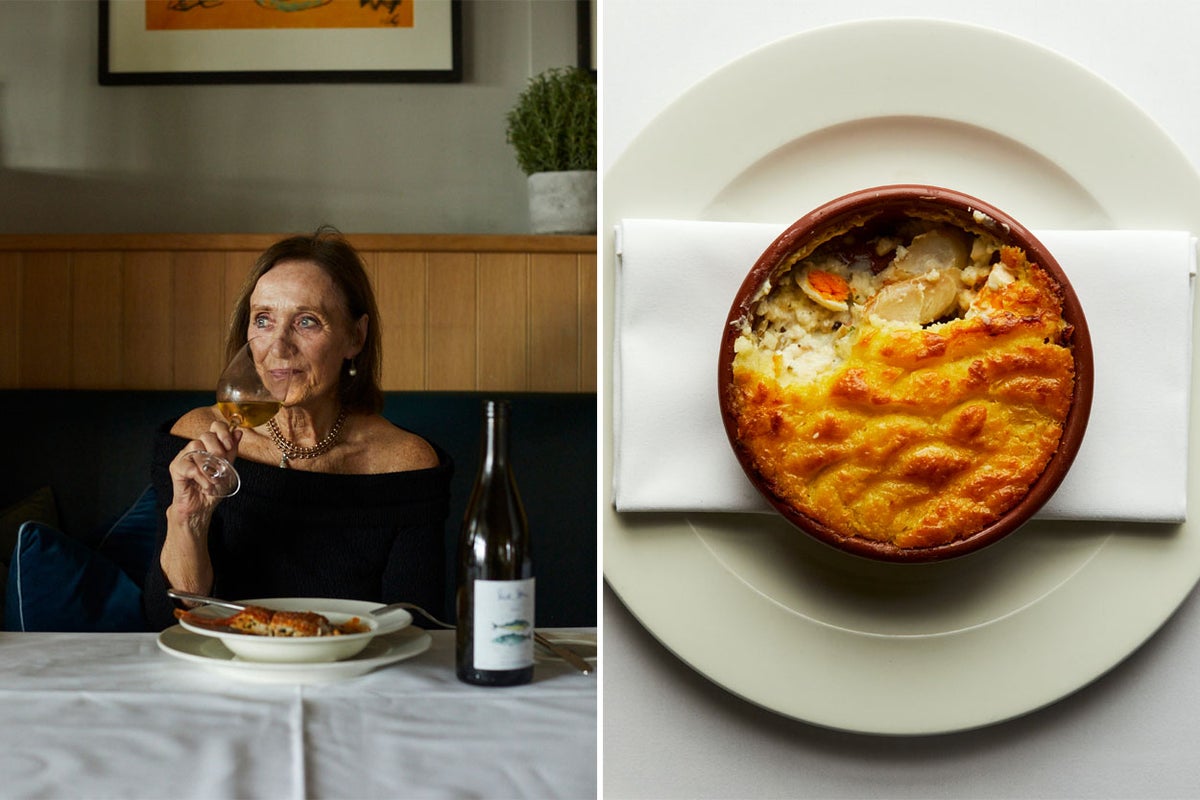
Ask Jill Stein whether she misses the early days of launching her and telly chef Rick Stein’s beloved Padstow joint, The Seafood Restaurant, and she laughs.
“Not really, no, ha!”
She takes a beat, then adds: “Actually, on a good night, Rick and I used to sit on the barrier outside the restaurant, have a beer and look in, and say, ‘God, that was a tough night,’ but you always felt a great sense of achievement.
“Hospitality, it’s like a drug, adrenaline, and you work on that. It’s probably not very good for you, but you get this big hit at the end of the night,” she continues. “Some nights it didn’t go well, and people had to wait or complained, and you have to deal with it. So it was quite tough, but I wouldn’t change it.”
They first opened in 1975 and, five decades on, the Steins have put together The Seafood Restaurant Cookbook, packed with classic dishes from menus across those 50 years, and a few new ones too. “It’s not about the past, it’s about going forward as well,” says Stein.
Looking back on half a century in business has been “quite an emotional journey”, she says. Not least because there were moments when the future of both the restaurant and her partnership with Rick seemed uncertain.
The pair were married for 32 years before divorcing in 2007 after Rick’s five-year affair with Australian publicist Sarah. Yet they still run the business together.
“A separation and divorce is very traumatic, but you learn to get over it. Life’s too short to worry about these things. You just go through it,” says Stein.
It’s impressive when so many people would have cut and run.
“Some days it wasn’t easy, it was difficult. I’m sure it was difficult for Rick as well, and also for the people that worked with us, but we managed it,” she says. “Nothing is insurmountable, and I’m quite a tough cookie, really. I just thought, ‘Well, I’m not leaving my business because we’ve separated,’ that’s the last thing I wanted to do, and also I wanted to bring my sons on, and it is going to be theirs, eventually. So it was very important to me that I stayed in the business.”
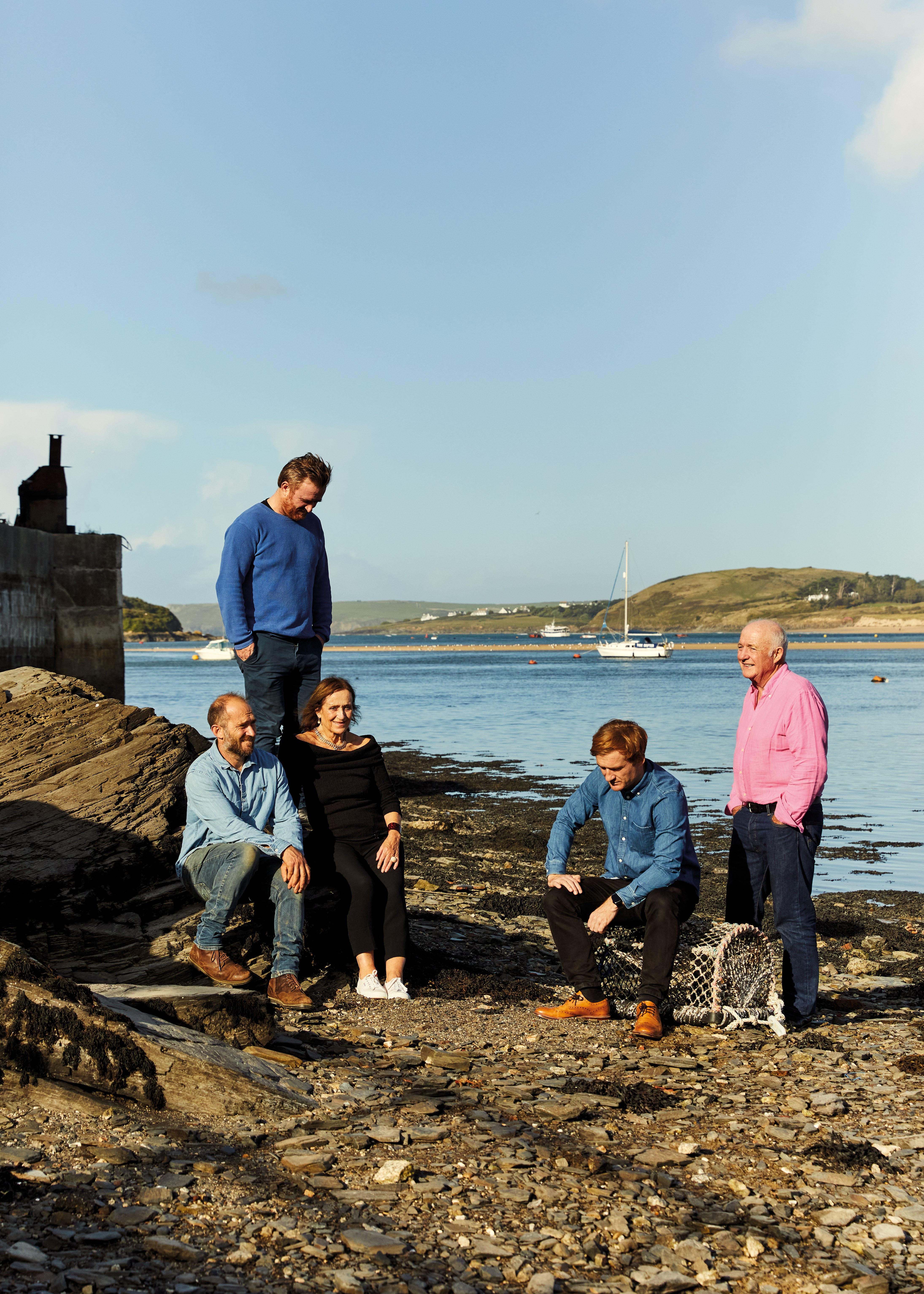
Today, it remains very much a family affair. Rick’s notes in the book are accompanied by contributions from sons Jack, who oversees the menus, and Charlie, who manages the wines. Their other son, Ed, oversees building projects.
Stein says putting the book together meant digging out old menus and family photographs.
“Suddenly you’re at 50 [years] and you don’t feel like it’s 20. Life creeps up on you, doesn’t it? You think, ‘Help!’ I didn’t realise we’d still be here, let alone still in business.”
When they first opened all those years ago, she admits, “we didn’t have a business plan”.
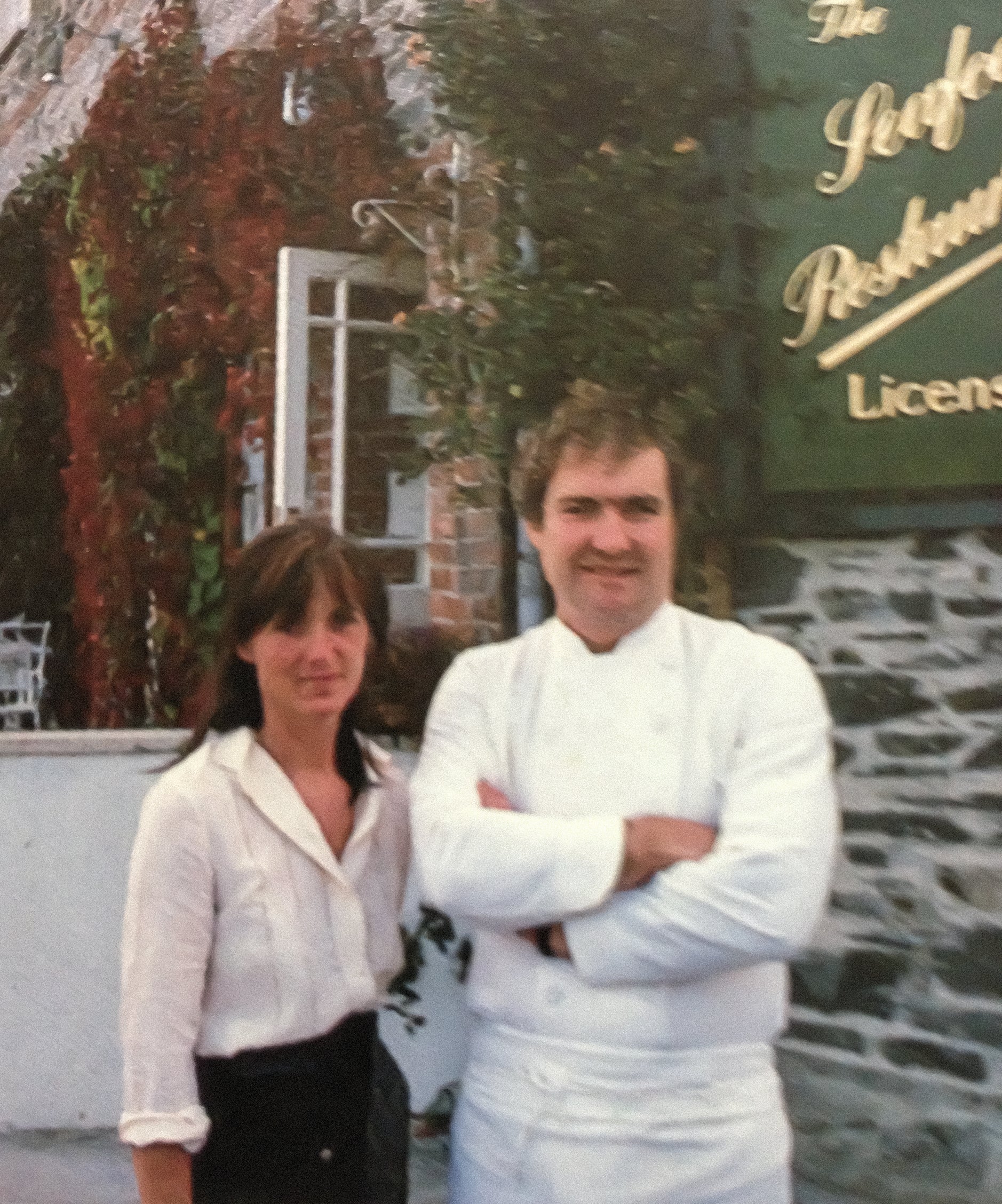
Having run a mobile disco together – The Purple Tiger, with Rick on the decks and Stein on the door – The Seafood Restaurant came about after the pair lost the licence for their harbourside club, The Great Western.
“It was very rowdy,” she says, recalling the drunken fishermen and chaos they brought with them, not mollified by the Vesta packet curries the Steins served as part of their licence agreement.
Having the licence revoked turned out to be “the best thing that happened to us”. “It made us really say to ourselves, ‘Right, we’ve got to do something now.’ The fun bit was over.”
Early on, life was “pretty hand to mouth”, with Rick cooking while Stein ran front of house and designed the interiors. “You can see when somebody walks in the door if they’re in a good mood or a bad mood, and it’s quite interesting if you try and change it,” she says.
Then television came calling. Rick’s growing fame brought customers, money and opportunities to travel. The family would run the restaurant through the summer before heading abroad during the quieter winter months.
“We went to some very far-flung places,” remembers Stein. “We went to Australia when Charlie was only about 18 months old. People were saying to me, ‘You’re taking three children on that long flight!’ I said, ‘Oh, I never thought about it.’”
And no, they didn’t push their children into joining the family business. “We told them not to!” she laughs.
These days, Stein still enjoys travelling, though she stays a little closer to home. “I just want to chill out on a beach with a book and enjoy my time.”
Why leave Cornwall at all? “I couldn’t live anywhere else,” she says. “I can see the sea from my house, and that is really important to me. I need to be by the ocean. It’s different every day, and I never tire of looking at it.”
The future, however, is harder to predict. “God knows, I won’t be here, I have no idea! My children might be handing it over to their children,” she says when asked where The Seafood Restaurant might be in another 50 years.
What concerns her more are the challenges facing hospitality today. “It’s tough times in hospitality at the moment, and not a lot of people will survive. Hopefully, we can get over this, but I’ve never known it so bad, really. It’s very difficult. The world’s in a bit of a state at the moment, isn’t it? That has an effect on people.”
Yet after five decades in the business, she still finds herself drawn to the same thing that first hooked her.
“I was in The Seafood on Saturday night, sat at the bar with a new bar menu, and it was amazing. It was busy, lots of people enjoying themselves, and I get off on that. It’s theatre,” says Stein.
“It’s where I’ve been all my life. So I hope we’ll be there in 50 years’ time.”
Rick Stein’s pan-fried fillet of monkfish with new-season garlic and fennel
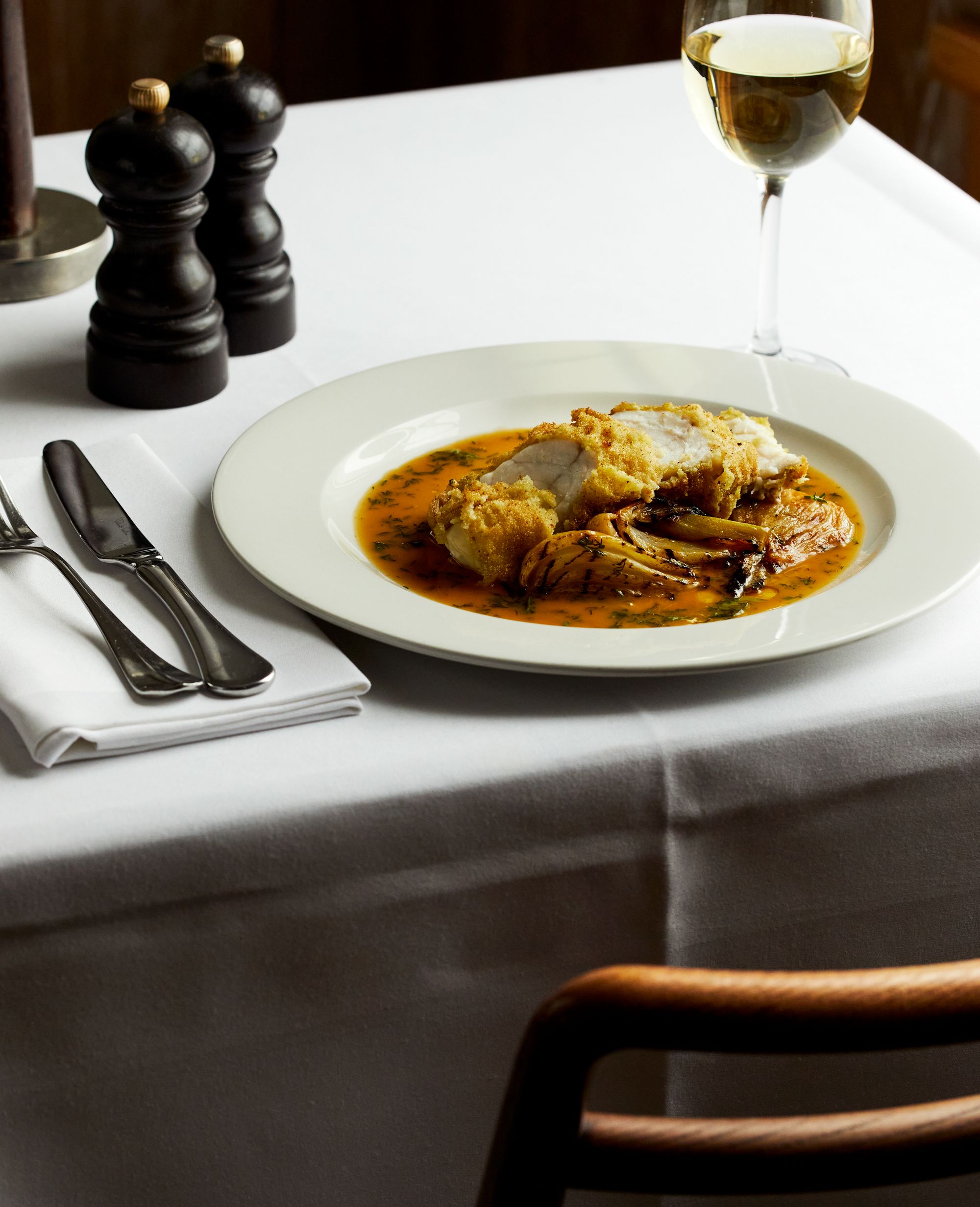
“This recipe has stood the test of time; and again it is influenced by a trip to France,” says Rick Stein. “This time, I’d found a grocer selling new-season garlic (available during late spring and early summer). It occurred to me that that would make a delicious dish with fennel. The combination works really well with monkfish.”
Serves: 4
Ingredients:
16 large garlic cloves, peeled (new season, if possible)
100g semolina
15g fennel-herb sprigs
100g unsalted butter
2 fennel bulbs, thinly sliced
600ml fish stock
4 pieces of prepared monkfish fillet, each about 225g
4 tbsp sunflower oil
2 tsp lemon juice
A splash of Pernod
Salt and freshly ground black pepper
Method:
1. Slice two of the garlic cloves and put them with the semolina and all but one fennel sprig into a food processor and blend until you have an aromatic pale-green powder. Set aside.
2. Cut the remaining garlic cloves lengthways into long, thin pieces. Melt half the butter in a pan, add the fennel bulbs and garlic and fry over a medium heat for 10 minutes to lightly brown. Add half the stock, season, and simmer for 15 minutes until the fennel is tender. Pre-heat the oven to 200C/180C fan. Coat the pieces of monkfish in the semolina mixture.
3. Heat the oil in an ovenproof frying pan over a medium heat. Add a small knob of the remaining butter and all the monkfish and fry, turning now and then, until golden all over (about three to four minutes altogether). Transfer the pan to the oven and bake the monkfish in the hot oven for a further eight minutes until cooked through.
4. Remove the pan from the oven, lift the fillets on to a chopping board, and rest them for four to five minutes. Cut each diagonally into thick slices, keeping each fillet in shape. Transfer to a plate and keep warm.
5. Finely chop the remaining fennel herb. Add the sautéed fennel mixture, lemon juice, Pernod, remaining stock and chopped herb to the empty monkfish pan over a high heat. Simmer rapidly to reduce, then add the remaining butter, simmering to melt and combine to make a rich sauce. Adjust the seasoning, if necessary. Lift the fish onto four warmed plates and spoon some sauce around each to serve.
Tips and wine notes from Rick’s sons Jack and Charlie Stein:
Jack’s chef notes:
Monkfish was an under-appreciated fish in the Eighties, when Dad first brought it on to the menu. This dish is a favourite of the chefs, because it requires perfect braising of the fennel and garlic, perfect sauce work with the emulsion, and then cooking the monkfish to the perfect 50C, resting it, and the satisfaction of slicing it, knowing it is just right.
Charlie’s wine notes:
Fennel is a tricky ingredient for wine pairing – the herbaceous and aniseed qualities don’t sit well next to purely fruity wines. And monkfish is a meaty fish, so we need a wine with lots of weight. I’d go for a chardonnay, but maybe a more taut style… perhaps even from an English producer, like the brilliant Danbury Ridge in Essex.
Rick Stein’s classic fish pie
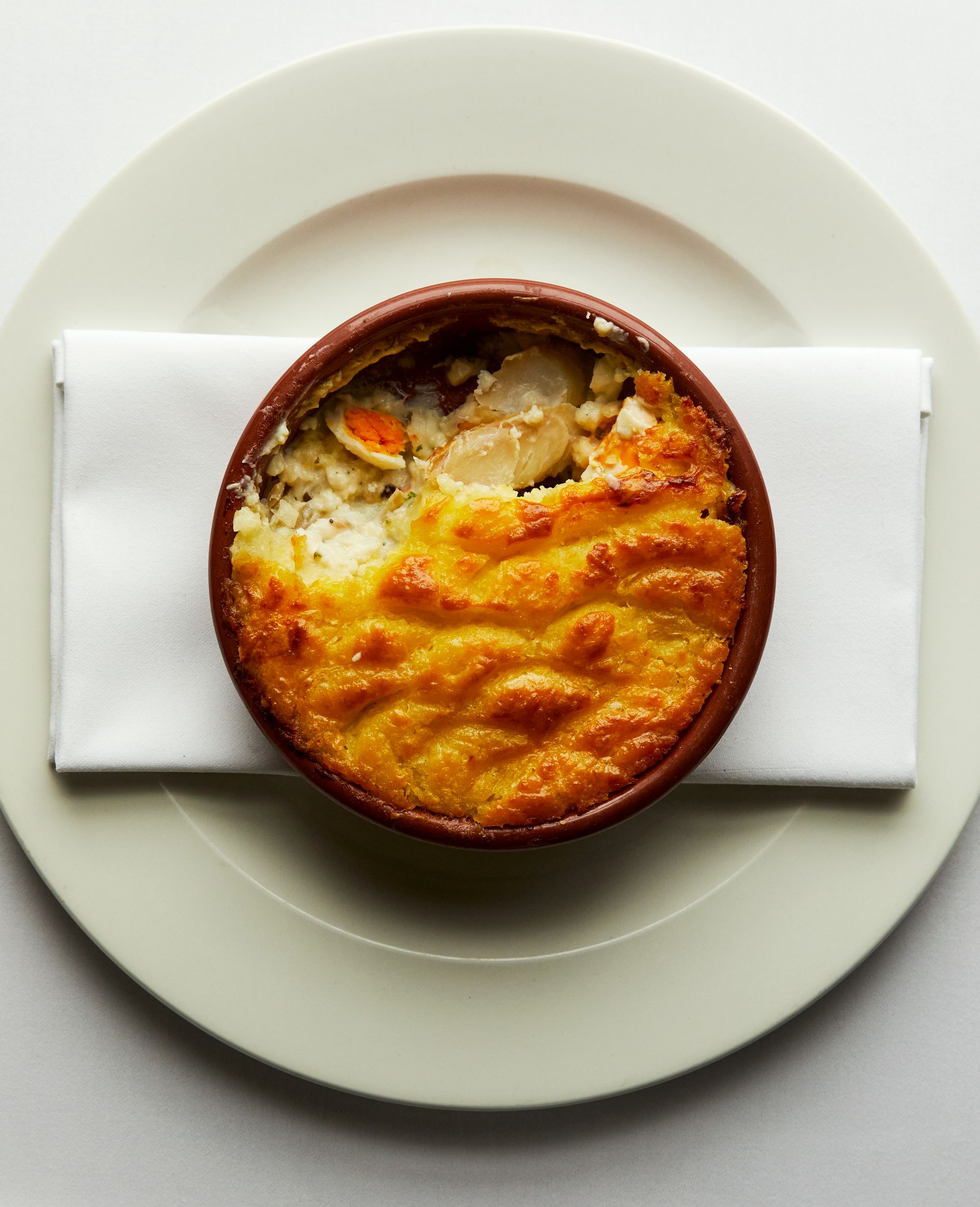
“I grew up eating my mother’s fish pie, which was very like this one, although she didn’t use smoked haddock (but I love its smokiness) and I avoid using salmon,” says Rick Stein. “For a long time, I felt the restaurant didn’t need staples like fish pie; I felt they weren’t restauranty enough. But it’s not true, hearty dishes are exactly what we need sometimes.”
Serves: 4
Ingredients:
1 small onion, thickly sliced
2 cloves
1 bay leaf
600ml whole milk
300ml double cream
450g skin-on cod fillet
225g undyed smoked haddock fillet
4 eggs
100g butter
3 tbsp plain flour
5 tbsp chopped flat-leaf parsley
Freshly grated nutmeg
1.25kg floury potatoes, such as Maris Piper or King Edward, peeled and quartered
1 egg yolk
Salt and freshly ground
White pepper
Method:
1. Stud a couple of onion slices with the cloves. Put these in a large pan with the bay leaf, 450ml of the milk, and the cream, cod and smoked haddock. Bring the liquid just to the boil, then simmer for eight minutes. Lift the fish out on to a plate and strain the cooking liquor into a jug. Set both aside, leaving the fish until it is cool enough to handle.
2. Meanwhile, hard-boil the eggs for just eight minutes. Drain them and leave to cool. Peel the cooled eggs, and cut them into chunky slices.
3. Break the cooled fish into large flakes, discarding the skin and any stray bones. Sprinkle the flakes over the base of a shallow 1.75-litre ovenproof dish. Arrange the egg on top.
4. Melt 50g of the butter in a pan over a medium heat. Add the flour and cook for one minute. Off the heat, gradually stir in the reserved cooking liquor. Return the pan to the heat and bring the liquid to the boil, stirring all the time. Simmer gently for 10 minutes to cook out the flour, then remove the pan from the heat once more, stir in the parsley and season with nutmeg, salt and white pepper. Pour the sauce over the fish and leave to cool. Chill in the fridge for one hour.
5. Meanwhile, boil the potatoes for 25-30 minutes until tender. Drain them, then tip them back into the pan and mash with the rest of the butter and the egg yolk. Season with salt and freshly ground white pepper. Beat in enough of the remaining milk to form a soft, spreadable mash. Pre-heat the oven to 200C/180C fan.
6. Spoon the potato over the filling and mark the surface with a fork. Bake for 35-40 minutes until piping hot and golden brown on top.
Tips and wine notes from Rick’s sons Jack and Charlie Stein:
Jack’s chef notes:
This is a classic fish pie that came back on to the menu after Dad made Seafood Lovers’ Guide for TV, at around the turn of the millennium. Like he says, sometimes comfort is everything we’re looking for.
Charlie’s wine notes:
Talk about comfort. I don’t mess around with matches when it comes to fish pie – reach for a complementary, buttery chardonnay.
Rick Stein’s squid, mint and coriander salad with roasted rice
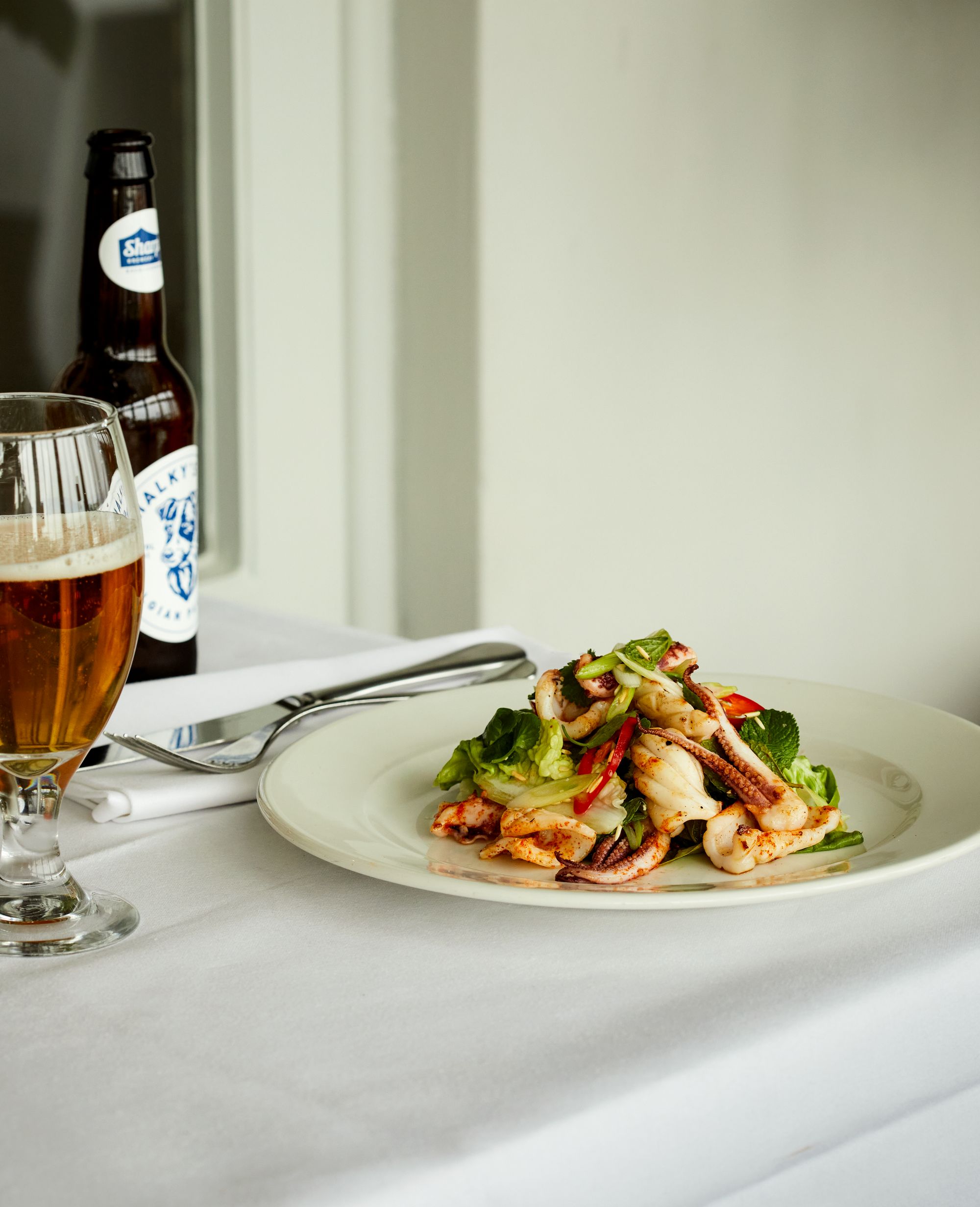
“This is a memorable dish for me – the result of our trip to Thailand in 1986,” explains Rick Stein. “It was an early means to show off the excellence of the great squid we have in Cornwall in a simple and fresh way. It’s also quite hot with red chilli. The crisp, roasted rice was something I’d never come across before, giving a pleasing crunch to the salad.”
Serves: 4
Ingredients:
225g prepared small squid
2 tbsp groundnut oil
A good pinch of cayenne pepper
2 tbsp long-grain rice
1 Romaine lettuce heart, cut across into wide strips
4 spring onions, trimmed, halved and finely shredded
A handful of mint leaves
A handful of coriander sprigs
Salt and freshly ground black pepper
For the dressing:
1 red finger chilli, thinly sliced into rings
50ml white wine vinegar
Juice of 1 lime
2 tbsp Thai fish sauce (nam pla)
½ tsp caster sugar
1 lemongrass stalk, outer leaves removed and the core very finely chopped
Method:
1. Cut along one side of each squid pouch and open it out flat. Score the inner side into a diamond pattern with the tip of a small, sharp knife, then cut the squid into 5cm squares. Separate the tentacles, if large. Season with a little salt and pepper.
2. Start the dressing: in a bowl cover the chilli slices with the vinegar and leave them to steep for 30 minutes. Meanwhile, heat the oil in a wok. Add the squid and stir-fry for two minutes. Transfer the squid to a plate, sprinkle with the cayenne and leave to cool, but don’t refrigerate.
3. While the squid is cooling, heat a small, heavy-based frying pan over a high heat. Add the rice and toss for a few minutes until it is richly browned and smells nutty. Tip the rice into a mortar or mug and pound it with a pestle or the end of a rolling pin to break it up. Don’t grind it into fine powder.
4. To serve, toss together the lettuce, spring onions, mint and coriander and spread the salad out on a large oval platter. Scatter over the squid and any oil left in the pan.
5. Lift the chilli slices out of the vinegar (keep the vinegar for the next time). Mix the slices with the rest of the dressing ingredients and two tablespoons of water. Spoon this over the squid and sprinkle with the roasted rice. Serve straight away.
Tips and wine notes from Rick’s sons Jack and Charlie Stein:
Jack’s chef notes:
Scoring and cooking the squid to get the right colour is really important with this dish. The sauce is so well balanced – it’s the kind of sauce chefs will put on staff tea to increase the flavour.
Charlie’s wine notes:
A light and aromatic dish, this salad needs something equally light as a pair… I’m thinking a crisp and fresh Vinho Verde from Portugal.
‘The Seafood Restaurant Cookbook’ by Rick and Jill Stein (Jon Croft Editions, £35).



