


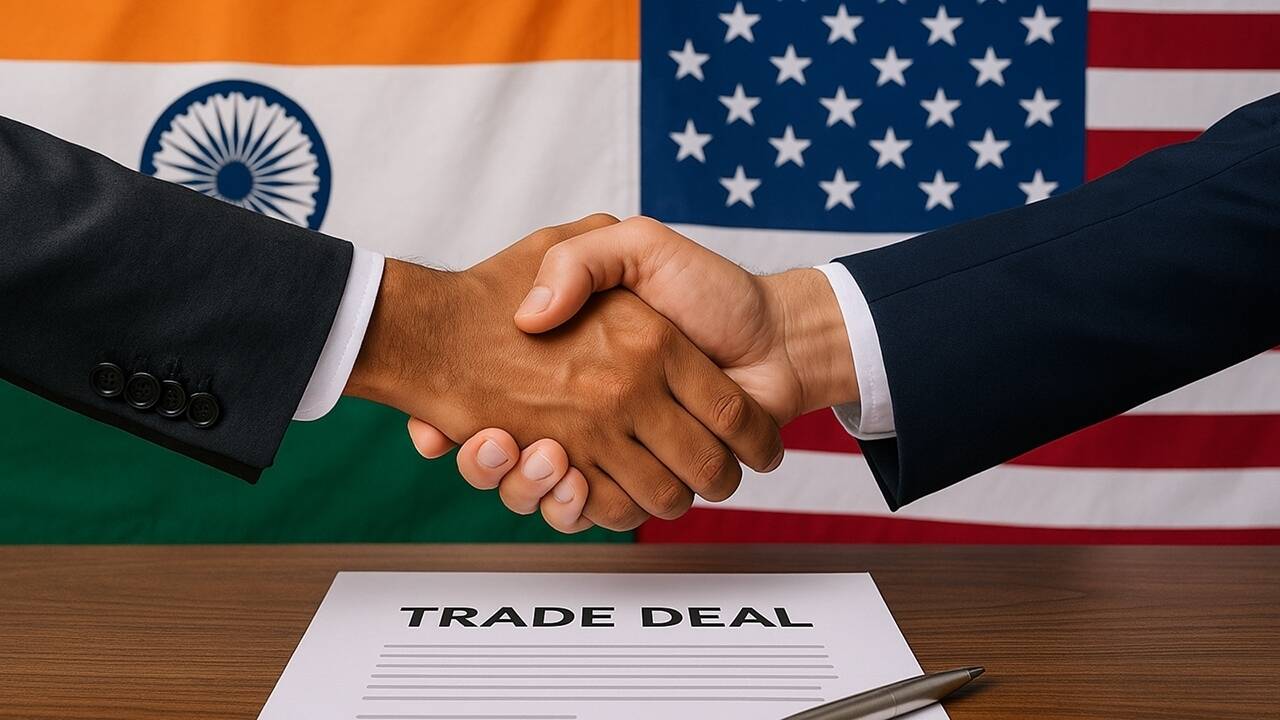
The comprehensive India-US trade deal can reshape India’s economic growth path, economist and author Surjit Bhalla has said. According to him, the significance of an India-US trade agreement extends well beyond the issue of trade balances. India and the US are in the process of finalising the first phase of a bilateral trade deal.The trade deal has the potential to boost competitiveness and accelerate India’s journey towards becoming a developed nation, Surjit Bhalla said in an interview to ANI. However, he warned that prolonged delays in concluding such an agreement would ultimately work to China’s advantage.Bhalla described the absence of a bilateral trade pact with the US as one of India’s biggest policy shortcomings over the past three decades. He attributed the delay to resistance from entrenched interests within the country’s policymaking establishment.“There is only one policy in my view… a major trade deal with the US. That will unleash animal spirits… and make us an important player in the global stage. Until we are an important player in the global stage, we’re not going to achieve any of our ambitions,” Bhalla said.Also Read | Fresh Trump tariff threat looms: India’s strong stand on US Section 301 probe that proposes 12.5% duties – explained“The trade deal with the US is not just about trade surplus. It is about markets, technology, etc,” he added.Bhalla pointed out that India already enjoys one of its largest trade surpluses with the United States.“If you take the trade surplus with the US and compare it to the aggregate trade surplus of Japan, the EU and the UK, it’s four times. One is about 70 billion and the other is about 15 billion.”He also questioned why negotiations have failed to produce an agreement despite being under discussion for decades.“We’ve been talking about a trade deal with the US for 30 years… I think one needs to really examine why it hasn’t happened. And I think it’s very much the deep state.”Bhalla argued that a trade agreement with the US would increase competition in the domestic market by exposing established Indian companies to stronger global rivals, reducing the advantages they currently enjoy in a relatively protected environment.“If you have a trade deal with the US, everybody will agree that we will become a lot more competitive… Then the major firms in India will not be so comfortable anymore. They will have competition.”
Delay in India-US trade deal: Advantage China
Bhalla also argued that the prolonged delay in finalising a trade agreement has broader geopolitical consequences.“There is one country that really benefits from the lack of a trade deal between India and US and that’s China.”He stressed the need for greater transparency in economic policymaking, saying there should be a more open discussion on the impact of major policy decisions and who stands to gain or lose from them.“We should be able to have an open conversation of who benefits, who loses, from which actions. That we don’t have.”When asked what advice he would give PM Narendra Modi if he were to return as an economic adviser, Bhalla said: “Trade deal with the US, 100%. Without thinking.”According to Bhalla, the benefits of such an agreement would extend well beyond trade alone.“It will unleash competition, unleash the competitive urge. It will remove comfort. It will remove complacency.”He also maintained that trade agreements with other major economies cannot serve as a substitute for a comprehensive pact with the United States.“The UK trade deal doesn’t do any of that. The Japanese trade deal doesn’t do any of that. The EU trade deal doesn’t do anything of that.”Bhalla reiterated that if India intends to achieve developed economy status by 2047, it must expand its focus beyond the domestic market and deepen its engagement with the global economy.



