


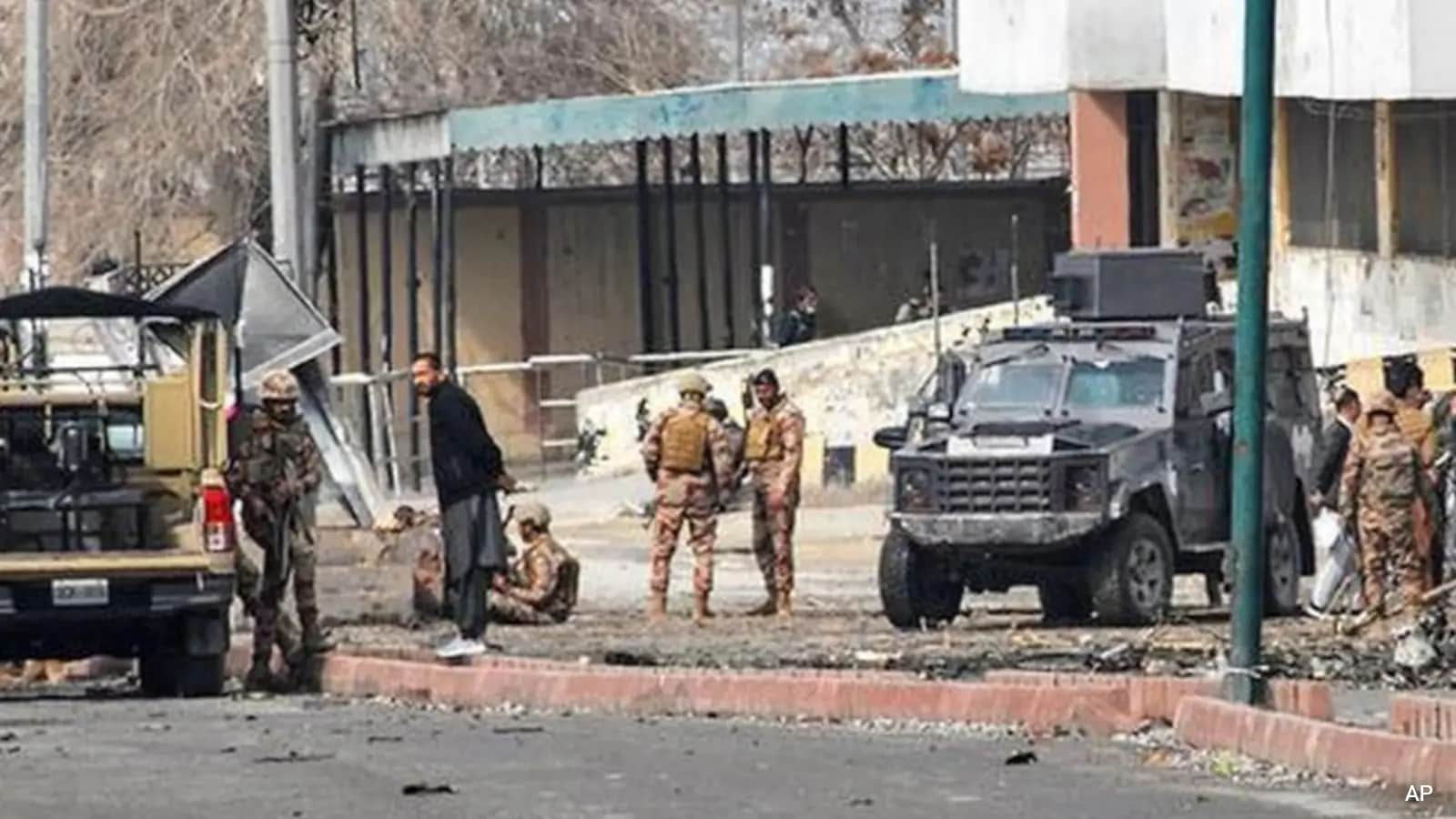
Pakistan, which played a key role in efforts to halt war between Iran and the United States, is embroiled in a massive, never-ending war within its own borders.
Just how bad is it?
According to an April 2026 report by the Pakistan Institute for Conflict and Security Studies (PICSS), Pakistan ranked first on the Global Terrorism Index for the year 2026. The country saw 1,045 incidents and 1,139 deaths in 2025 alone, the highest fatality level in over a decade.
A major driver of this bloodshed is the resurgence of the Tehreek-i-Taliban Pakistan (TTP), an alliance of militant networks formed in 2007 to unify opposition against the Pakistani military, which accounted for over half of these deaths.
In 2024, the country experienced 521 internal attacks that claimed the lives of 358 security personnel. Today, the violence is largely concentrated in Khyber Pakhtunkhwa and Balochistan.
But what is actually fueling this endless unrest?
The Root Cause: The Dominance of “Punjab-istan”
Pakistan is made up of four main provinces: Punjab, Sindh, Balochistan, and Khyber Pakhtunkhwa (KP). However, over the years, critics and locals have started calling the country “Punjab-istan.”
The reason is simple: Punjab’s dominance over the rest of the country is absolute. Just look at the numbers: while it accounts for nearly 26% of Pakistan’s total land area, it holds 51% of the population and generates a massive 60% of the national GDP. This economic might translates directly into political power Punjab single-handedly holds 173 out of 336 seats (51.5%) in the National Assembly.
From the military and bureaucracy to the economy (and even the cricket team), Punjabis heavily dominate the system. This centralised control has left the other states feeling deeply marginalised. Grievances over unequal resource distribution and a severe lack of provincial autonomy have fueled ethnic and nationalist insurgencies across the country.
Let’s break down the crisis, province by province.
Balochistan: A Wealthy Land with Poor People
The conflict in Balochistan is the oldest, dating back to a revolt in 1948 just a year after Pakistan was formed. The Baloch people claim Islamabad annexed their land illegally. For decades, they have demanded independence, control over their own natural resources, and the protection of their distinct culture.
The contrast with Punjab is shocking. Geographically, Balochistan makes up 44% of Pakistan’s land area, but it gets just 20 seats (6%) in the National Assembly. Here is the bitter irony: Balochistan is Pakistan’s richest province in terms of natural gas, coal, copper, and gold. It is also the central hub for the China-Pakistan Economic Corridor (CPEC). Yet, its direct contribution to the national GDP is a mere 5%. Worse, a staggering 70% of its population lives below the poverty line, the highest in the country.
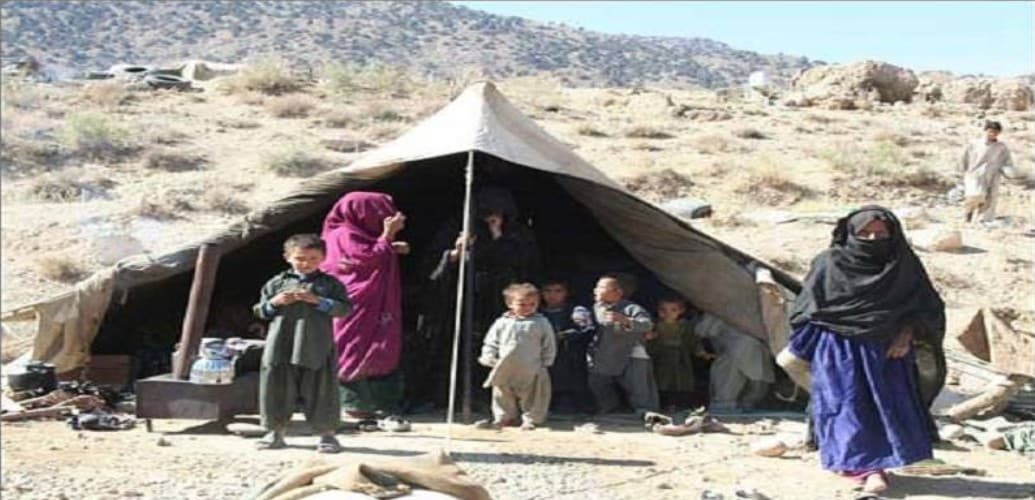
Baloch people
Locals allege that foreign investments, especially Chinese megaprojects, are designed to grab Balochistan’s wealth to serve the Punjabi elite. This anger has birthed militant separatist groups like the Balochistan Liberation Army (BLA) which boasts around 6,000 fighters along with the BLF, UBA, and BRA. The violence is brutal: in July 2026, fighters killed 42 people (including 27 police officers) at a dam project in Ziarat. Earlier, in March 2025, they hijacked a passenger train, holding over 400 people hostage.
Khyber Pakhtunkhwa: The Frontline of Terror
Bordering Afghanistan, Khyber Pakhtunkhwa (KP) has been a hotspot for violence since the 2001 US invasion of Afghanistan forced militants across the border. The region has seen a sharp spike in violence since the Afghan Taliban took over Kabul in 2021.
While KP holds about 17% of Pakistan’s population and 13.4% of its assembly seats, 48% of its people live in poverty. The unrest here is largely driven by Islamist militancy, spearheaded by the TTP, the Islamic State Khorasan Province (ISKP), and the Hafiz Gul Bahadur Group.
It is important to note that the TTP is entirely separate from the Afghan Taliban. Their main goal is to push Islamabad out of KP and impose Sharia law. Their attacks are relentless, ranging from the December 2025 ambush in Karak that killed five police officers, to a horrific militant attack in November 2024 that left 42 people, mostly Shias, dead in the Kurram district.
Sindh’s Water Crisis: A Disaster in the Making
Sindh’s story is a tragic fall from grace. Rooted in the ancient Indus Valley Civilization and blessed with access to the Arabian Sea, it was historically a prosperous hub of trade and agriculture. Today, poverty stands at 45%.
Irrigated agriculture is the backbone of Sindh’s rural economy, covering 77% of its farmland. But the province is currently facing a massive 62% water shortage. Bad governance and crumbling infrastructure mean over 40% of canal water is lost to seepage and evaporation. Furthermore, 78% of the groundwater is highly saline, degrading the soil and ruining crops. Add the extreme summer temperatures of 42 degrees Celcius and above, and the demand for water becomes a matter of survival. According to the Global Climate Risk Index, Pakistan is among the top 10 countries most vulnerable to climate change, accelerating Sindh’s agricultural collapse.
A major flashpoint was a controversial canal project that pitted the provinces against each other. In July 2024, President Asif Ali Zardari co-chairman of the Pakistan Peoples Party (PPP) approved the construction of “six strategic canals,” pitchforking them as vital for agricultural development and food security. When the Cholistan Canal was inaugurated in February 2025, Sindh erupted in massive protests, fearing the project would divert its essential water to upstream Punjab. The PPP, which governs Sindh but is allied with the federal government, was caught in the crossfire. The intense public backlash eventually forced the project to be put on hold in August 2025, but the deep-seated anger it exposed remains highly volatile.
Gilgit-Baltistan: The State Without a Voice
Up north lies Gilgit-Baltistan (GB), an autonomous, resource-rich region bordering China, India, and Afghanistan. Part of the former princely state of Jammu and Kashmir, GB has been under Pakistani control since 1947 but lacks full constitutional status.
The people here have no representation in Pakistan’s parliament. While the federal government exploits GB’s massive hydropower and mineral resources for national benefit, the locals are left dealing with unemployment and prolonged power outages.
Frustration has boiled over into protests led by local activists and groups like the Balawaristan National Front. In February 2025, thousands blocked the Karakoram Highway for over a week to protest the Diamer-Basha Dam. A few months later, in April, locals in Shigar protested land grabs and mining leases handed over to non-locals and Chinese firms.
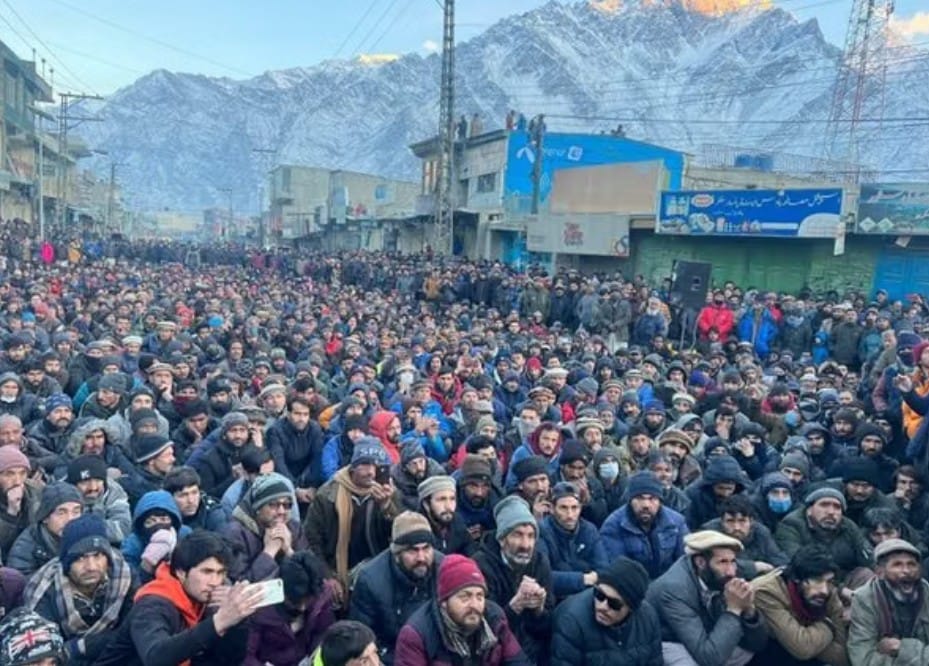
Pakistan-Occupied Kashmir’s Gilgit-Baltistan
Missing Voices: The Dark Reality of Enforced Disappearances
Instead of addressing these deep-rooted issues of economic disparity and political exclusion, Islamabad has largely relied on military crackdowns.
The most disturbing outcome of this is the epidemic of “enforced disappearances.” Activists, especially from Balochistan and KP who speak out against resource exploitation, frequently go missing. According to the government’s own Commission of Inquiry on Enforced Disappearances (COIED), over 10,500 cases were reported between 2016 and 2024. Independent human rights organizations argue the actual numbers are much higher. Baloch separatists alone claim that more than 5,000 of their people have vanished over the decades.
Until Islamabad stops treating its own provinces as resource colonies and starts focusing on genuine political inclusion and human rights, Pakistan will remain a country at war with itself.



, Pakistan ranked first on the Global Terrorism Index for the year 2026. The country saw 1,045 incidents and 1,139 deaths in 2025 alone, the highest fatality level in over a decade.)