


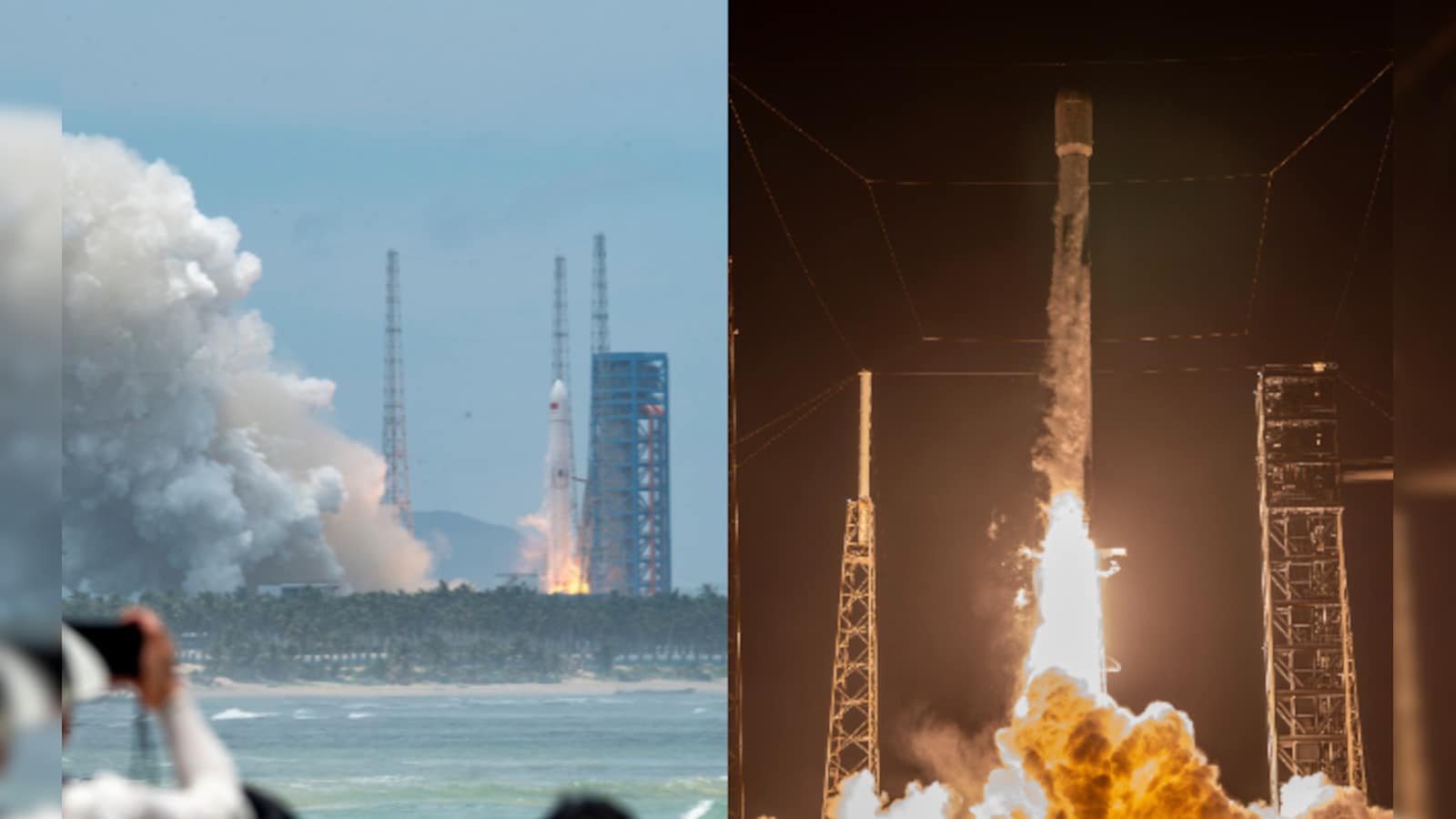
On Friday, off the coast of Hainan, a Long March-10B booster separated from its upper stage, descended vertically over the South China Sea, and was caught by a cable-net system mounted on a recovery vessel, the world’s first sea-based net capture of an orbital rocket. It caught the world by surprise, ending America’s monopoly on reusable rocket technology.
This is the latest piece of evidence for a much larger theme. For nearly three decades after the Cold War, the world operated under an implicit tech hierarchy. America invented. China manufactured. Everyone else consumed. Silicon Valley generated breakthrough ideas, Wall Street financed them, and Chinese factories turned them into products for the global market.
Advertisement – Scroll to continue
That hierarchy is dissolving. Across artificial intelligence, advanced semiconductors, electric vehicles, batteries and commercial space, China is no longer merely scaling technologies pioneered elsewhere. It is building a parallel innovation ecosystem, one capable of challenging assumptions about American tech leadership that have held since the 1990s.
This is neither an argument that China has overtaken America, nor a prediction that it inevitably will. The United States retains the world’s reserve currency, unmatched capital markets, and an unrivalled ability to take risks and attract entrepreneurial talent. But the defining geopolitical story of the post-Covid world is that the world no longer depends on a single tech engine. And what distinguishes the US and China is philosophy as much as geography.
Silicon Valley optimises for discovery: scientific breakthroughs, venture capital, companies that promise to reshape the future. China’s system optimises for deployment: manufacturing depth, supply-chain integration, relentless cost reduction. One asks how quickly a company can become worth a hundred billion dollars. The other asks how quickly a technology can be industrialised.
Artificial intelligence offers the clearest illustration. America’s AI race has become a contest over ever-larger models and never-seen-before capital expenditure, with OpenAI, Anthropic, Google and Meta pushing the frontier. China’s response has followed a different logic: DeepSeek has shown that highly capable models can be engineered for efficiency, while Alibaba’s Qwen has expanded as an open-weight alternative adopted well beyond China. Beijing has built a parallel ecosystem to American frontier AI, organised around affordability and industrial adoption rather than computational abundance alone.
The same divergence shows up in semiconductors, where Washington’s export controls, intended to slow China’s AI ambitions, instead accelerated Beijing’s push for domestic alternatives. Huawei’s growing AI ecosystem aims not just at building another accelerator chip but at reducing dependence on the software and supply chains underpinning American dominance.
In electric vehicles, Tesla made software central to the driving experience, while BYD, through vertical integration and cost discipline, has made execution, scale and cost the decisive factors.
In space tech, SpaceX remains the pioneer of reusable launch. But the question is no longer whether China can participate. It is whether a different engineering path, backed by state-owned enterprise, can compete on its own terms.
Remember, while the popular telling of the Apollo programme celebrates American private enterprise defeating Soviet central planning, the record is more nuanced. The US reached the Moon by combining scientific excellence with one of the largest state-directed industrial mobilisations in modern history. At its 1966 peak, NASA consumed as much as 4.4 per cent of the federal budget. The lesson was that breakthroughs must be matched by industrial execution. China appears to have absorbed that lesson, building a system that places manufacturing capability, engineering talent and deployment at the heart of it all.
That is an understudied part of China’s rise. The US has measured technological success largely through market capitalisation: Nvidia, Apple, Microsoft and 11 others crossing trillion-dollar valuations. OpenAI has become one of the world’s most valuable private companies. China’s tech firms are judged less by valuation than by their ability to build fast, cut costs and capture global market share. Beijing treats tech less as a financial asset than as industrial infrastructure, which explains why China is simultaneously competitive in batteries, EVs, drones, solar panels, high-speed rail, robotics and increasingly AI. Intense domestic competition, often marked by brutal price wars, compresses profits but produces firms exceptionally well prepared for global competition.
Despite all this, America has inherent strengths. The US remains the world’s foremost source of scientific discovery and frontier research. Its universities, laboratories and venture ecosystem still produce tech that shapes the future. But China’s ability to match the most cutting-edge US tech within quarters, sometimes weeks, is nothing but Cold War redux wrapped in a new avatar.
Yet, in so many ways, this rivalry differs fundamentally from the Cold War. The Soviet Union competed from behind an economic wall. Its tech rarely became integral to global supply chains. China competes from inside the global economy, simultaneously America’s principal strategic competitor and one of the world’s most deeply embedded manufacturing powers. Even as Washington pursues export controls, tariffs and industrial policy, global supply chains remain intricately linked to Chinese production. Remember, goods may be assembled in Vietnam or even Mexico, but the majority of critical components and processes still trace back to China.
The implications extend well beyond Washington and Beijing. Countries across Southeast Asia, the Middle East, Africa and Latin America increasingly find themselves choosing between two tech ecosystems, and for many the decision is purely economic. They will adopt whichever tech is more affordable, scalable and suited to their development needs.
India occupies the most consequential position among them. It can outcompete China in services, but is still building the physical infrastructure, semiconductor base, and digital public infrastructure that a tech power needs. Unlike China, India cannot rely on just a state-directed model to get there. As the world’s most populous nation, it must lift hundreds of millions out of poverty even as it competes at the tech frontier. The contrast is telling: as China tests reusable rocket, India is preparing to launch its first privately built orbital rocket.
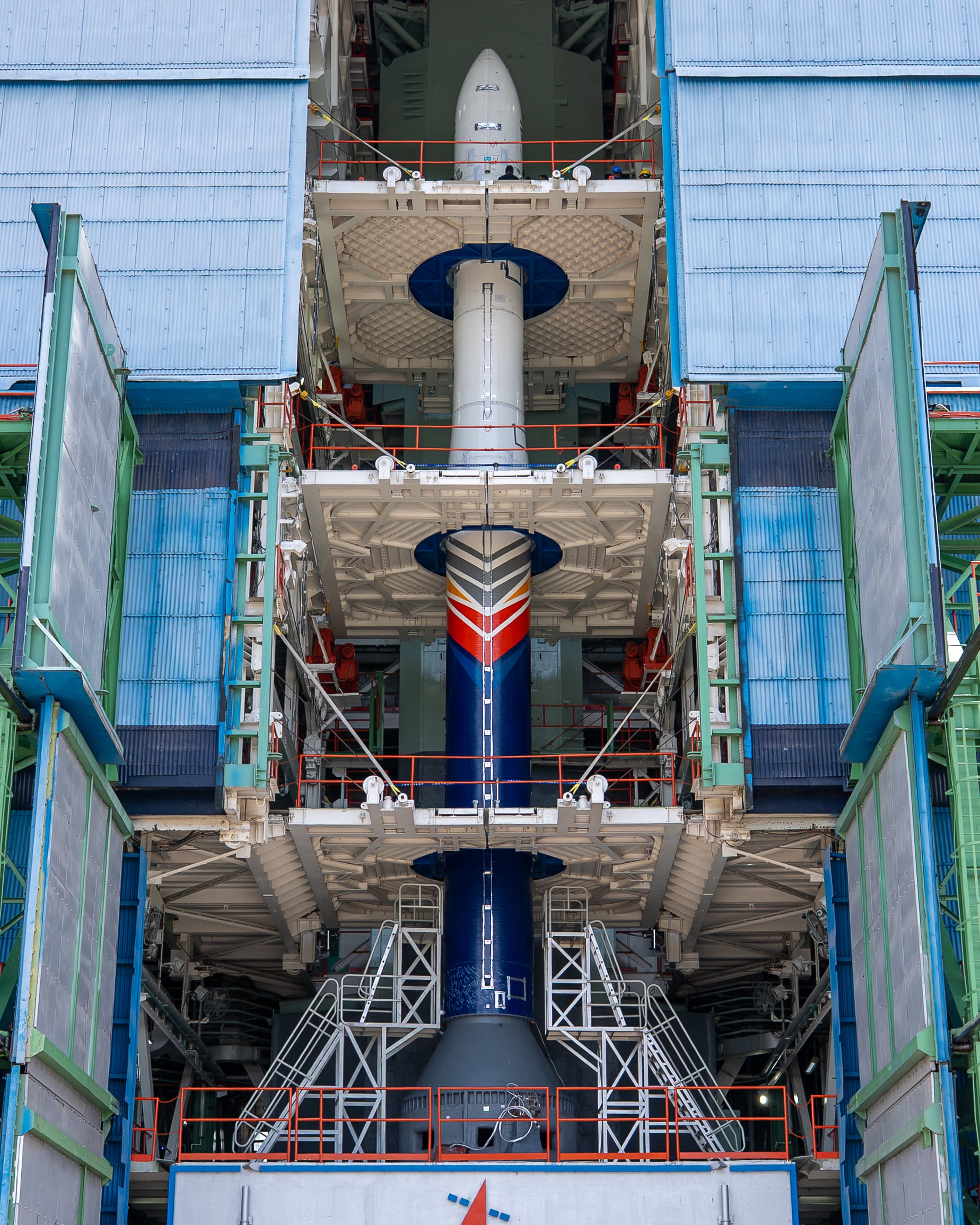
Image credit: x.com/@SkyrootA
The larger constraint is geopolitical. China’s manufacturing rise was powered by decades of access to the American market. Washington today is far more inward-looking, and its trade and tech policies often disadvantage strategic partners such as India. One such example is America’s reluctance to give allies genuine access to frontier AI compute and advanced chips. Those restrictions have not stopped China from building formidable AI capability of its own. They have, however, slowed a country like India, whose comparative advantage lies precisely in software and model layers. Washington should rethink this approach. A technologically stronger India is not a concession. It is a strategic necessity for balancing China over the long run.
The defining geopolitical story of the post-Covid world is that for the first time since the Cold War ended, the world is home to competing tech systems capable of shaping the future. The first Cold War was decided by who could build the superior tech, including in space and the military. This one may be decided by who can industrialise it faster, manufacture it cheaper, and deploy it at global scale.
The Long March booster settling onto its net over the South China Sea is a vivid reminder of exactly that. For three decades, the world assumed the next great breakthrough would inevitably come from America. That assumption may no longer hold.



