


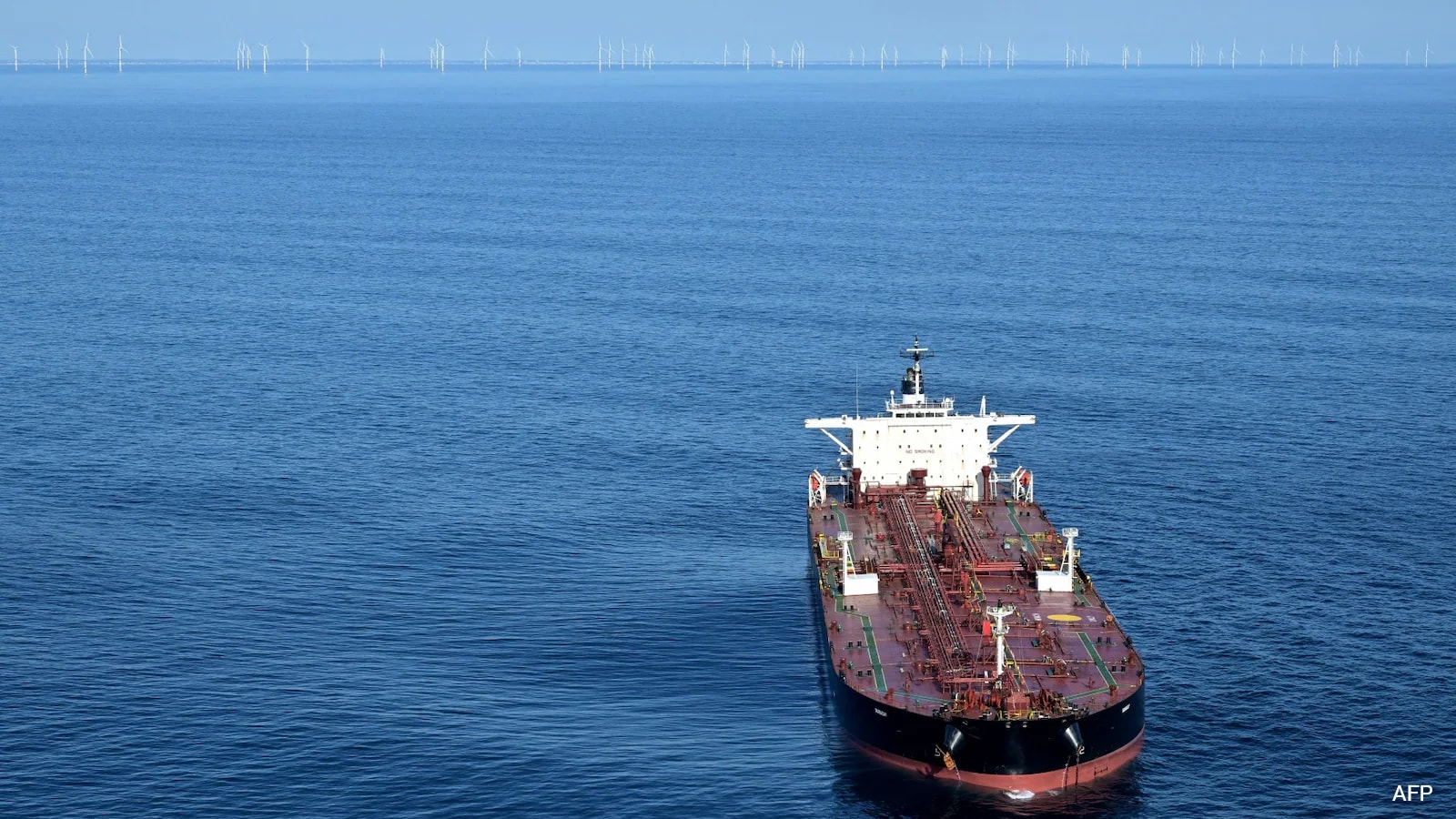
Russia’s sanctioned oil tankers are avoiding the English Channel and taking longer routes around northern Scotland following Britain’s seizure of a vessel from Moscow’s “shadow fleet” last month.
The longer route is adding days to voyages and increasing costs as sanctioned tankers seek to avoid the risk of seizure, according to the British newspaper The i Paper.
The oil tanker seized in the English Channel had remained anchored off the Dorset coast for nearly two weeks under the supervision of national and local authorities, the BBC reported in June.
Tankers switch routes after UK action
Around two-thirds of sanctioned tankers blacklisted for violating international sanctions passing through British waters used the English Channel in the 13 days before Royal Marines boarded the Smyrtos.
However, in the 13 days, only about a quarter of blacklisted vessels continued to use the Channel, with most choosing the longer route around the northern coast of Scotland, according to data from Starboard Maritime Intelligence.
English Channel seen as a ‘choke point’
According to Gonzalo Saiz Erausquin, a research fellow at the Royal United Services Institute (RUSI), the UK government’s tougher stance on shadow fleet operations had already made the English Channel a risky “choke point”, and the June 14 operation further reinforced those concerns. He said vessels taking the Scottish route face longer sailing times and higher costs, forcing the shadow fleet to rethink its traditional shipping routes.
Shadow fleet continues despite rising interceptions
Despite changing routes, analysts say the number of sanctioned tankers operating within the UK’s Exclusive Economic Zone (EEZ) has continued to rise, indicating that Russia is likely to keep relying on its shadow fleet.
The fleet consists of hundreds of ageing, often uninsured vessels with opaque ownership that transport Russian oil sold in breach of the G7 price cap imposed after Moscow’s 2022 invasion of Ukraine.
Many of these vessels operate under false flags and outside standard maritime regulations, allowing Russia to evade sanctions and continue funding its war in Ukraine. Sailing as stateless vessels also makes them liable to seizure, as Britain and other countries can board them under United Nations regulations.
Since 2024, authorities in countries, including France, Sweden, Estonia, Belgium, Germany and Finland, have seized around a dozen shadow fleet tankers, with interceptions increasing sharply in recent months.
Russia exploring alternative routes
According to Luke Wickenden, an analyst at the Centre for Research on Energy and Clean Air (CREA), crude oil remains Russia’s largest export revenue source, making the shadow fleet critical to maintaining sales outside the G7 price cap.
Erausquin said an increasing number of shadow fleet vessels are avoiding the English Channel and other “pinch points”, including the Strait of Gibraltar, to evade potential seizure. He added that a few vessels have even sailed around Africa to avoid the Mediterranean Sea.



