


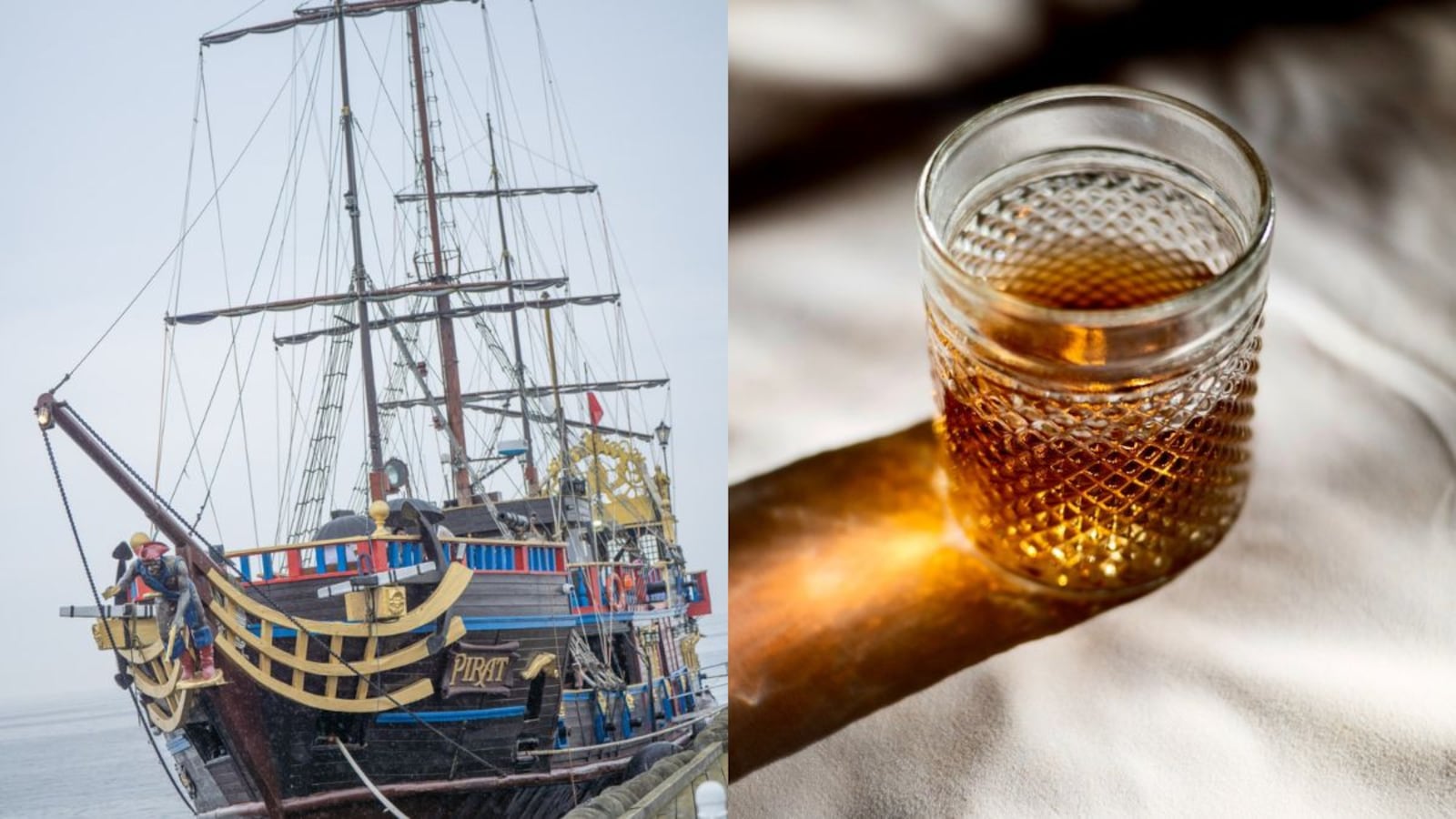
When someone says “pirate”, chances are the first image that pops into your head is someone with an eye patch, a treasure chest, and a bottle of rum in hand. From Treasure Island to Pirates of the Caribbean, rum has become almost inseparable from pirate culture. The famous line, “Yo-ho-ho, and a bottle of rum!” has only made the connection stronger over the years. But pirates didn’t always drink rum.
In fact, some of history’s most famous pirates probably drank far more wine and brandy than rum. So how did rum become the world’s ultimate pirate drink?
The Myth Everyone Believes
Photo Credit: Pexels
Ask almost anyone what pirates drank, and the answer is almost always rum. It’s easy to see why. Movies, books, television shows, and even rum bottles often feature pirates. Brands use pirate ships and treasure maps on their labels, making it seem like rum was always the pirates’ first choice.
But according to historians, pirates weren’t particularly loyal to one drink. They simply drank whatever alcohol they managed to steal. When the Golden Age of Piracy began in the late 1600s, rum hadn’t yet become the dominant spirit of the Caribbean. Many pirates spent their time attacking Spanish ships and settlements that usually carried wine and brandy.
So when pirates looted Spanish ships, they usually found barrels of wine and brandy instead. Clearly, pirates weren’t choosing drinks, they were taking whatever they found. Once rum became widely available, they drank plenty of that too.
Also Read: Assam Chief Minister Praises Karbi Anglong’s Giant Queen Pineapple, Calls It ‘To Die For’
So When Did Rum Become The Pirates’ Favourite Drink?
Everything changed in the early 1700s. Karishma Manga Bedi, Founder & CEO of Those Good Distillers and the creator of IDAAYA Rum, says the popular pirate story misses a much bigger picture. “Rum only became closely associated with piracy in the early 1700s, later than most people assume, once Caribbean sugar production was booming and rum was simply the most abundant, most easily plundered spirit on any ship sailing those waters.”
Soon, merchant ships were transporting barrels of rum between islands, Europe, and the Americas. For pirates, suddenly, rum was suddenly everywhere. Soon, rum became part of pirate life because it was the easiest alcohol to steal.
The Role Of British Royal Navy
Photo Credit: Unsplash
Karishma points out that rum’s strongest historical connection wasn’t with pirates at all. She says, “What’s often left out of the story is that rum’s real institutional home wasn’t piracy at all, it was the Royal Navy, which issued it as a daily ration for over two centuries.” In 1731, they officially introduced a daily rum ration for sailors. While fresh water often became unsafe after weeks at sea and beer spoiled, rum stayed drinkable for much longer because of its high alcohol content. However, to stop sailors from drinking too much straight rum, it was mixed with water. This drink became known as grog.
Also Read: Do MasterChef Judges Eat The Food Cold? What The Audience Does Not See
The Rise Of Rum Today
Today’s rum lovers know the spirit has far more to offer than old pirate tales. Rum is made in many different styles across the world, from light and fruity expressions to rich, dark, aged rums. Like whisky or wine, its flavour changes depending on where it’s made, the type of sugar used, the climate, and how long it’s aged. That growing appreciation is changing how people think about rum today.
Speaking about IDAAYA, Karishma adds, “With IDAAYA, we wanted to bring rum back to what it actually is at its best: a spirit of real patience, technique, and provenance, rooted for us in the Himalayas.”
So, Did Pirates Drink Rum?
Early pirates mostly drank wine and brandy because that’s what they found aboard the ships they raided. Rum became their signature drink only after it became the Caribbean’s most common spirit in the early 1700s. Later, books, films, and popular culture turned that historical reality into one of the most famous drinking myths of all time.



