


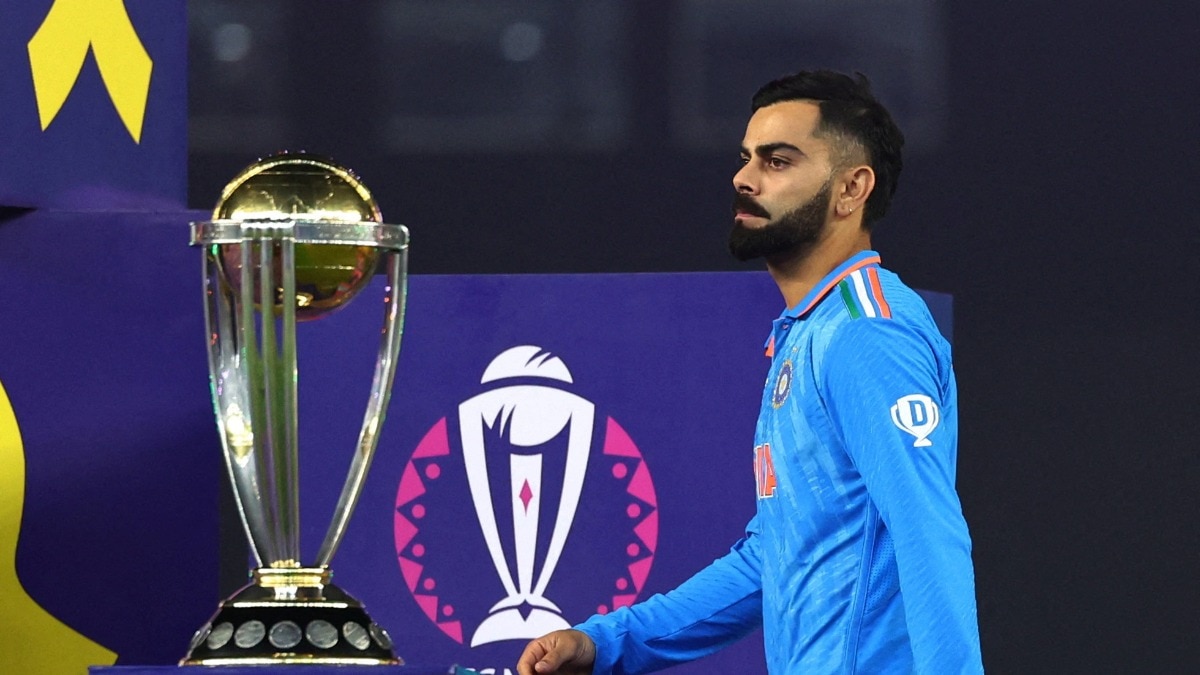
World Cups are built for stars to dazzle. For heroes to fall and cry, and prove they’re superheroes after all. Some show they’re human too. Some collect records, some become GOATs. Messi has done all of it, and Kohli, in his own sport, has too. But that’s only one part of the story. The real romance lives in the underdog. Vozinha, Cape Verde’s goalkeeper, standing between the posts for the third-smallest nation to ever qualify, taking the reigning champions to extra time before bowing out. Nobody wrote that story in advance. That’s what a World Cup is actually for.
And cricket, in its next 50-over edition, is leaving room for none of it.
FIFA clearly understands the assignment. Fresh off running its first 48-team World Cup, a tournament Gianni Infantino is already calling a success on the back of nine of 10 African teams reaching the knockouts, the governing body is now discussing a 64-team edition.
“Every nation should be able to dream of taking part,” Infantino said. UEFA’s Aleksander Ceferin thinks it’s a bad idea. Concacaf’s Victor Montagliani thinks it’s the wrong move for the sport. Fifa is examining it anyway. Whatever you make of the politics behind that push, and there’s plenty to make of it, the direction is unambiguous: wider doors, more countries with something real to play for.
To its credit, cricket has been listening too, at least where the T20 World Cup is concerned. It’s now a 20-team tournament, and the ICC has just approved another expansion for 2028, increasing the Super 10 stage from eight teams to 10 and adding an Eliminator round so second and third-placed sides get one more shot at the semi-finals. That’s real growth, more nations, more matches that matter, more Cape Verdes waiting to happen. Fair play to the ICC for that.
WHY LEAVE ODIs OUT?
Which makes the next bit harder to explain. If associate nations are good enough to be trusted with an expanding, competitive T20 World Cup, why does the tournament everyone still calls the pinnacle of the format, the 50-over World Cup, the one that decides who’s actually the best team in the world, keep shrinking their access to it?
The ICC’s revamped 2027 ODI World Cup is a 14-team tournament that, at the business end, is a 12-team tournament wearing a bigger jersey.
Warning: You’ll need a PhD in mathematics just to follow the ODI World Cup format itself.
The three lowest-ranked qualifiers, currently sitting at 12th, 13th and 14th, will play a round-robin “Super Series” before a ball is bowled in the actual event. Only the winner advances. The other two go home having technically qualified for a World Cup they never got to play a single match in. That isn’t a drafting error. It’s the format, confirmed by the ICC’s own announcement.
Max O’Dowd, the Netherlands opener who has spent his career fighting for associate cricket to be taken seriously, summed up what this feels like from the inside:
He isn’t exaggerating. To even reach the Super Series, teams like the Netherlands, USA, Scotland, Nepal, Oman, Namibia, UAE and Canada spend three years in the Cricket World Cup League 2, playing 36 ODIs apiece across nine triangular series, hosted everywhere from Kirtipur to Windhoek to Dundee. The top four go into a Cricket World Cup Qualifier. Some of those, plus teams from the Challenge League, cricket’s third tier, then fight through a Global Qualifier for the two remaining direct spots. Whoever misses out doesn’t go home either. They get one final audition, the Super Series, against the two other bottom-feeders, for the solitary spot left in the tournament proper.
One X user summarised the whole ordeal better than any ICC press release ever will: “Check how many games leading associates are having to fight to qualify for the ‘global qualifier’, where they then must win top 2 spots to then secure their place for this horrible ‘Super Series’ to then earn the 1 spot opened at the actual World Cup. Not unfair. It’s inhumane!”
Three years. Dozens of matches. Several qualifying layers deep. And the reward for getting through all of it is one more mini-league, where only one of you gets to walk through the door you thought you’d already reached.
ICC’S INDIA vs PAKISTAN OBSESSION
Which brings us to the one fixture this entire format seems built around: India versus Pakistan.
This isn’t a new anxiety. Since 2012, the ICC has arranged its seeding so that India and Pakistan land in the same group at almost every major white-ball tournament, guaranteeing a fixture without ever technically calling it fixed. Football runs its World Cup draw as an actual draw, seeded pots, yes, but a ceremony where the balls come out and nobody in the room controls the outcome.
Cricket doesn’t bother with the theatre. There’s no draw to speak of, no balls, no envelopes, just a seeding table that keeps landing the same two names in the same group, tournament after tournament, and calling it coincidence. That’s the tell. Random is what happens when you actually leave it to chance. This has never once looked random.
The financial logic isn’t subtle either. Reports around the 2026 T20 World Cup, when Pakistan’s government threatened a boycott of the fixture over political tensions, suggested the match’s absence risked an estimated USD 174 million in revenue. That’s the number that explains every seeding decision the ICC has made in the last 13 years. Bilateral cricket between the two nations has been dead since 2013. ICC tournaments are now the only stage left for the rivalry, and the only stage left is precisely the one the ICC controls.
The 2027 ODI World Cup takes that logic and adds a layer. India and Pakistan are expected to be placed in the same group in the 12-team stage, guaranteeing one meeting. If both progress to the Super 7, a genuine round-robin where everyone plays everyone, they meet again automatically, no seeding required, the format does the work by itself. And if both reach the semi-finals, a third meeting becomes possible depending on how the top four are paired off, something that has never happened in a single World Cup before. Two guaranteed, a third plausible, in a format the ICC insists exists purely to “enhance consequence” in the early stages. Convenient, then, that the consequence lands so precisely on the two teams whose fixture alone can make or break a broadcast deal.
Speaking of which. JioStar, the broadcaster paying USD 3 billion for India’s ICC media rights through 2027, has reportedly told the ICC it cannot continue with the deal, citing losses running past Rs 25,000 crore. Faced with the ODI format’s declining relevance, the ICC’s fix isn’t fewer teams or fewer matches, it’s weeding out dead rubbers and manufacturing context for every single game.
Australian journalist Adam Collins put it as well as anyone has.
That’s really the whole story, isn’t it. The ICC can be trusted to widen the T20 World Cup, more teams, more eliminators, more room for the next Cape Verde to turn up and ruin someone’s evening. But hand it the format the sport still calls its pinnacle, and the instinct flips entirely, associate nations get squeezed into a qualifying maze designed to spit most of them back out, while the one fixture that was never going to be left to chance gets guaranteed not once but potentially three times over.
Call it context, call it consequence, call it whatever the press release says this week. It’s neither. It’s a governing body that has worked out exactly which nations pay the bills and which ones simply make up the numbers, and has built a 2027 World Cup that treats both accordingly. Somewhere between Kirtipur and Windhoek, a team had just spent three years and thirty-six matches finding that out the hard way. Cricket didn’t need to make that choice. It made it anyway.
– Ends



