


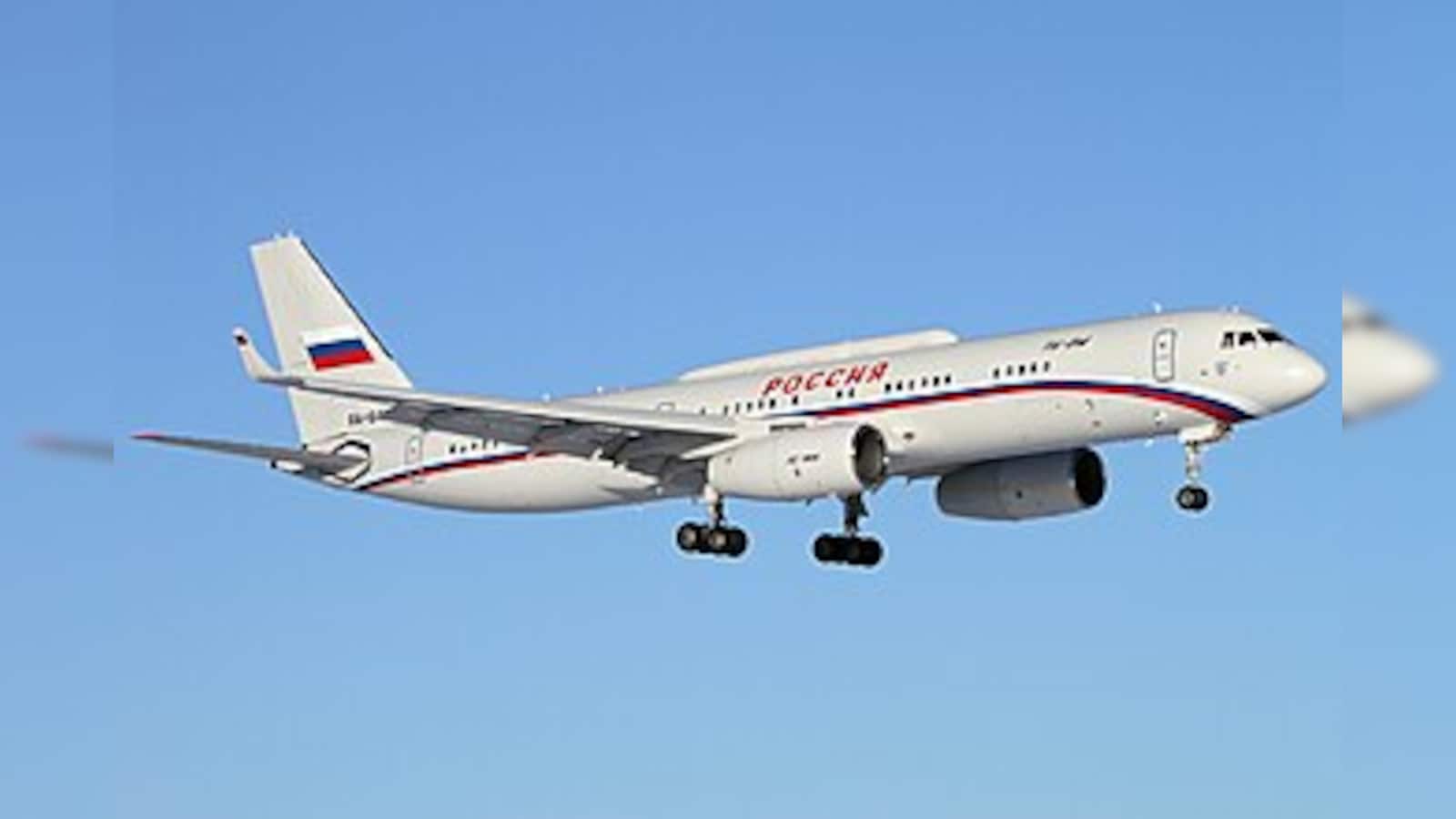
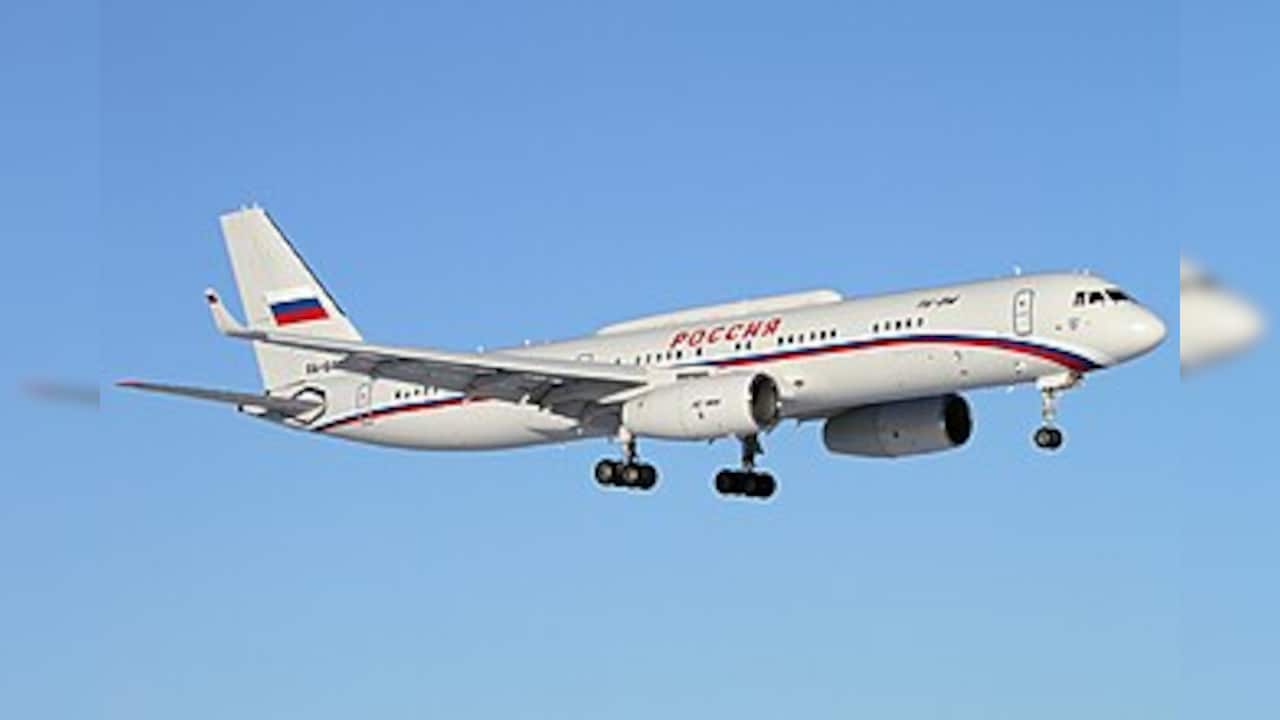
Russia dispatched a Tupolev Tu-214PU airborne command post, often referred to as a “doomsday plane”, to Tehran’s Imam Khomeini International Airport. A Tu-214PU aircraft took off from Moscow and landed in Tehran at around 10:10 am (IST) on July 13. The deployment coincided with escalating US and Israeli airstrikes on Iranian military infrastructure after the collapse of a regional ceasefire.
The heavily modified Tupolev Tu-214 is operated by the Rossiya Special Flight Squadron and contains advanced, hardened communication and command systems. It enables senior officials to coordinate state affairs and military operations from the air in high-threat environments. The arrival is widely interpreted as a signal of high-level crisis diplomacy and tightening strategic cooperation between Moscow and Tehran.
Analysts and commentators have pointed out that while this move doesn’t mean Russian troops are entering the fight, it’s a massive power signal to Washington, that Russia remains closely aligned with Iran and is prepared to support coordination at a high level.
During the ongoing Ukraine war, at least on five occasions, President Putin or his foreign minister has used the ‘N’ word. Putin’s nuclear sabre-rattling has been part of the Russian escalate-to-deescalate strategy that he himself was the author of as a young official. In late 2022, Putin even ordered a drill of Russia’s strategic deterrence forces, which included intercontinental ballistic missiles (ICBMs), submarines, and heavy bombers, the entire Russian nuclear triad.
Interestingly, both the US and Russia have special airborne presidential command posts to manage major hostilities, especially a nuclear war. These are appropriately called the “Doomsday” airborne command and control aircraft. Doomsday aircraft are essentially large transport aircraft fitted with special, long-range communication equipment, along with some other security features.
Russian Doomsday Aircraft “Maxdome”
The Russian President’s “Doomsday” aircraft is a specially configured Ilyushin Il-80 “Maxdome”, which is also referred to as “Flying Kremlin”. Interestingly, it was seen flying low over Moscow in early May 2022 during a rehearsal for Victory Day celebrations. Given the repeated threats of nuclear weapon use in the early days of the Ukraine war, such a flypast raised concerns in the strategic community. Earlier, Russian President Putin had said that he won’t “brag” about nuclear weapons but will use them “if necessary”. The Maxdome had last participated in such a flypast in 2010.
The Il-80 Maxdome is a modified Ilyushin Il-86 airliner converted into an airborne command-and-control centre and a presidential office in the sky. The aircraft reportedly made its first flight in 1985 and was inducted in 1987. Four were built, and three are still in service. Such aircraft are required for cases when the ground-based command infrastructure may be destroyed in the event of nuclear war or a major disaster.
The Il-80 aircraft has no windows, except cockpit windscreens and direct-view side panels. This is meant to protect the sensitive electronic equipment and the people inside from nuclear radiation and the ensuing electromagnetic pulse. There is only the upper deck forward door on the left and the aft door on the right. There is only one air-stair door, instead of the normal three. Even the aft cockpit windows are blocked with baffles.
Like the E-4B, the aircraft has a dorsal SATCOM canoe, believed to house advanced satellite communications equipment and a trailing wire antenna mounted in the lower aft fuselage for very low frequency (VLF) radio transmission and reception. These could be for communication with ballistic missile submarines. The aircraft can be refuelled in flight.
Il-96-400M
Russia’s next doomsday plane would be the Il-96-400M. It is an upgraded version of the four-engine civil airliner. The plane is currently under development by Russia’s United Aircraft Corporation (UAC). Designated under “Project Zveno-3S”, at least one prototype airframe has been completed and is being converted to replace the aging fleet of Ilyushin Il-80 aircraft.
The flight range of the new aircraft will be double that of its predecessor, and it will communicate effectively with strategic nuclear forces within roughly 6,000 kilometres. The aircraft will have a very powerful self-defence system and will always be escorted by air-defence fighters. It will also have much better nuclear and thermal effects shielding, acoustic control, and upgraded air-conditioning to cool the more powerful heat-generating electronics. The aircraft is planned to be inducted end-2026. In 2020, one of the aircraft was infiltrated through the cargo hatch and robbed while undergoing maintenance. Thirty-nine pieces of radio equipment, some having gold and platinum electric components were stolen in this rather embarrassing incident.
Tupolev Tu-214PU-SBUS
The Tu-214 VIP is also a presidential aircraft with a maximum range of 9,200 km. Tu-214PU-SBUS is an airborne command-and-control (C2) variant. It can be visually distinguished from the standard Tupolev airliner by two prominent features on top of the fuselage: a canoe-shaped pod along the upper spine, and a second, dome-shaped bulge further back, which houses the dedicated satellite and radio communication hardware.
American Doomsday Aircraft
In the USA, these aircraft are officially called the National Airborne Operations Centres (NAOC). They are also equipped with a full set of traditional analogue flight and navigation instruments as they are less affected by cyberattacks. The US’s airborne command posts have been operational since the early 1970s and can be termed as a Cold War legacy. The planes are essentially flying war rooms and are manned by military strategists and communication aides.
The Boeing E-4, also called the “Night Watch”, evolved from the Boeing 747-200B and was part of the National Emergency Airborne Command Post (NEACP) programme. The E-4B made its first flight on June 13, 1973, and was inducted into service in 1974. At least one E-4B is reportedly always on alert station, and satellite technology offers it worldwide communications using a wide range of frequencies. The aircraft’s main deck has been configured into several operational areas. These include designated areas for command and communications, briefing and conference, data analysis, etc. The aircraft can accommodate up to 112 people. The Joint Chiefs of Staff direct the E-4B operations, and the operational execution is by the US Strategic Command. Traditionally, one E-4B always stood by at Andrews Air Force Base in a Washington DC suburb for quicker access to the President during a global crisis. When the US President travels outside of North America, an E-4B is positioned at an airbase near his destination. A more modern replacement for the E-4 is being devised.
The Boeing E-6 Mercury is based on the Boeing 707-320. The latest variant, the E-6B “Looking Glass”, entered service in 1998, and can communicate directly with fleet ballistic missile submarines and also remotely control Minuteman ICBMs using the Airborne Launch Control System. The E6-B has the capability to fly for 72 hours before refuelling. TACAMO (Take Charge and Move Out) is the term used for survivable communications. These aircraft remain on alert near Offutt Air Force Base in Nebraska.
An Airborne Operations Centre
The Survivable Airborne Operations Center (SAOC) is the US Air Force’s program to replace the aging E-4B fleet. Built as a militarized Boeing 747-8i, it functions as a survivable, mobile command post allowing national leadership to direct nuclear and conventional forces during a severe crisis or nuclear attack. The E-4C fleet is expected to replace the E-4B NAOC platform by around 2036.
There was a proposal to have a single multi-task aircraft to replace the E-4B, RC-135 Rivet Joint, E-3 Sentry, and E-8 Joint STARS. The Northrop Grumman had proposed a Boeing 767-400ER platform to be called E-10 MC2A. It was to be built by a consortium between Northrop Grumman, Boeing, and Raytheon, as a central command authority for all air, land, and sea forces, including unmanned, in any combat theatre. The proposal was finally shelved because of funding constraints.
What The Russian Aircraft In Iran Signals
The discussions on the newer versions of the Strategic Arms Reduction Treaty (START) and the Strategic Offensive Reductions Treaty (SORT) cannot progress because of renewed frictions in Europe. The US, China, and Russia are all modernising their nuclear weapons. The Russian nuclear warnings in Ukraine were primarily to prevent NATO from entering the conflict. Amidst all this, Russia’s plans to upgrade its Doomsday aircraft fleet are being watched by the West, which, in turn, is considering upping the nuclear ante.
The purpose of Russia deploying its Tu-214PU airborne command post in Iran is reportedly to provide a secure mobile headquarters and encrypted communication hub during intense military strikes. It could also be signalling deep strategic coordination and high-level crisis diplomacy between Moscow and the Iranian leadership, in addition to enabling senior Russian and Iranian officials to hold classified deliberations safely from interception.
However, so far, fortunately, no president has had the occasion to get into one of these Doomsday aircraft for actual operations. Even after the 9/11 terror attacks, President George W. Bush preferred to be on the VC-25A (Air Force One) instead of the E-4B. To date, China does not have any equivalent aircraft. India, too, perhaps does not need one, at least for now.
(The author is a retired Air Marshal)
Disclaimer: These are the personal opinions of the author



