


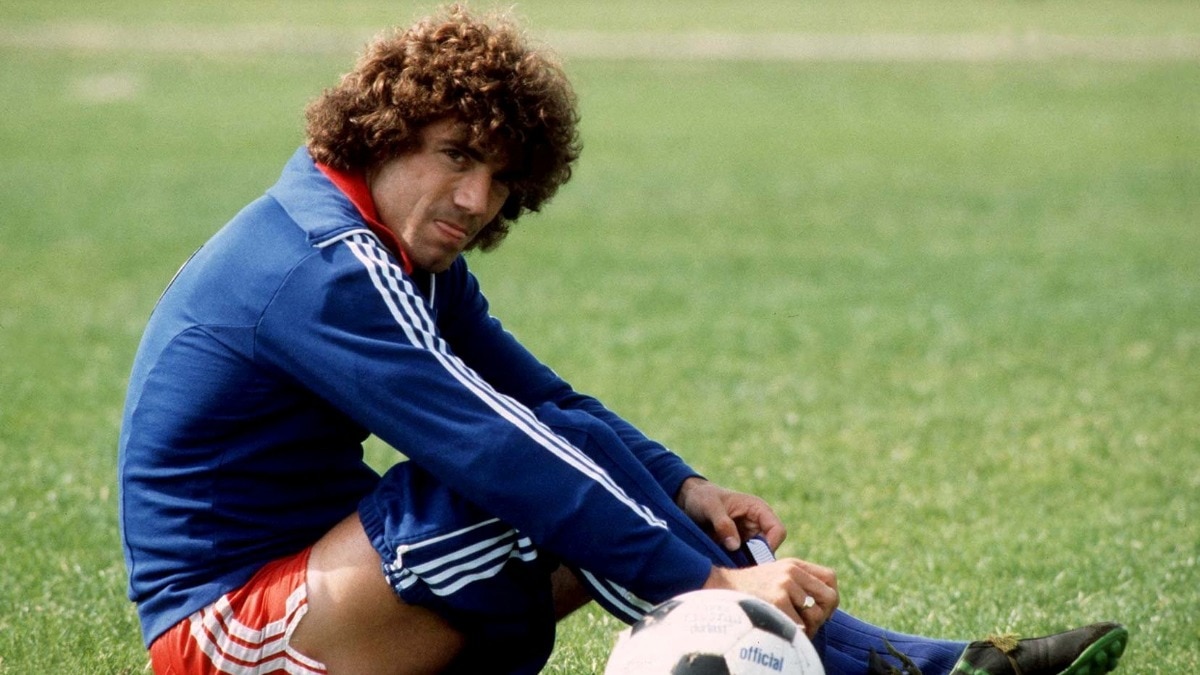
Former England captain and manager Kevin Keegan, one of the most influential figures in English football history, has died at the age of 75 after a battle with cancer, his former club Newcastle United announced on Monday.
Keegan’s family and Newcastle had revealed in January that the two-time Ballon d’Or winner was undergoing cancer treatment without disclosing details of his illness. In June, Keegan confirmed that he had stage four cancer.
“It is with immense sadness that we announce that Kevin Keegan has passed away at the age of 75,” his family said in a statement quoted by British media.
“The former England player and manager had been battling cancer and was surrounded by his wife and daughters in his final moments.”
Newcastle led the tributes, describing Keegan as one of the defining figures in the club’s history. “We are devastated to learn of the passing of Kevin Keegan, one of the most iconic, influential and deeply loved figures in our club’s history,” the Premier League club said.
“As a player, he brought world-class talent, ambition and belief to St James’ Park, helping to transform perceptions of what Newcastle United could be.
“As a manager, he ignited our city. Kevin gave supporters hope and pride, and led a team whose style, spirit and passion captured the imagination of football fans around the world.”
LIVERPOOL GREAT AND TWO-TIME BALLON D’OR WINNER
Nicknamed ‘King Kev’ and ‘Mighty Mouse’, Keegan began his professional career at Scunthorpe United before joining Liverpool in 1971, where he established himself as one of Europe’s finest forwards.
He made 323 appearances for Liverpool in all competitions, scoring 100 goals during six seasons at Anfield. He won three First Division titles, the FA Cup, two UEFA Cups and the 1977 European Cup before moving to German club Hamburg.
Keegan reached even greater heights in Germany, winning the Ballon d’Or in 1978 and 1979. He remains the only British player to have won the award twice.
He later returned to England to play for Southampton and Newcastle United before retiring in 1984 at the age of 33.
For England, Keegan scored 21 goals in 63 appearances between 1972 and 1982 and captained the national team 31 times.
NEWCASTLE REVIVAL AND ENGLAND STINT
Keegan returned to Newcastle as manager in 1992 and transformed the club’s fortunes, guiding them into the Premier League and turning them into one of England’s most entertaining teams.
His side came agonisingly close to winning the 1995-96 Premier League title before being overtaken by Manchester United in the closing weeks of the season.
After leaving Newcastle in 1997, Keegan had a brief spell at Fulham before succeeding Glenn Hoddle as England manager in 1999.
He resigned following England’s defeat to Germany at Wembley after Euro 2000, saying he was “not good enough” for the role. He won seven of his 18 matches in charge.
Keegan later managed Manchester City before leaving in 2005. He returned to Newcastle for a second spell in 2008, but resigned after eight months following a dispute over the club’s transfer policy.
TRIBUTES POUR IN FROM FOOTBALL WORLD
Tributes poured in from across the football community following the announcement of Keegan’s death.
Liverpool described him as “our ‘Mighty Mouse'” and said his legacy at Anfield “will be forever etched in history”.
The Football Association said it was “incredibly saddened” by the news, while former Newcastle captain Alan Shearer posted on social media: “My Hero. My manager. My friend. Sleep easy Boss.”
– Ends



