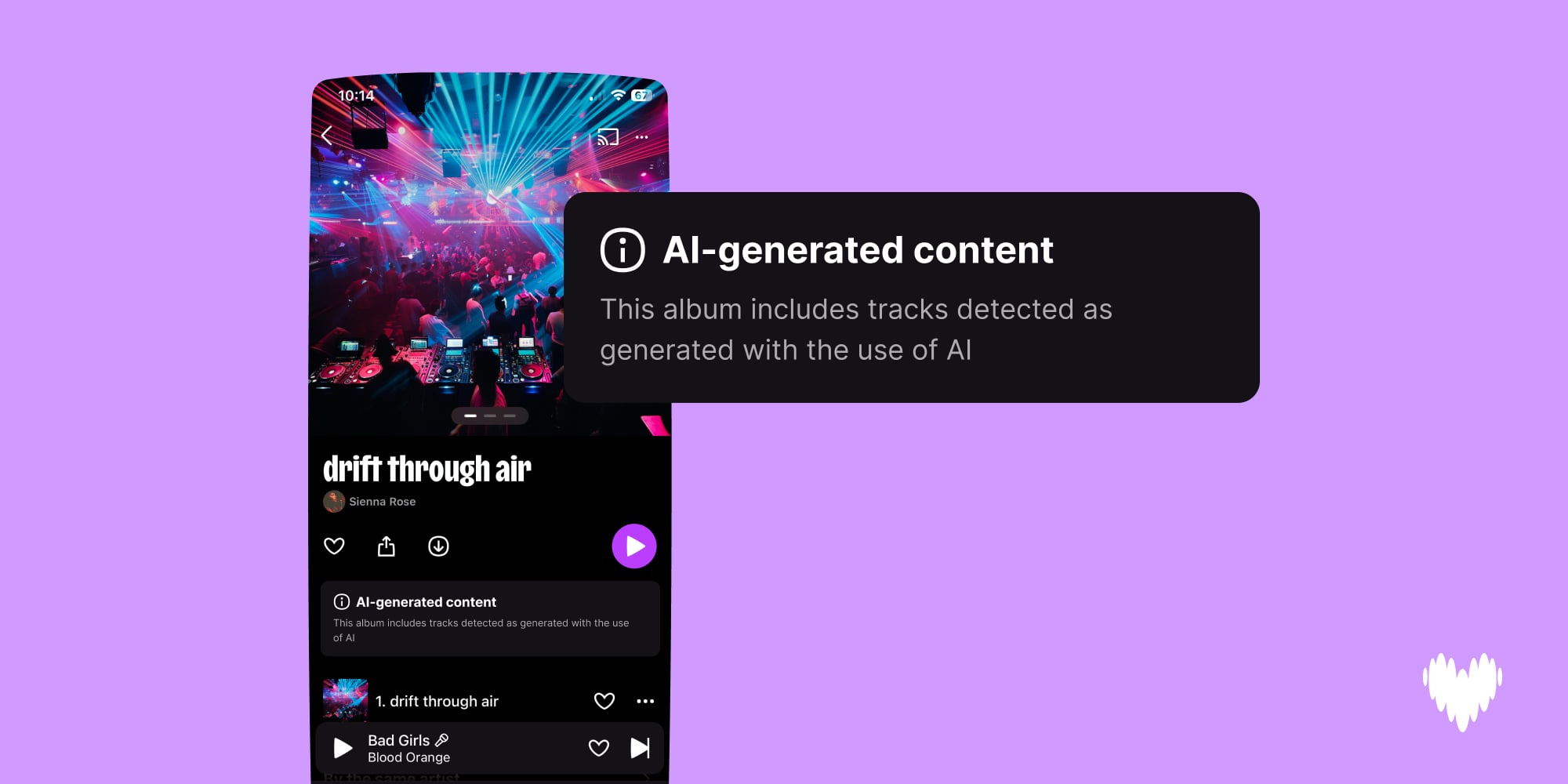
The volume of fully AI-generated music being uploaded to streaming services has surged yet again.
According to eye-opening new stats revealed by Paris-headquartered streaming service Deezer today (July 21), fully AI-generated music accounted for more than half of all new tracks uploaded to its platform for the first time in June.
Deezer says it was receiving nearly 90,000 fully AI-generated tracks every day in June.
On peak days, that content made up more than 50% of all new music delivered to the service.
Following the milestone, Deezer says it will take down generative-AI tracks used to inflate streams fraudulently, as well as those that have not been streamed for six months or more.
The 90,000-a-day peak marks an escalation from the 75,000 AI tracks a day, or 44% of daily deliveries, that Deezer reported in April.
AI-generated tracks have flooded streaming services over the past two years, with much of that content uploaded to commit fraud and dilute royalties owed to human artists, according to Deezer.
The trend has prompted a record-industry push for transparency, with the RIAA and IFPIcampaigning to label AI tracks as either “AI-generated” or “AI-assisted” across the world’s streaming services.
“Deezer has been at the frontline of fighting fraud and reducing payment dilution related to AI music for almost two years. Now that half of all daily uploads are AI-generated tracks, we are taking additional steps to safeguard the rights of artists and songwriters, while maintaining focus on music that fans actually love,” said Alexis Lanternier, CEO of Deezer.
“We have reached a pivotal moment, but we have the technology to keep track of the development, and an ambition to do what’s right. If the industry can align and come together to create shared standards, we can build a healthy and sustainable music ecosystem, where great music wins.”
Alexis Lanternier, Deezer
“We have reached a pivotal moment, but we have the technology to keep track of the development, and an ambition to do what’s right. If the industry can align and come together to create shared standards, we can build a healthy and sustainable music ecosystem, where great music wins,” Lanternier added.
Fully AI-generated music accounts for between 1% and 3% of all streams on the platform, according to Deezer.
The company says up to 85% of the streams generated by fully AI-generated tracks were fraudulent in 2025, and that when “detecting stream manipulation of any kind,” it excludes those streams from royalty payments.
Deezer says “the primary purpose of uploading these tracks to streaming platforms is fraudulent.”
Until now, Deezer has kept AI-generated tracks off its algorithmic recommendations and editorial playlists without removing them from the platform.
Deezer says further measures, including changes to its supplier policy and the removal or demonetization of AI content, will require careful consideration.
Deezer says it detected and tagged more than 13.4 million AI tracks across 2025, and that its tool can identify fully AI-generated music from generative models including Suno and Udio.
Deezer says its detection system “sets an industry standard,” and that it is now licensing the technology to the wider music industry.
Rival services have moved too, with TIDALsetting out a policy in June to tag fully AI-generated music and block it from royalties, and Qobuz and Apple Music launching their own tagging systems earlier this year.
A broader push to standardize AI labeling is now under way, with the RIAA and IFPIleading a campaign to tag AI-made tracks across the world’s streaming services. The plan sets out two labels, “AI-generated” for fully synthetic tracks and “AI-assisted” for those only partly made with AI, applied voluntarily by artists, labels and distributors.
Deezer has also pointed to a survey of 9,000 people across eight countries, carried out by Ipsos, which it first unveiled in November.
It found that 97% of respondents could not tell the difference between fully AI-generated and human-made music in a blind test, and that 80% agreed fully AI-generated music should be clearly labeled.
A further 73% of music streaming users said they want to know when a service is recommending fully AI-generated tracks, according to the survey.
Deezer, which took part in the study, pointed to research by CISAC and PMP Strategy that it said found nearly 25% of creators’ revenues are at risk by 2028, amounting to as much as €4 billion.
Deezer applied for two patents covering its detection technology in December 2024, and says both were published by the EU and US patent offices in June 2026.
Deezer was founded in Paris in 2007 and is listed on Euronext Paris.Music Business Worldwide