


Thane:
Amazon’s proposed Rs 45,000-crore data centre project in Thane has sparked growing opposition from residents and political leaders, with protesters demanding that the facility be shifted away from densely populated residential areas.
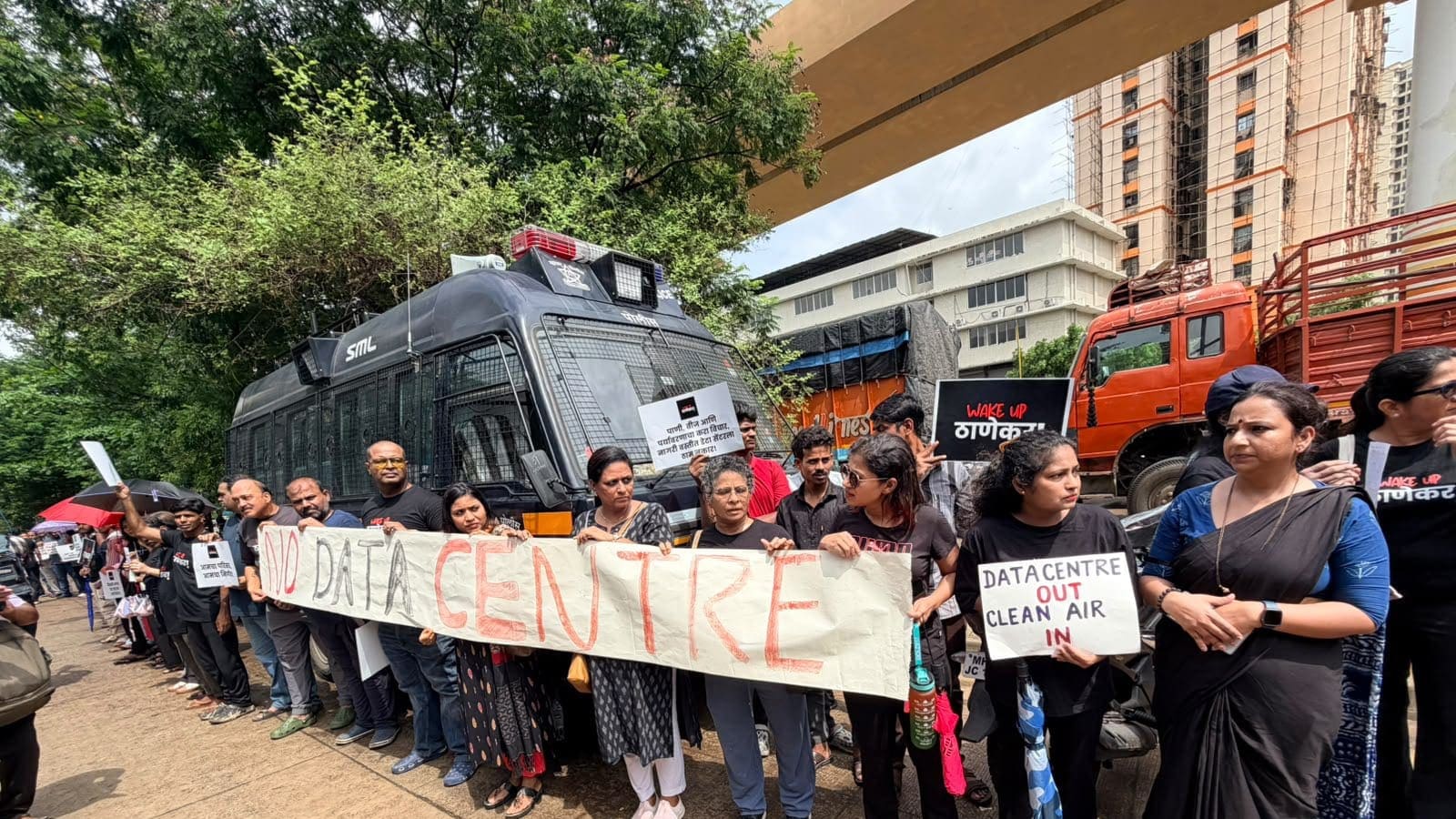
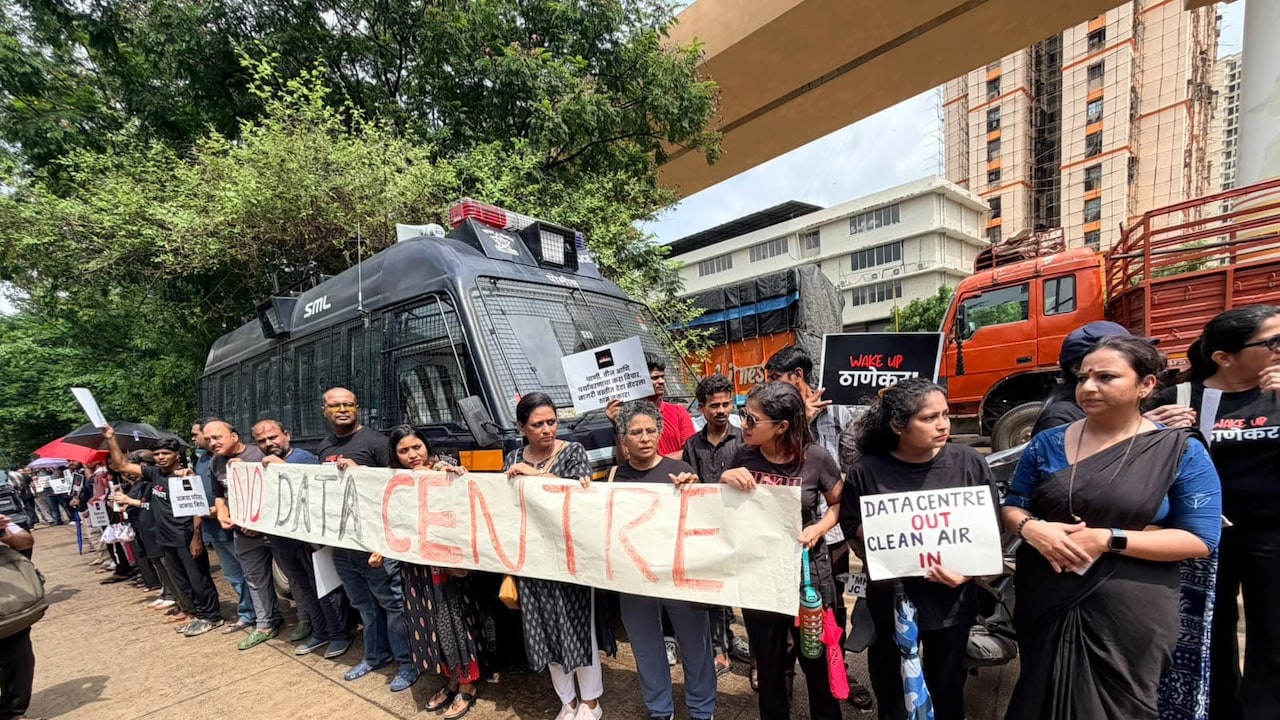
Hundreds of residents gathered outside the proposed 58-acre project site at Balkum Naka under the banner “Wake Up Thanekars (WUT)”, raising concerns about the impact of the 422 MW data centre on the local environment and civic infrastructure. Protesters carried placards and banners, wore “Wake Up Thanekar” T-shirts, and called for the project to be relocated to a designated industrial or technology zone rather than being built close to housing societies and schools.
Residents argued that while they support investment and technological development, the location of the project is inappropriate. They expressed concerns over noise pollution, heat generation, traffic congestion, reduction in green cover, and increased pressure on Thane’s already strained water and electricity infrastructure.
Local NCP (Sharad Pawar) leader Manoj Pradhan, who participated in the protest, said data centres are known to generate continuous noise and therefore should not be located in residential neighbourhoods. He also warned that the project could worsen water shortages in a city where several housing societies already face irregular municipal water supply.
Dayanand Nene, a member of ‘Wake Up Thanekars’, said the movement is not opposed to economic development but is demanding that the project be shifted to a more suitable location that balances technological growth with the interests of citizens.
Questions Over Environmental Impact
According to residents, Amazon’s Environmental Impact Assessment (EIA) report states that the project will be developed across nearly 55 acres with a planned capacity of 422 MW and will include 193 diesel generators for backup power.
Following discussions with Amazon officials in the presence of Thane Municipal Commissioner Saurabh Rao, residents said several questions remained unanswered, particularly regarding the project’s water consumption, electricity demand and cumulative environmental impact after the second phase becomes operational.
‘Wake Up Thanekars’ has since submitted a five-page document containing 22 questions and 10 written submissions to the authorities. Among their demands are copies of the water supply agreement between Amazon and the Thane Municipal Corporation, details of sewage water treatment arrangements, a thermal impact assessment for nearby residential areas and Thane Creek, and at least one public information meeting involving residents of Balkum Pada, Majiwada and surrounding areas.
Organisers said the group first wrote to Amazon in June but received only a public statement before eventually meeting company representatives shortly before the protest.
Amazon Responds
Amazon has rejected several of the concerns raised by residents.
In a statement issued through a spokesperson, the company said the Thane data centre would not draw electricity from the local distribution network used by homes and businesses. Instead, it said the facility would receive power through a dedicated high-voltage substation planned in coordination with the electricity utility.
The company also denied that the project would consume local drinking water for cooling.
“Amazon does not currently use water for cooling in its data centres in India, including the Thane site, and we do not draw from the community’s drinking or potable water for cooling purposes,” the spokesperson said.
Political Opposition Grows
The controversy has also attracted political attention.
Shiv Sena MP from Thane Naresh Mhaske has written to the Thane Municipal Corporation seeking a stay on the project, alleging violations including the cutting of more trees than permitted. He has demanded that all permissions granted to the project be reviewed by an independent expert committee, followed by a public hearing and a joint meeting involving local residents, technical experts and elected representatives.
The NCP (Sharad Pawar) has also backed the local protest, making the project one of the latest major infrastructure investments in Maharashtra to face political resistance.
A Larger Debate On Data Centres
The Thane protest marks one of the first organised public movements in India against the location of a large data centre, echoing similar community protests seen in parts of the United States.
The opposition comes even as Maharashtra seeks to establish the Mumbai Metropolitan Region (MMR)-including Mumbai, Thane, Navi Mumbai, Kalyan-Dombivli, Ulhasnagar, Bhiwandi-Nizampur, Vasai-Virar, Mira-Bhayandar and Panvel-as India’s leading data centre hub. The state government expects around 60% of the country’s data centre capacity to eventually be located within the MMR.
As discussions continue between residents, local authorities and Amazon, the future of one of India’s biggest proposed data centre investments is likely to depend on whether concerns over environmental impact and civic infrastructure can be satisfactorily addressed.



