


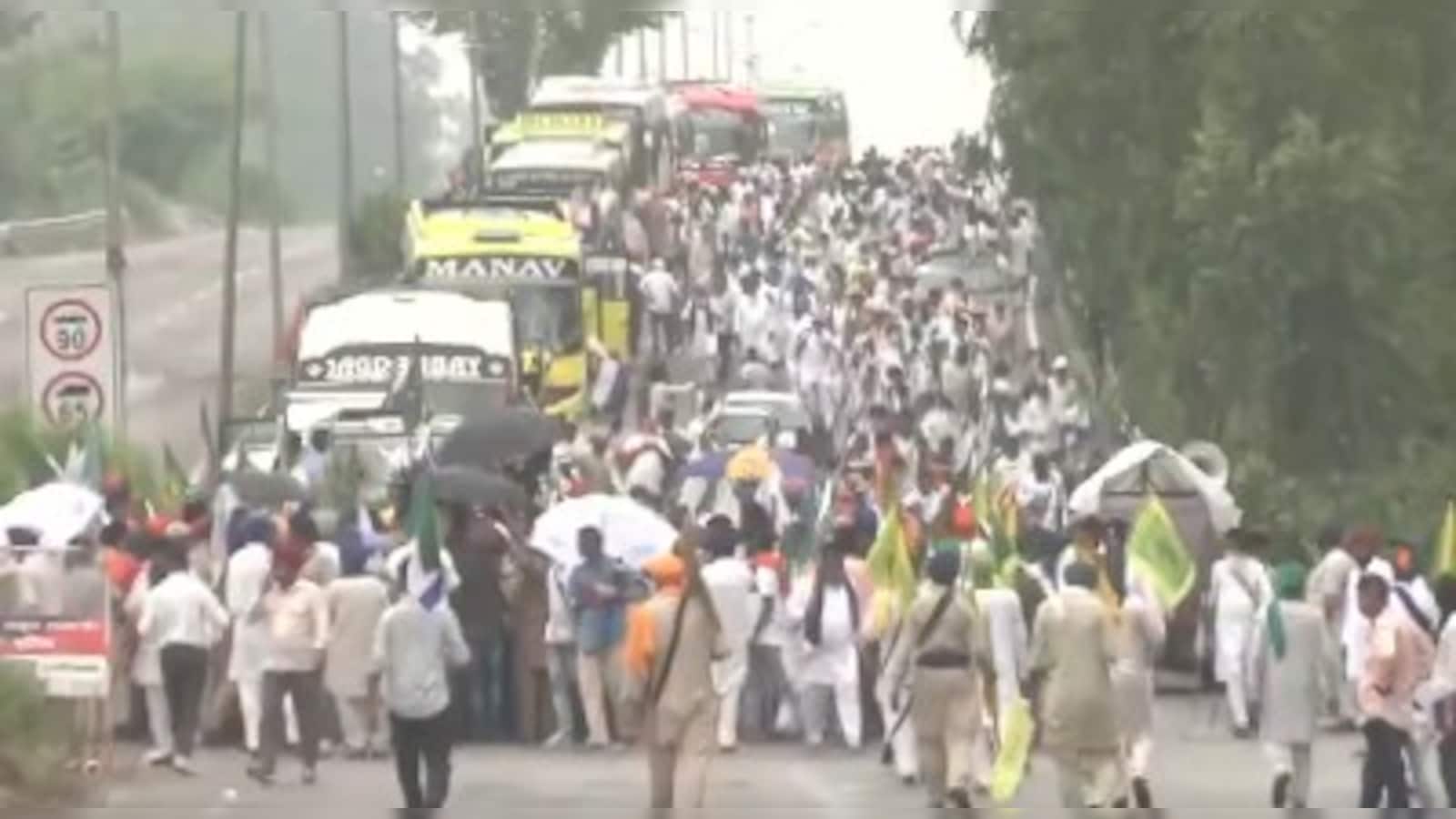
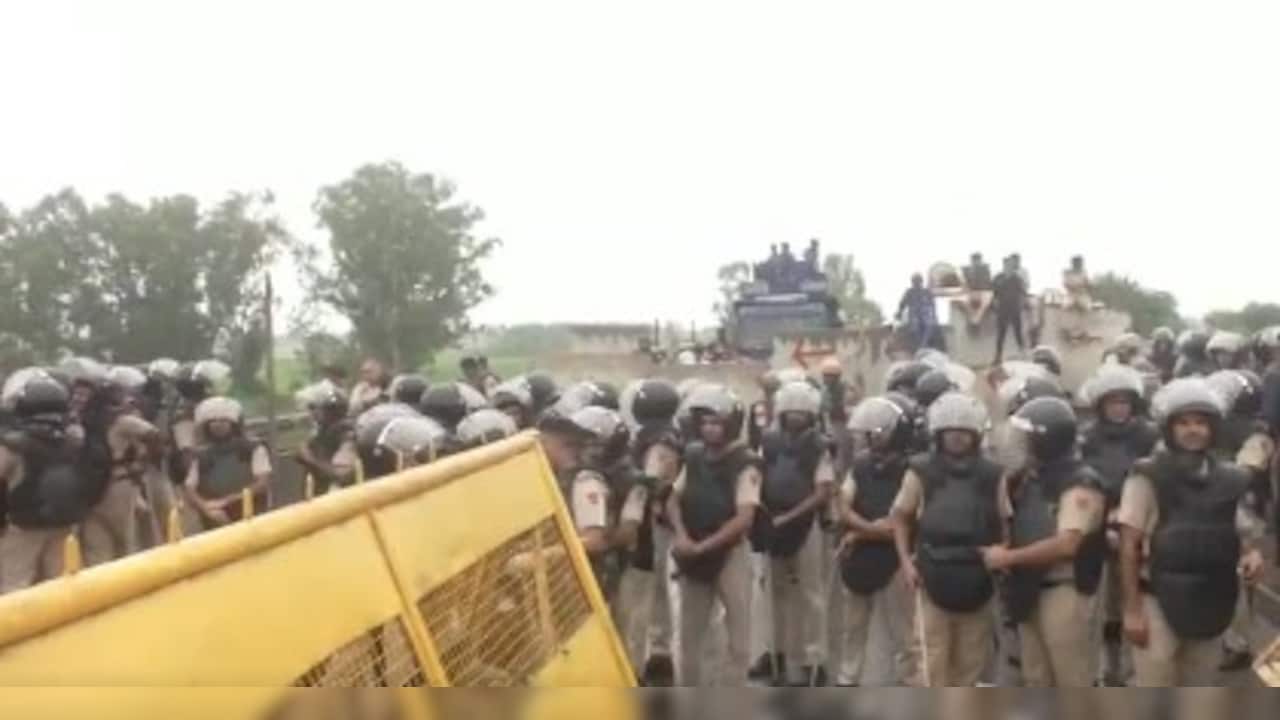
Hundreds of farmers from Punjab, who began marching towards Delhi on Tuesday to participate in a Kisan Mahapanchayat against the proposed India-US trade deal, were stopped by Haryana Police at the Shambhu border, the entry point to Haryana.
Barricades were erected at the Punjab-Haryana border in scenes reminiscent of the February 2024 “Delhi Chalo-2” agitation when the border was turned into a fortress with concrete blocks, iron spikes and multi-layered barricading to prevent farmers from entering the national capital.
Denied passage, the farmers turned the Shambhu border into a protest site, accusing both the Haryana and Punjab governments of suppressing their democratic right to assemble in Delhi.
But by afternoon, the farmers returned from the border after assurances by Haryana government on two of their demands —
release all the farm union leaders who have been arrested in Haryana today, and a promise of a meeting with Union Agriculture Minister Shivraj Singh Chouhan.
Earlier, BKU Shaheed Bhagat Singh leader Tezveer Singh alleged that Haryana Police had erected barricades inside Punjab’s territory and claimed the Punjab government had remained a “silent spectator” instead of resisting the move.
While Punjab convoys were halted, farmers from Haryana, including Ambala, Kurukshetra and neighbouring districts, continued their journey to Delhi.
The Mahapanchayat, called under the banner of the Desh Bachao Morcha, has brought together farmer organisations from Punjab, Haryana and Himachal Pradesh to demand that the Centre abandon the proposed India-US trade agreement.
Kisan Mazdoor Sangharsh Committee (KMSC) leader Sarwan Singh Pandher said convoys of KMSC, Kisan Mazdoor Morcha (Punjab chapter), Azaad Kisan Morcha and BKU Ekta Sangharsh had left from different parts of Punjab before being stopped at the Shambhu border.
Pandher said the India-US joint statement issued in February 2026 committed both countries to negotiate the first tranche of a multi-sector bilateral trade agreement by fall 2026.
He argued that the proposed pact was far more than a conventional trade deal and could open negotiations on agriculture, dairy, industry, digital trade, e-commerce, investment, government procurement, intellectual property rights and the services sector.
Farmer leaders said previous US trade reports have consistently sought deeper access to India’s agriculture and dairy markets through lower tariffs and fewer restrictions on products such as soybeans, maize, cotton, ethanol, apples, almonds, dairy products, poultry and fisheries.
They warned that opening India’s market to subsidised American agricultural and dairy products would leave millions of small and marginal Indian farmers unable to compete. They also expressed concern over the lack of transparency surrounding the negotiations, alleging that key details of the proposed agreement have not been made public.
The organisations said India’s dairy sector alone sustains nearly 80 million rural families and cautioned that any adverse impact would ripple across the rural economy, affecting dairy producers, small traders, agri-based industries, food processors and micro enterprises.
The Desh Bachao Morcha demanded that the Centre immediately place all documents related to the proposed India-US trade agreement in the public domain and refrain from signing any pact without holding comprehensive consultations with farmers, workers, dairy producers, small traders and other stakeholders.



