


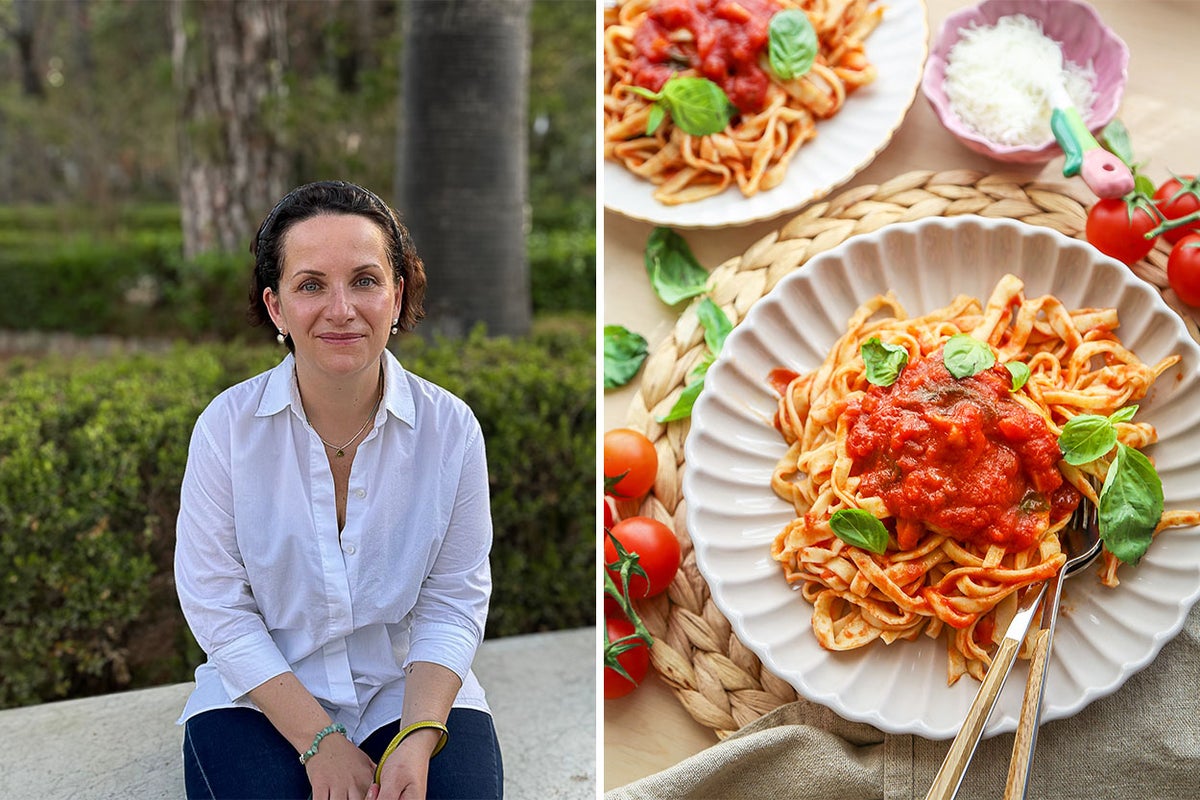
Isabella Barbato’s life was changed forever after a cancer diagnosis in 2018 brought her busy life as a global marketing executive to a halt. Within five years, both her parents would also pass away from the cruel disease.
“On the eve of my 35th birthday, I was told I had cancer,” the food writer and creator reveals, after finding a lump six months earlier. “The original hospital scan had come back clear, but all the time, I had this voice in my head telling me something was wrong.”
Having just relocated from Singapore to London with her husband, Akshay, she was told to put her life on hold. “I had six months of chemotherapy, followed by a lumpectomy, and then a month of radio.”
Breaking the cancer news to her mum and dad, Giovanna and Riccardo, back in Sicily, Barbato felt very far away from the home she had left.
Coming from a long line of home cooks in the hilltop baroque town of Ragusa in southeast Sicily, Barbato explains: “My father worked for the Ministry of Education and my mum was a teacher, but it was my dad who encouraged me to leave,” she explains. “He’d say sadly, ‘As soon as you turn 18, go somewhere else. There’s nothing here for you’.”
Now, 45, Barbato has released her debut cookbook, Pasta Therapy – keeping alive the memories of her beloved Sicily, and her family.
“Pasta Therapy is about legacy. My parents and the elder women in my family all passed away too soon. This is the only way to preserve them. People will continue to make their recipes.”
Cooking lessons started young, as Barbato recalls, “When my parents came home from work at 2pm along with me and my sister Paola from school, we had to learn the basics for lunch.”
Barbato’s earliest memory of cooking is making pasta with her mum’s tomato sauce. “Mum would also make something she called carbonara – but I would be killed in Italy for that. It was a veggie version made with courgettes.”
On the weekends, all the aunties and cousins would gather. “Everyone would bring something, and we’d have very big lunches that would last for hours,” she recalls.
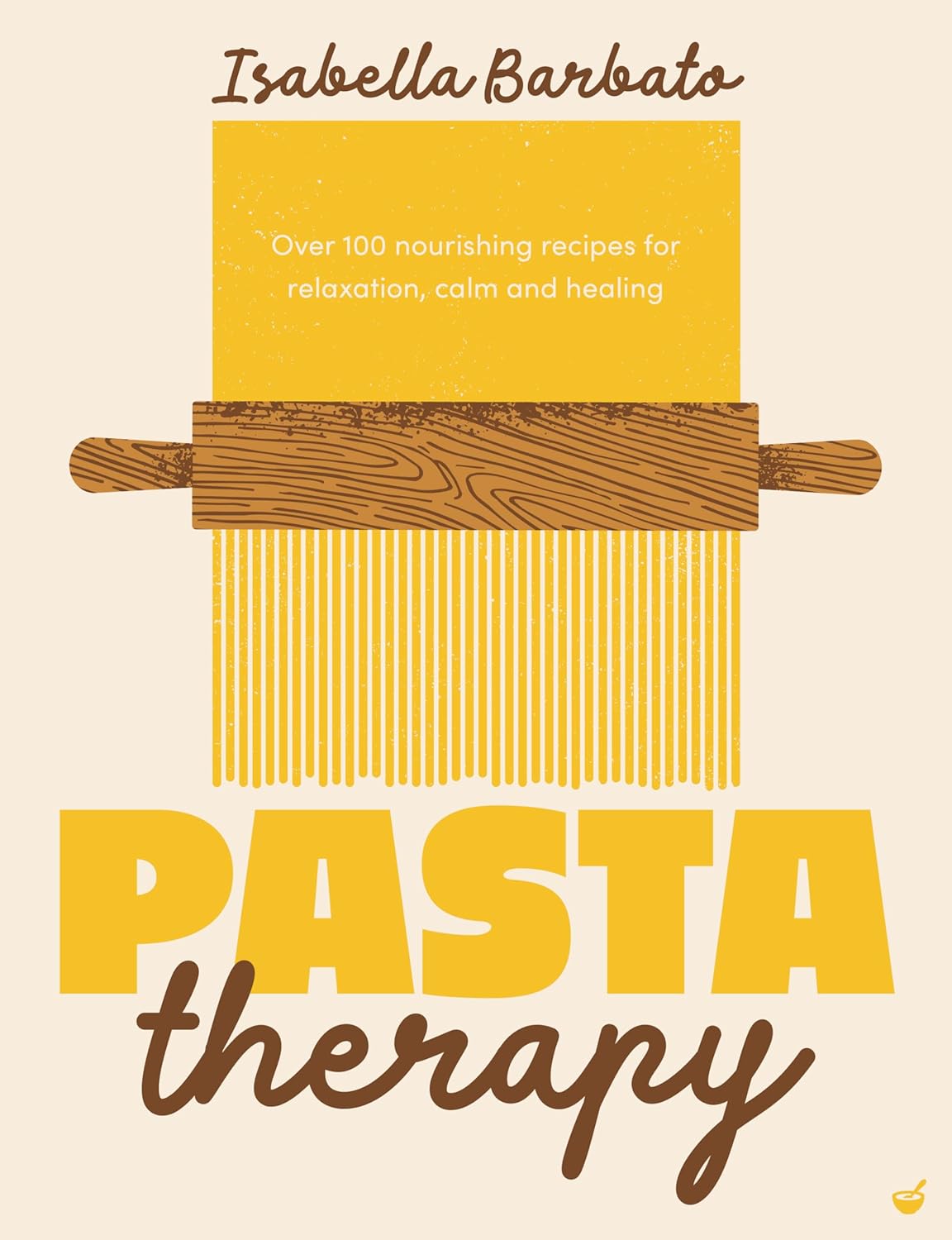
The 120 recipes in the book draw on her home island’s melting pot of flavours. “North Africans, Ottomans, Spanish, French and Greek – so many influences have shaped our cuisine.”
Barbato explains how she recreated her Sicilian family’s traditional cooking in her tiny kitchen in St John’s Wood in North London.
Sicilian food is classically meat-based but Barbato has replicated the recipes using plant-based ingredients. “Like my mum’s special ravioli with ricotta, which she made on Sundays. In my hometown we add sugar to our ricotta which makes it unique. Mum would make it with spicy Sicilian sausage but I use fennel seeds and spices.”
The simple act of making pasta from scratch became an act of caring for herself, and Barbato began posting pictures on her personal Instagram account.
“Cancer feels like such a train wreck – you are not in control of anything. The only thing I could control was my food.
“I only had about 80 followers, but I started posting pictures. Then a friend said, ‘I can see you making all this beautiful food and I feel that you’re OK.’”
Her blog, A Taste Of Sicily, was taking off when Covid hit and then crushing news came from home – Barbato’s dad had been diagnosed with pancreatic cancer.
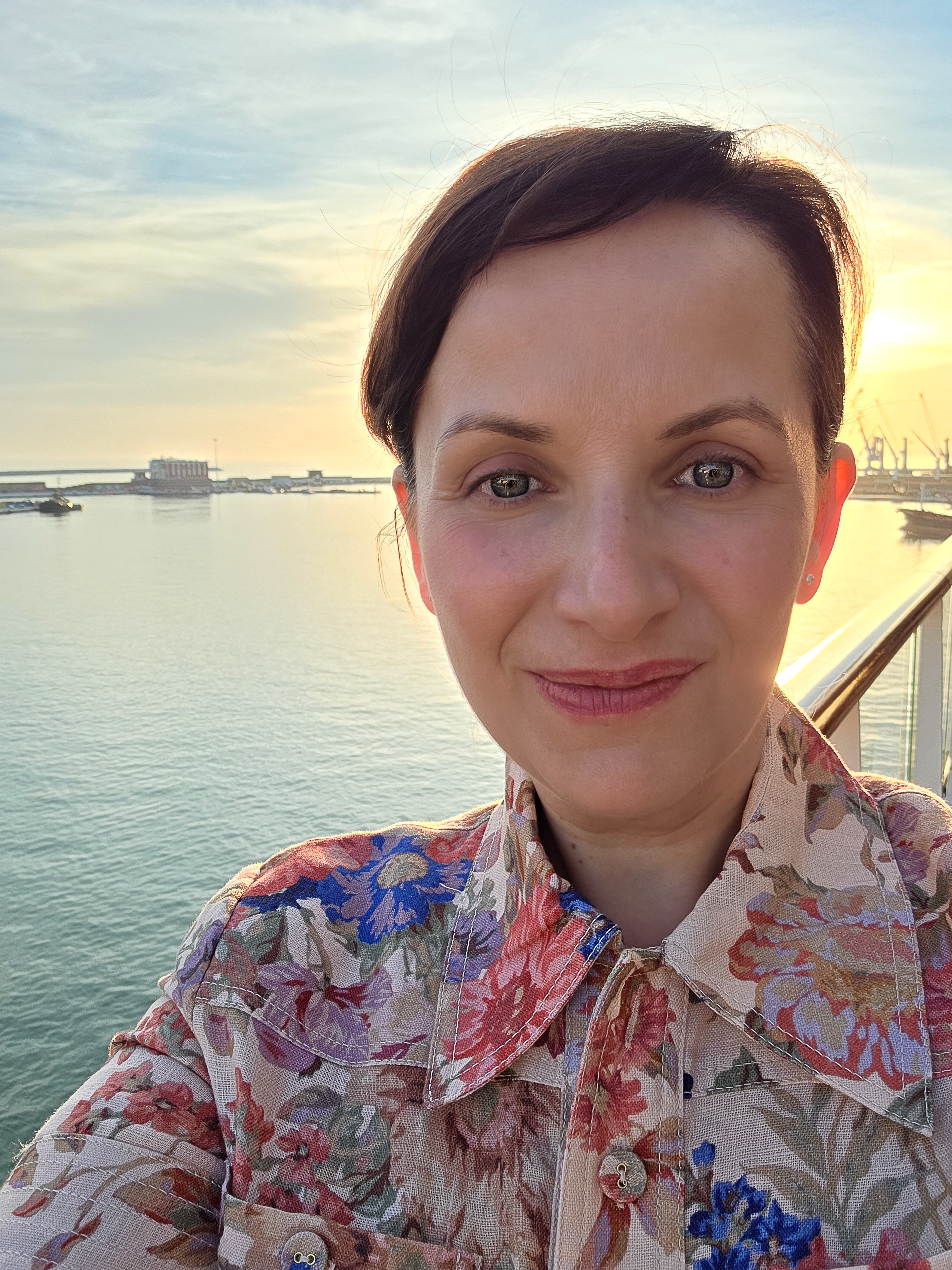
“It’s worse seeing someone you love having cancer than having cancer yourself because you feel powerless,” she says. “Dad died of pancreatic cancer in 2022, then five months later, my mum got ill. Her cancer had metastasised but they couldn’t find where it had come from. She died in November, exactly 10 months to the day my dad died.”
The death of both her parents left Barbato broken, but it had been a comfort knowing she had been able to cook for them. “I was in a very bad place but going back to the silence of the kitchen helped. It was like a meditation.”
Back in London, Barbato found the charity Future Dreams by chance. Grateful for the help from a community of people also affected by cancer, she started giving workshops on how to cook pasta. “I found my tribe,” she smiles. “The act of cooking together, which I was so used to growing up, had been missing. Now I have a community again.
“People told me, ‘For the last two hours I was here in the workshop, I completely forgot about what I’m going through.”
She also believes pasta is accessible for everyone. “All you need is flour and water – and a rolling pin.”
And her secret to making pasta? “Dough really needs to rest. At least for 30 minutes minimum.”
But with the workshops have come more loss, which Barbato says has been hard. “I’ve lost close friends. One of them, Veronica, whose Italian mum’s recipe features in the book, passed away last year.”
While the author believes nutrition is vital, she does not believe in eliminating foods. “You hear that a lot in the cancer community,” she reveals. “They say, ‘You shouldn’t have sugar or alcohol.
“I’m guilty of that myself – [I didn’t] even allowed myself to celebrate with cake at the end of chemo. But going through treatment is difficult enough.”
Writing Pasta Therapy has also helped Barbato rewrite the past. “This book was a way to erase the bad memories of Sicily and override them with good ones.”
And she’s started planning for the future. “I’m eight years in remission and I still struggle with anxiety, but you just accept it and make plans – and that’s when you realise you’re healing.”
Ricotta and spinach gnudi with butter and sage
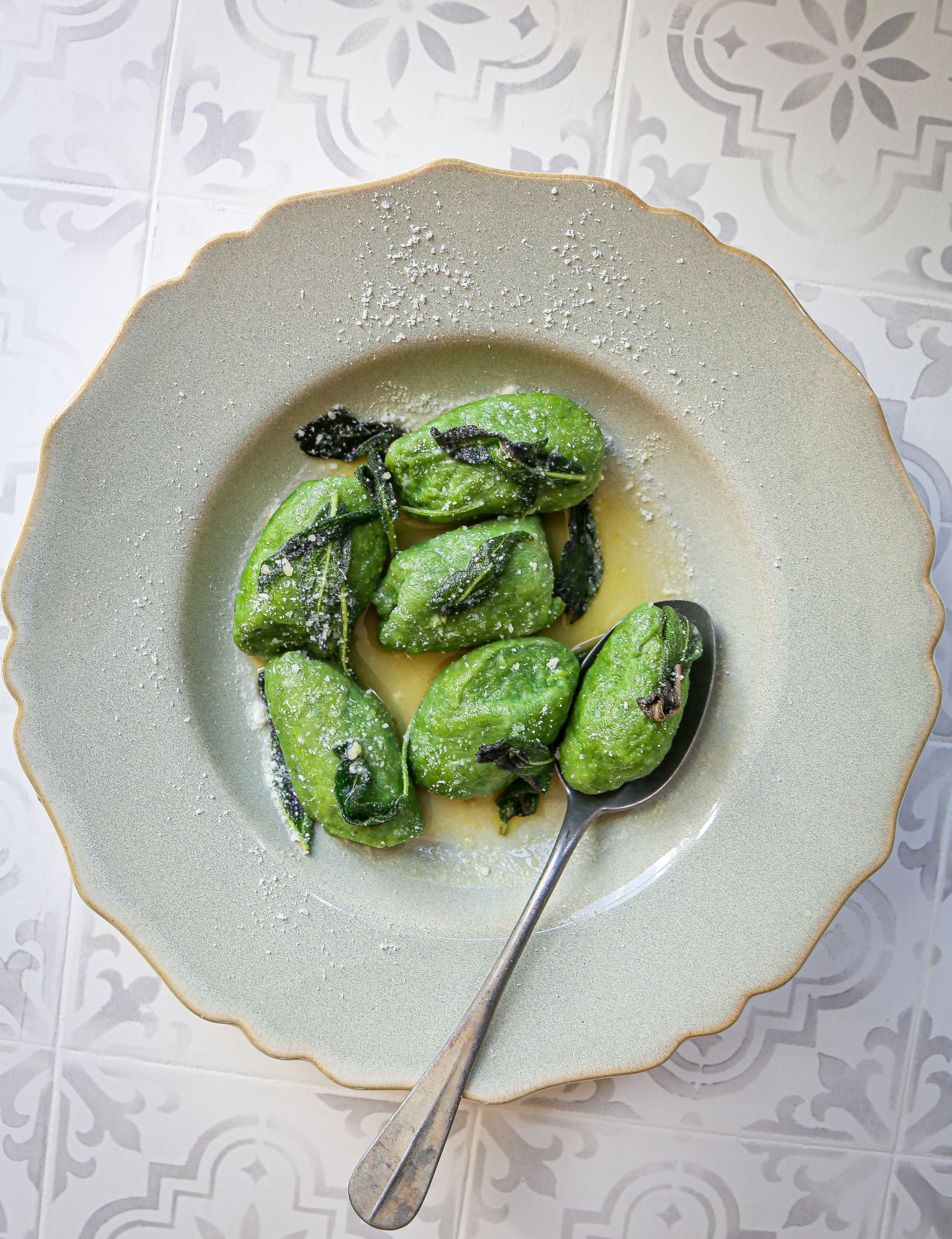
“Soft, pillowy dumplings made with ricotta and spinach, lightly floured and served in a classic sage- infused butter – there’s something deeply satisfying about gnudi,” enthuses Barbato. “No machines, no fancy technique, no pasta sheets to roll. Just a bowl of filling and your hands. Anyone can shape these little dumplings.
“You don’t even need a table: just your palms. I like to blend the spinach because it gives a smooth, almost creamy texture, and a vibrant green colour. But some people just chop it up with a knife and call it a day. Honestly, do whatever feels right. That’s the beauty of this dish. It’s simple and deeply comforting, with nothing to prove.”
Serves: 4
Prep time: 30 minutes, plus 30 minutes resting | Cooking time: 10 minutes
Ingredients:
For the dough:
250g ricotta, well drained
250g cooked spinach, squeezed dry and finely chopped or puréed, according to your preference
40g Parmigiano Reggiano, finely grated
1 medium egg
1-2 tbsp plain/all-purpose flour
Freshly grated nutmeg, to taste
Salt and pepper, to taste
For the sauce:
80g unsalted butter
10-12 fresh sage leaves
Salt, to taste
Finely grated Parmigiano Reggiano, to serve
Method:
1. Make the gnudi: In a bowl, combine the ricotta, spinach, Parmigiano, egg and a tablespoon of flour. Season with the nutmeg, salt and pepper. Mix gently until just combined. If the mixture is very soft, add a touch more flour, but keep it light.
2. Shape the gnudi: Dust your hands and a tray with flour. Scoop out small spoonfuls of the mixture and shape into walnut-sized balls. Roll each one lightly in flour and place on the tray. Chill for 30 minutes to help them firm up.
3. Make the sage butter: Melt the butter in a wide frying pan over a medium-low heat. Add the sage leaves and fry gently until the butter turns golden and the sage is crisp, 2-3 minutes. Season with salt.
4. Cook the gnudi: At the same time, bring a large pot of salted water to the boil. Gently lower the gnudi into the water and cook until they float to the surface, about 2-3 minutes. Let them bob there for another minute, then remove with a slotted spoon straight onto serving plates.
5. Serve: spoon the sage butter over the gnudi. Finish with a dusting of Parmigiano.
Barbato’s tagliatelle with her mum’s tomato sauce
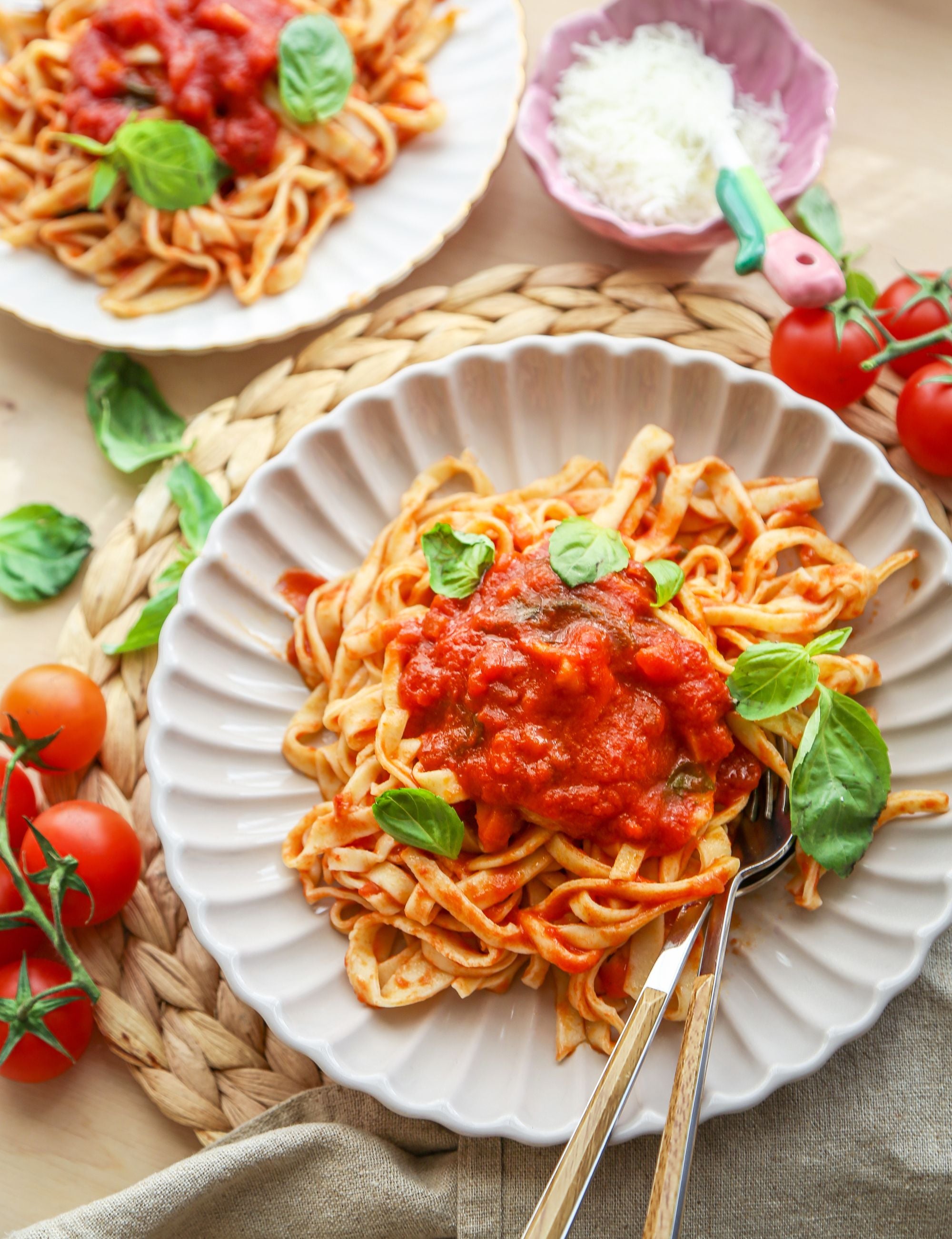
“Hand-cut tagliatelle made with semola and whole eggs, served with the slow-cooked tomato sauce that is the beating heart of this book,” says Barbato. “I could not have started this book with anything else. This dish is where it all begins: my love of cooking, my sense of belonging, my first memories of family gathered around the table.
“The sauce, slow-cooked with care… our end-of-summer ritual, bottling the ripe tomatoes to last through winter. And the pasta? Golden, resilient, honest. These tagliatelle ribbons are rolled and cut by hand, the way our nonnas did, the way I still do. A reminder that tradition isn’t static. It lives on in the way we shape it.”
Serves: 4
Prep time: 30 minutes (if you have made the sauce), plus 30 minutes resting | Cook time: 3-4 minutes
Ingredients:
For the dough:
400g semola
4 medium eggs
To serve:
700ml Giovanna’s tomato sauce (see below for recipe)
Ragusano DOP or Parmigiano Reggiano, to serve
Method:
1. Make the dough: on a clean work surface, make a mound with the semola and create a well in the centre. Crack in the eggs and whisk gently with a fork, gradually incorporating the semola until a rough dough forms. Knead for 5-7 minutes until smooth and elastic. Cover in a dish towel and let rest for 30 minutes.
2. Roll and cut the tagliatelle: lightly dust a work surface with semola. Divide the rested dough into 2-3 portions. Roll each piece into a thin sheet, about 1mm thick (setting 5 on a Marcato pasta machine). Dust with semola, then fold the sheets loosely lengthways into thirds or quarters, just enough to handle easily. Slice into ribbons about 6-8mm wide. Unfold and toss with semola to prevent sticking.
3. Cook and serve: warm Giovanna’s tomato sauce in a wide pan. Meanwhile, bring a large pot of salted water to the boil. Cook the tagliatelle for around 3-4 minutes, or until al dente. Using tongs, lift the pasta directly into the pan with the sauce and toss gently to combine, adding a splash of the cooking water if needed to help the sauce cling evenly. Serve immediately with a generous grating of Ragusano or Parmigiano.
Giovanna’s tomato sauce (salsa di pomodoro)
Serves: 10-12
Prep time: 15 minutes | Cook time: 2 hours 50 minutes
Ingredients:
3kg ripe tomatoes – use the best quality, local, ripe, in-season tomatoes; Roma, San Marzano or beefsteak varieties work well
1 medium onion, peeled and quartered
3 cloves garlic, peeled and lightly crushed
3 tbsp extra virgin olive oil
8-10 fresh basil leaves
Sea salt, to taste
Freshly ground black pepper, to taste (optional)
Method:
1. Prepare the tomatoes: roughly chop the tomatoes and add them to a large pot. Using your fist or palm, press down on the tomatoes in the pot to release their juices. This step allows the tomatoes to break down and cook without the need to add any water.
2. Start the sauce: add the quartered onion, garlic cloves and a good pinch of sea salt. Cover the pot with a lid and place it over a medium-low heat. Do not add any additional ingredients at this stage; just bring the sauce to a simmer gently. Remove the lid occasionally to stir, ensuring nothing sticks to the bottom.
3. Simmer and reduce: after about 30 minutes of simmering, the tomatoes will have started to release their liquid. Continue simmering gently for around 2 hours, stirring occasionally. The sauce will gradually reduce by half, and you’ll see it thicken as the flavours concentrate.
4. Add the basil and olive oil: once the sauce has reduced, add the olive oil and basil leaves. Stir well and let it cook for an additional 20 minutes, allowing the basil to infuse its aroma into the sauce.
5. Blend and finish the sauce: while the sauce is still hot, run it through a vegetable mill in batches or use a hand-held/immersion blender to grind the skins and seeds, creating a smooth consistency. Transfer the sauce to a clean pot or bowl as you work through the batches.
6. Store the sauce: if using immediately, serve with your favourite pasta. To store, transfer the sauce to sterilised jars and keep in the refrigerator for up to a week. For longer storage, vacuum-seal the jars to keep them at room temperature for several months.
Courgette carbonara with busiate
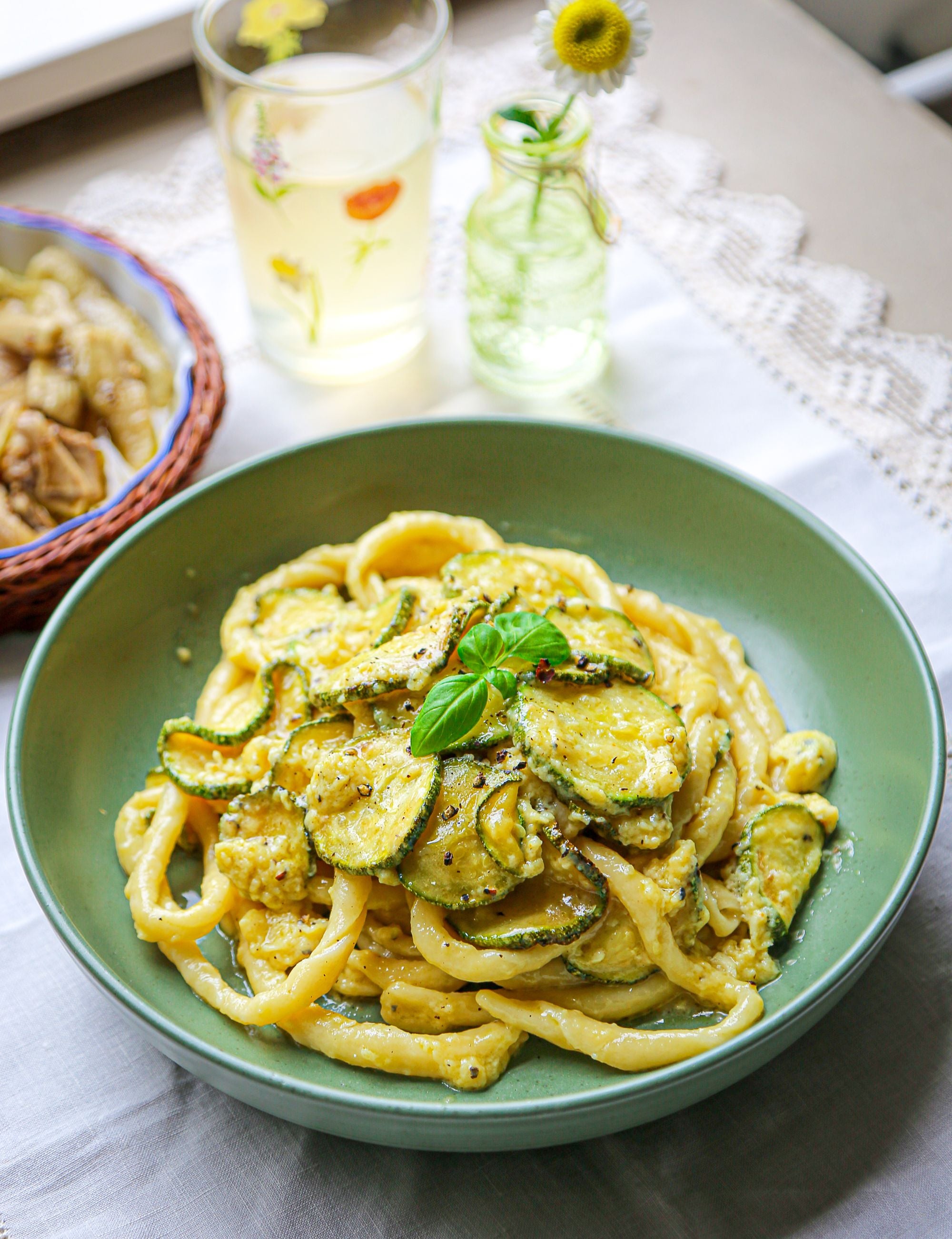
“This dish, along with pasta maritata, was one of our go-to lunches on school days. Both my parents worked and usually got home just after me and my sister. That’s why we learned to cook so young: we’d start lunch, so it was ready for everyone,” recalls Barbato.
“At home we loved courgette. They were affordable, always in the refrigerator and we found ways to use them in everything. This carbonara was one of my mum’s favourites. It’s not traditional, of course: there’s no pancetta, just golden courgette rounds sautéed in olive oil, tossed with eggs and a bit of Parmigiano. Quick, light and so satisfying.
“My mum usually made this with store-bought spaghetti to save time, but for the book I’ve paired it with fresh busiate, which the sauce clings to beautifully, elevating the dish without complicating it.”
Serves: 4
Prep time: 30 minutes, plus 30 minutes resting | Cook time: 10 minutes
Ingredients:
For the dough:
400g semola
200ml lukewarm water
For the sauce:
3 tbsp extra virgin olive oil
2 courgettes, thinly sliced into rounds
4 large eggs
50g Parmigiano Reggiano, finely grated, plus extra to serve
Salt, to taste
Freshly ground black pepper, to taste, plus extra to serve
Method:
1. Make the dough: on a clean work surface, make a mound with the semola and create a well in the centre. Gradually add the water, mixing with your fingers or a fork to incorporate the semola until a rough dough forms. Knead for 5-7 minutes until smooth and elastic. Cover with a dish towel and let rest for 30 minutes.
2. Shape the busiate: lightly dust a tray and work surface with semola. Cut off a small piece of rested dough, roughly the size of a golf ball, and roll it into a rope about the thickness and length of a pencil. Roll each piece diagonally around a thin wooden skewer, knitting needle or traditional brass ferretto to form a tight spiral. This may take a little practice, but you’ll get there. Slide it off gently, dust with semola and set on the tray, and keep covered as you work. Repeat with the remaining dough.
3. Prepare the courgette: heat the olive oil in a large pan over a medium heat. Add the courgette slices and sauté for 8–10 minutes, until golden and soft. Season with salt and pepper, then remove from the heat and set aside.
4. Beat the eggs: in a small bowl, beat the eggs with the grated Parmigiano. Season lightly with salt and pepper.
5. Cook the busiate: bring a large pot of salted water to the boil. Cook the busiate for 4–5 minutes, or until al dente.
6. Combine and serve: using tongs, lift the pasta directly into the pan with the courgette. Toss gently to coat, adding a splash of cooking water if needed to help loosen. Pour in the egg mixture, stirring quickly to create a silky sauce from the heat of the pasta. Add a splash of pasta water if needed to help the sauce cling evenly. Serve immediately with extra Parmigiano and black pepper.
‘Pasta Therapy’ by Isabella Barbato (Nourish Books, £25).



