


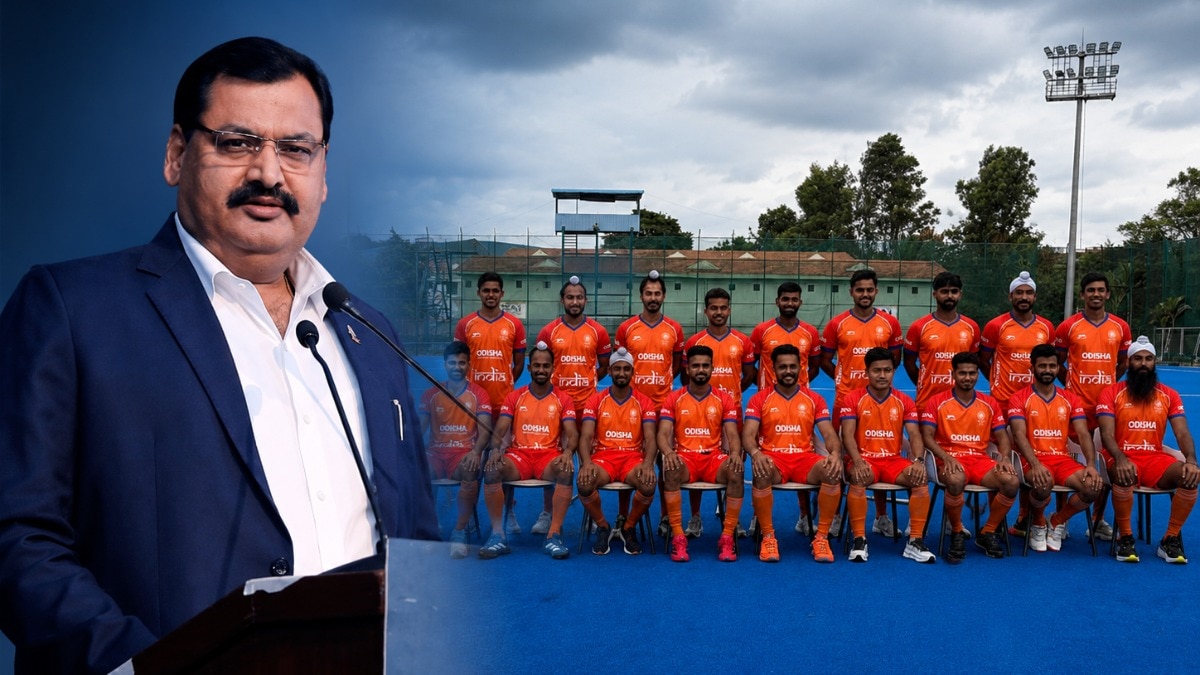
Hockey India found itself in the eye of the storm this week over a jersey. The national teams, dressed in blue for as long as most fans can remember, will turn out in saffron at the upcoming World Cup, and the switch has made headlines and drawn fire from former players and supporters alike. But a colour change alone does not explain the email India Today has now accessed, sent by Hockey India president Dilip Tirkey to secretary general Bholanath Singh and the rest of the Executive Board, and it does not say what Tirkey said to the press a day earlier. He had called the decision collective. His own email says he was not consulted, and neither was the board he leads. The gap between those two statements is not a footnote to the jersey story. It is the story, and there is more to it than meets the eye.
The backlash has been quick for Hockey India after it decided to change the jerseys of the national teams from blue to saffron. The federation’s own explanation for the U-turn made things worse rather than better. HI responded to the backlash over the colour switch by stating that the decision was made in consultation with the players, coaches and support staff. It was a clean, uncontroversial line. It also, per Hockey India’s own sources, was not true.
Hockey India sources have now confirmed to IndiaToday.in that the jersey was changed without consultation from players. The captain and the coach of the team were presented with the jersey on Wednesday, July 29, and they opted not to protest against it. That is a different thing from being consulted, and it is not a distinction Hockey India seemed keen to draw in public. The sources also told India Today that other players were not kept in the loop at all. A national team was handed a new identity to play in front of the world and found out about it the way everyone else did.
The stated reason for the switch was technical. Hockey India cited a technical issue, stating that the blue jersey was difficult to spot on a blue turf, which has been standardised across the world since 2012. It is not an unreasonable problem to flag. It is, however, one that has existed since 2012, which makes the timing of the sudden fix worth noting. The choice of colour, in any case, has been slammed by legends like Viren Rasquinha and Dhanraj Pillay, for whom visibility was never really the argument being contested.
So, what’s cooking now?
According to the sources, the change to saffron was an attempt to do two things. First, to detach from the issues that plague the hockey administration, and second, to please the administrators and the masses in the country who feel pride in the colour and feel that it represents India. The hockey stars, for their part, made just one plea: to get a nice playing kit. No one was paying attention to that. No one was interested in hearing them out. They were presented the new orange kit instead, reportedly the idea of a senior hockey administrator, and left to make peace with it or not.
Publicly, Tirkey made peace with the decision. Privately, he did not. Just a day after he told the media it was a collective call, India Today accessed the email he sent the rest of the administrators. Addressed to secretary general Bholanath Singh and others, it asks plainly why the decision to change the jersey wasn’t placed before the Executive Board and him for approval first.
“I wish to bring to your attention the recent change in the colour of the Indian national team’s jersey. This decision appears to have been taken and implemented without being placed before the Executive Board for discussion and without my prior knowledge.”
“My concern is not with the choice of saffron itself. However, a decision of this significance, involving the identity and representation of our national team, should ideally have been discussed with the elected leadership and the Executive Board before implementation.”
COLOUR CHANGE A DIVERSIONARY TACTIC?
Read on its own, that is an administrative mess. Read alongside everything else surrounding Hockey India this week, it looks like something closer to a distress signal.
The change of jersey colour uproar comes at a time when Hockey India is at the centre of a far graver controversy, with a former India player having levelled allegations against secretary general Bholanath Singh and former coach Sudhir Golla. The allegations are grave in nature and accuse Golla of intimidating women players after allegations of sexual harassment surfaced against him. Both Singh and Golla have denied the allegations. Incidentally, Bholanath Singh is also the president of Hockey Jharkhand, and was vice president of the Wrestling Federation of India under Brij Bhushan Sharan Singh, which is not the sort of company that inspires confidence that this is the first time he has managed a crisis by other means.
When everyone talks about the uniform, people forget about Asunta Lakra. The former Indian captain is now the subject of a complaint filed against her by Hockey India’s own ethics committee, and told India Today during a phone call that she has been told to respond by August 5. Lakra, who has been serving as a selector, said she remains sidelined from selection calls. She also said that Bholanath challenged her to try and remove him from power. It is worth sitting with that for a moment: a serving selector, publicly dared by the man she has accused, while the country argues about thread colour.
Bholanath, for his part, has firmly denied allegations. Speaking to India Today’s Nitin Srivastava, he said, “It was a collective decision to change the jersey color. If someone is saying that he was not consulted, what I can say?”
Asked whether the allegations against him were the reason he might be trying to change the conversation, he said, “What I have done? and why will I do it (change jersey colour) on my own? It was players and support staff feedback.”
It is a question that answers nothing and asks for sympathy without saying so.
NOT THE FIRST TIME
Veteran journalist Sharda Ugra said she wasn’t surprised with what was happening here. “I am not at all surprised that none of the players were consulted in this,” she said.
“If the President of Hockey India, a giant of the game, is not being asked about this, then you can tell what the non-players think about the athletes.”
It is a neat, damning summary of the hierarchy Hockey India has built for itself, one in which even a 400-cap international and former captain of the country ranks below whoever is taking calls.
This is not, in any case, the first time an Indian dressing room has been handed a saffron kit. Ugra, in her story “Modi Operandi”, reported that the Indian cricket team was presented with an all-orange playing kit shortly before the 2023 World Cup match against Pakistan, but the players rejected it.
According to that report, the BCCI had prepared the uniform and presented it to the team two days before the match, and the players were reportedly taken aback when they saw it. Three independent sources, from the team, the ICC and the BCCI, confirmed to Ugra that the kit existed and had been shown to the players. Accounts differed on why it was rejected. One said the players felt it looked like Holland. Another said the objection ran deeper, with players telling each other that it was not on, that they would not do it, that it was disrespectful to some members of the team.
That team had a dressing room that could say no. Hockey India’s did not even get asked.
– Ends



