


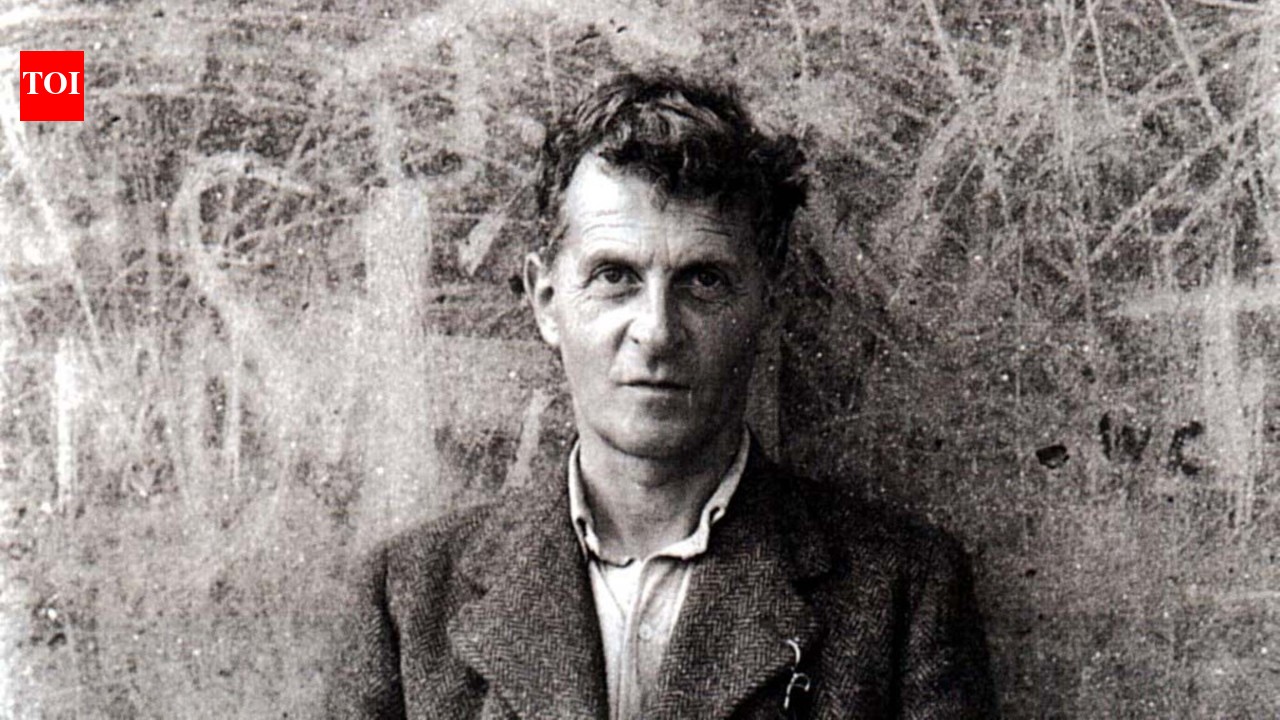
A person standing before a remarkable painting might ask how much the canvas cost, where the paint was bought, or how many hours it took to dry. These questions are technically reasonable, but they completely miss the purpose of the artwork. They reduce a search for meaning to a list of physical details.Human beings often approach death in the same way, focusing on whether consciousness continues after physical death while ignoring a much deeper question: even if an afterlife exists, does it really solve the human search for meaning?This is exactly the confusion the Austrian-British philosopher Ludwig Wittgenstein challenged when he wrote: “The real question of life after death isn’t whether or not it exists, but even if it does what problem this really solves.”In one short sentence, Wittgenstein changes the direction of an ancient debate. Most religious and philosophical traditions treat life after death as the final answer to human fears and uncertainties. Wittgenstein argued that simply extending existence forever only delays the real issue. Giving an unsolved problem infinite time does not automatically provide an answer.
Notes written in the trenches
Wittgenstein developed these powerful ideas during one of the most violent periods in modern history. He volunteered for the Austro-Hungarian army during the First World War and served on both the Eastern Front and the Italian Front. While surrounded by death in artillery positions along the Vistula River, he filled private notebooks with personal reflections alongside his technical work on mathematics and logic.These private notes, written between 1914 and 1916, later shaped his famous book, Tractatus Logico-Philosophicus, published in 1921. In proposition 6.4312 of the Tractatus, Wittgenstein examined the traditional belief that the human soul lives forever.He wanted to challenge a common misunderstanding of his time. The intellectual world of early twentieth-century Europe was divided between strict scientific materialism and the remaining influence of Victorian spiritual beliefs. Many people thought that proving an afterlife would restore moral certainty and give human suffering a clear purpose.Wittgenstein, writing as a soldier who faced death every day, rejected this comforting belief. He argued that endless space or endless time offers no guarantee of spiritual meaning. Just as our present life remains mysterious, an endless continuation of that same life in another world would remain equally mysterious.
Death as a boundary, not an event
To understand Wittgenstein’s argument, we must first understand his view of human experience. In the Tractatus, he wrote that “death is not an event in life: we do not live to experience death.” Since conscious experience is the way we encounter the world, our own death is not something we directly experience but the boundary where our experience ends.Many people hope that an afterlife will eventually explain the suffering, unfairness, and confusion they experience in this life. Wittgenstein argued that this hope is based on a basic mistake in reasoning.If someone cannot find clarity, purpose, or moral direction during an eighty-year life, simply extending that life to eighty thousand years—or even forever—does not solve the problem. A longer existence is only a change in quantity, while a meaningful life requires a change in quality.This idea has similarities with ancient Stoicism and classical Zen philosophy, both of which teach that reality must be faced in the present moment. By removing the idea of the afterlife as something that fixes all of life’s problems, Wittgenstein placed responsibility back on how we live today. The shortness of life is not the real problem; the real problem is failing to live the present moment with meaning.
The modern pursuit of artificial eternity
In 2026, Wittgenstein’s insight feels more relevant than ever, especially in technology circles fascinated by digital immortality and radical life extension. Many Silicon Valley leaders invest billions of dollars in cryonics, mind-uploading ideas, and cellular reprogramming because they believe that overcoming biological death will also remove humanity’s deepest fears.Yet living longer does not answer the basic questions of morality, loneliness, or personal fulfillment. A digital copy that imitates a dead person’s speech or a genetically modified human who lives to 150 years still faces the same essential questions: how to love, how to act with justice, and how to find meaning in everyday life. More years do not automatically create greater wisdom.The same pattern appears in business and career planning. Many leaders believe that reaching the next financial target, completing another acquisition, or securing permanent market dominance will finally solve deeper problems of identity and purpose within an organization. Just as with human mortality, gaining more time and resources often hides an unwillingness to deal with the organization’s immediate purpose.By removing the illusion that simply having more time solves life’s deepest problems, Wittgenstein leaves readers with a clear and practical lesson. The mystery of life is not answered in some distant future with endless time, but in the way we choose to live within the limits of the present.As he wrote elsewhere in the Tractatus, “If we take eternity to mean not infinite temporal duration but timelessness, then eternal life belongs to those who live in the present.”



