


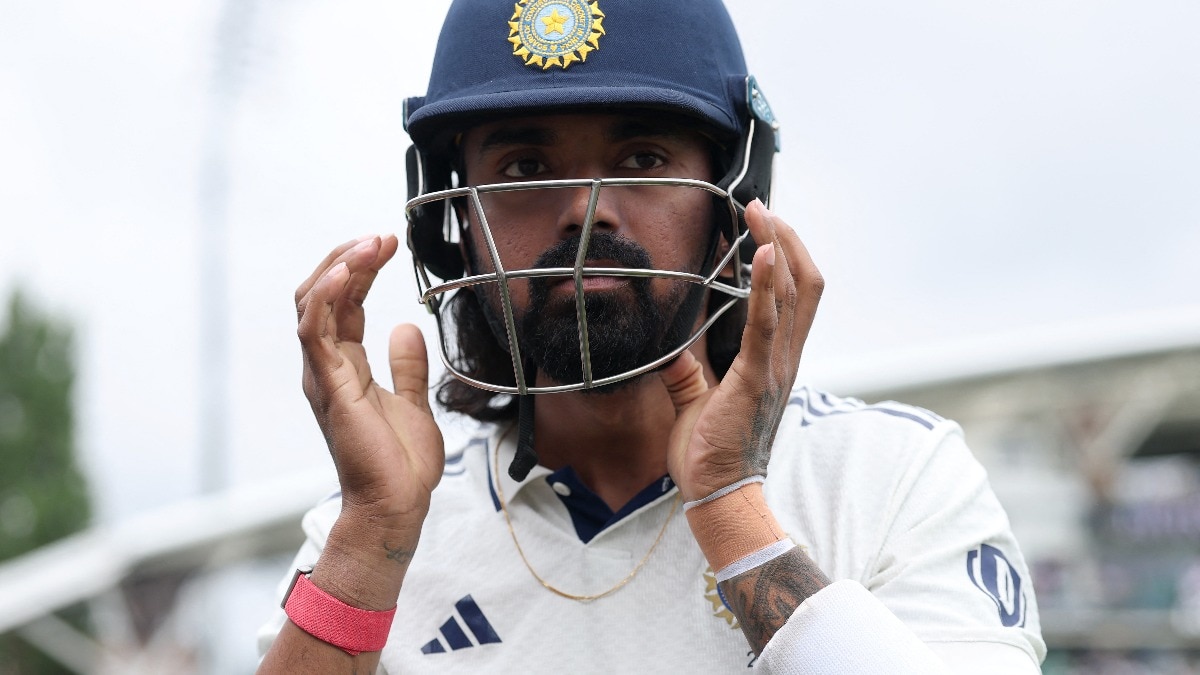
KL Rahul gave fans a glimpse of his preparation for India’s Test tour of Sri Lanka through an Instagram video that was anything but routine.
Instead of batting on pristine practice wickets, the vice-captain was seen training on a damp, muddy surface in Mumbai. The ball gripped, turned sharply and occasionally stayed low, creating the kind of unpredictable conditions Rahul is likely to encounter against Sri Lanka’s spinners.
The Indian Test squad arrived in Sri Lanka on August 4 ahead of a three-day warm-up match beginning on August 7. As vice-captain and the only batter in the current squad to have featured in India’s previous two Test tours of Sri Lanka, in 2015 and 2017, Rahul carries valuable experience into the series.
Preparing on wet surfaces during Mumbai’s monsoon serves a clear purpose. When the ball lands on damp turf, it can grip sharply, skid through or stop on the surface, creating the kind of uncertainty batters often encounter on worn pitches in Galle and Colombo.
By facing quality spinners and taking throwdowns on these unpredictable tracks, Rahul has spent the build-up conditioning himself to play with soft hands, delay his stroke-making and make late adjustments against sharp turn and uneven bounce. The drills also encourage precise footwork and patience, two qualities that are often decisive on Sri Lankan surfaces.
Rahul’s own record in Sri Lanka has been steady rather than spectacular. He averages 33 in Tests in the country, with a century and two half-centuries from his previous tours.
KL RAHUL TEST STATS IN SL
- Runs: 268 in eight innings
- Batting average: 33
- Centuries: 1
- Half-centuries: 2
INDIA’S TEST STATS IN SL
- Historical team batting average per batter per innings: 36
- Team batting average per batter per innings since 2015: 41 (highest for any visiting nation)
India, however, have become one of the strongest visiting batting sides in Sri Lanka over the past decade. While they have averaged 36 runs per wicket across their Test history in the island nation, that number has risen to 41 since 2015, the highest by any visiting team during that period.
With a relatively young batting unit taking shape under captain Shubman Gill, Rahul’s role extends beyond scoring runs. As the most experienced batter in Sri Lankan conditions, he will be expected to guide the middle order and set the standard against spin.
His decision to swap pristine practice wickets for muddy, rain-soaked surfaces in Mumbai reflects that intent.
The series also carries significant weight in the World Test Championship cycle. India are fifth in the 2025–27 standings with a point percentage of 48.15, behind Australia (87.50), South Africa (75.00) and New Zealand (72.22).
With only the top two teams qualifying for the 2027 final at the Oval, every point will matter. Sri Lanka, currently sixth with 41.67 per cent, remain dangerous opponents at home, making a strong start to the campaign all the more important for India.
– Ends



