





















Are the songs that people make on Suno competing with the work of human artists?
It’s an ongoing debate, and a pillar of the legal fight between the AI company and those major rightsholders suing it for copyright infringement.
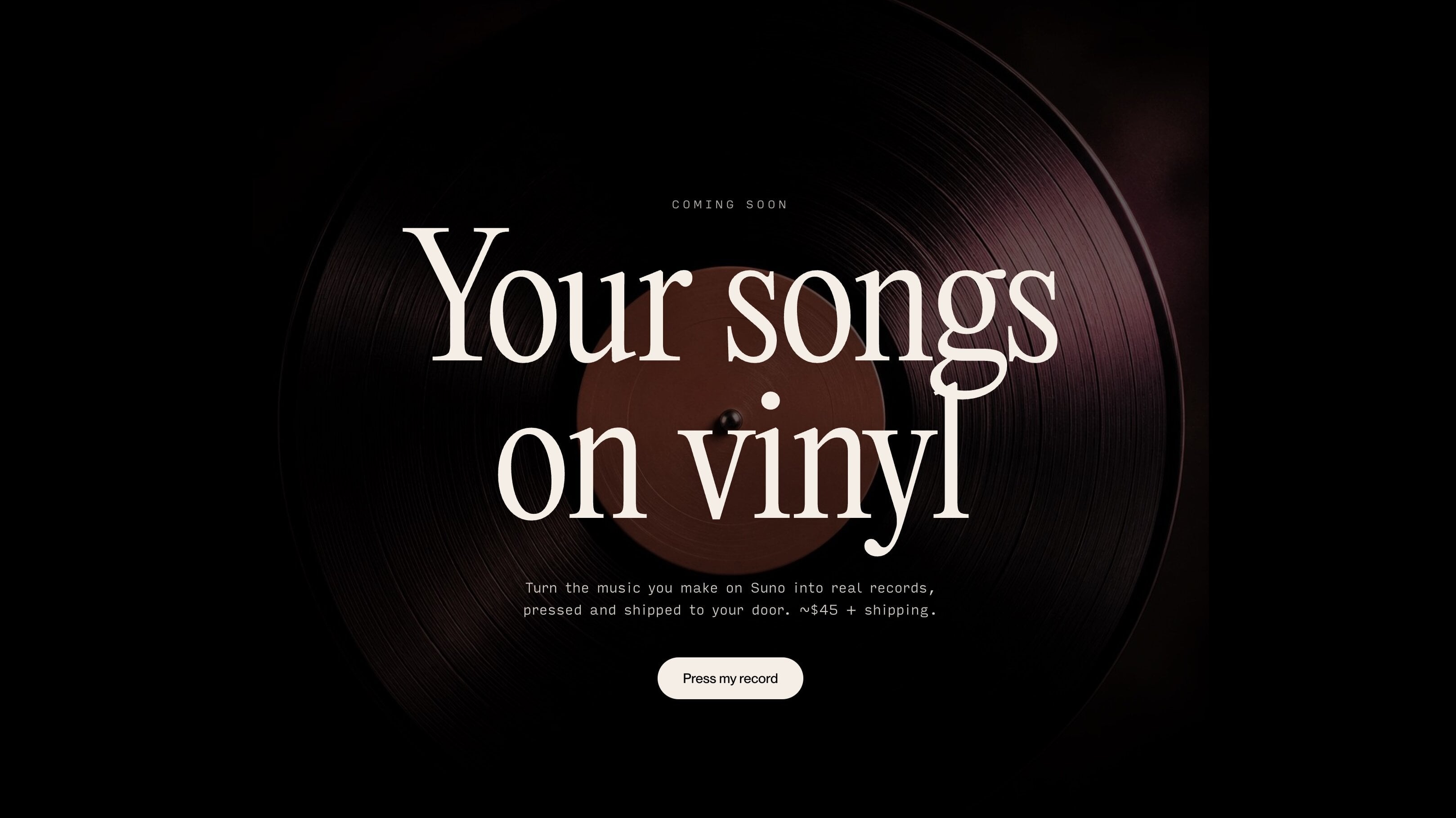
Now, the debate is taking another turn, as Suno moves into the vinyl market.
The company, which raised over $400 million in a Series D round in June that valued it at $5.4 billion, has opened a waitlist for Suno Vinyl, a service that turns songs made on its platform into physical records.
A Suno spokesperson told MBW that the in-the-works service is part of an effort to explore ways to give people physical versions of the music they create.
Each record is pressed and shipped to the user’s door, with pricing estimated at $45 plus shipping, according to the Suno Vinyl page, which lists the service as coming soon.
Suno pitches the product with the line: “Some songs deserve more than a stream.”
“Press a personal keepsake. Press a gift for a loved one. Or press a banger, because it’s too good to live on a screen,” the Suno Vinyl page reads.
The pitch leans on gifting, with Suno suggesting records for “the anniversary song, the birthday track, the inside joke that became an anthem.”
Users build a tracklist from their Suno library, with up to 46 minutes of audio per record.
They can then design a sleeve, labels and cover using their own art or Suno artwork.

The record comes with a full color printed sleeve and labels, according to the Suno Vinyl page.
The finished record is then pressed, quality checked and delivered, Suno says.
Each disc is a 12-inch black record made from PETG, which Suno describes as “eco-friendly,” and is pressed from the user’s final mix.
Suno says every record is “a genuine pressed record, not a novelty cut.”
News of the launch lands as Suno fights copyright battles on several fronts over how its models were trained.
In 2024, the major labels alleged that Suno and rival Udio were “replacing the work of human artists” with AI-generated tracks that, they said, cut into the royalties paid to human musicians.
The three majors first sued Suno and Udio in 2024, in a case coordinated by the RIAA.
Warner Music Group settled its case with Suno in November 2025 and struck a licensing deal with the company.
Universal settled its separate case against rival Udio in October 2025 but remains a plaintiff against Suno.
Sony Music, which has not settled with either AI company, also remains a plaintiff in copyright cases against both Udio and Suno.
As part of the Warner deal, Suno also acquired the label’s concert-discovery platform Songkick.
Under that same deal, Suno said downloading audio would require a paid account, with free-tier songs playable and shareable but not downloadable.
Just last week, Suno lost its copyright case in Germany from collecting society GEMA and continues to face legal action in Denmark from Koda.
Independent artists have brought their own cases, accusing Suno of copying their recordings to build its models.
The vinyl service gives Suno‘s users a physical product at a time when the legality of how the company trained its models is still being tested in court.Music Business Worldwide



