
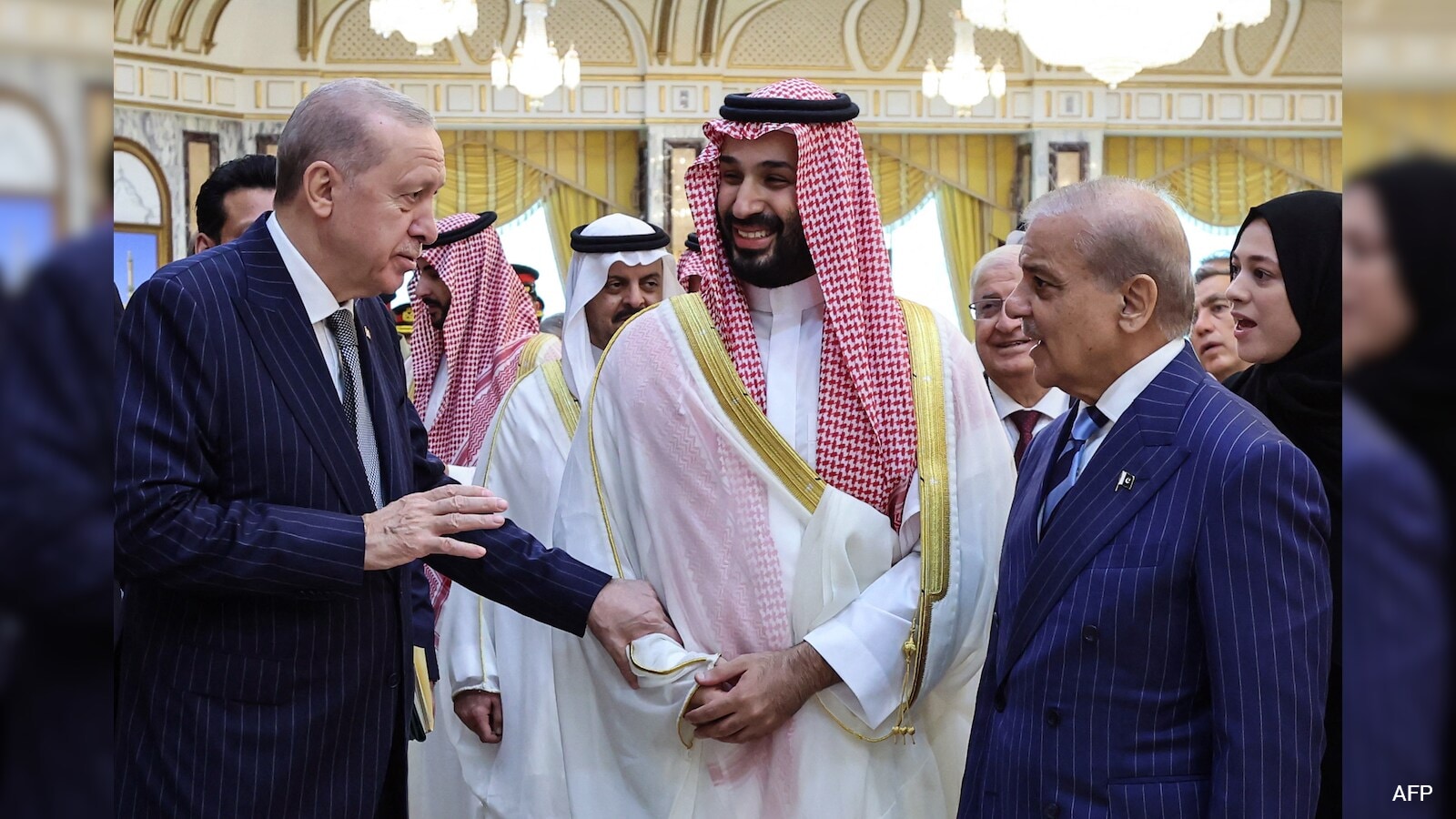



















A defence pact between Saudi Arabia, Turkey and Pakistan heralded a new security alliance seeking to deter a bellicose Iran, offset an unreliable US and send a message to Israel, analysts say.
As the Middle East war drags on, this alliance binds three powerful Sunni countries that are strategic allies of the United States with a NATO-style clause that considers any attack on one country as an attack on all.
Analysts doubt this provision will be enforced, as the trio seeks resolutions to the war, with Pakistan and Turkey acting as intermediaries.
Wealthy Saudi Arabia has positioned itself at the centre of this new alliance, signed in Islam’s holiest city, Mecca, but what does this agreement mean in practical terms?
Why now?
Nearly six months into the Middle East war, the US has failed to deliver a knockout blow to Iran, while Tehran continues to choke off traffic in and around the Strait of Hormuz and its Houthi allies disrupt shipping in the Red Sea.
This reality has upended the region’s security architecture — forcing a rethink of decades of conventional wisdom rooted in US military supremacy.
Despite the archipelago of US bases across the region, American forces have struggled to intercept all of the drones and ballistic missiles fired by Iran and its proxies.
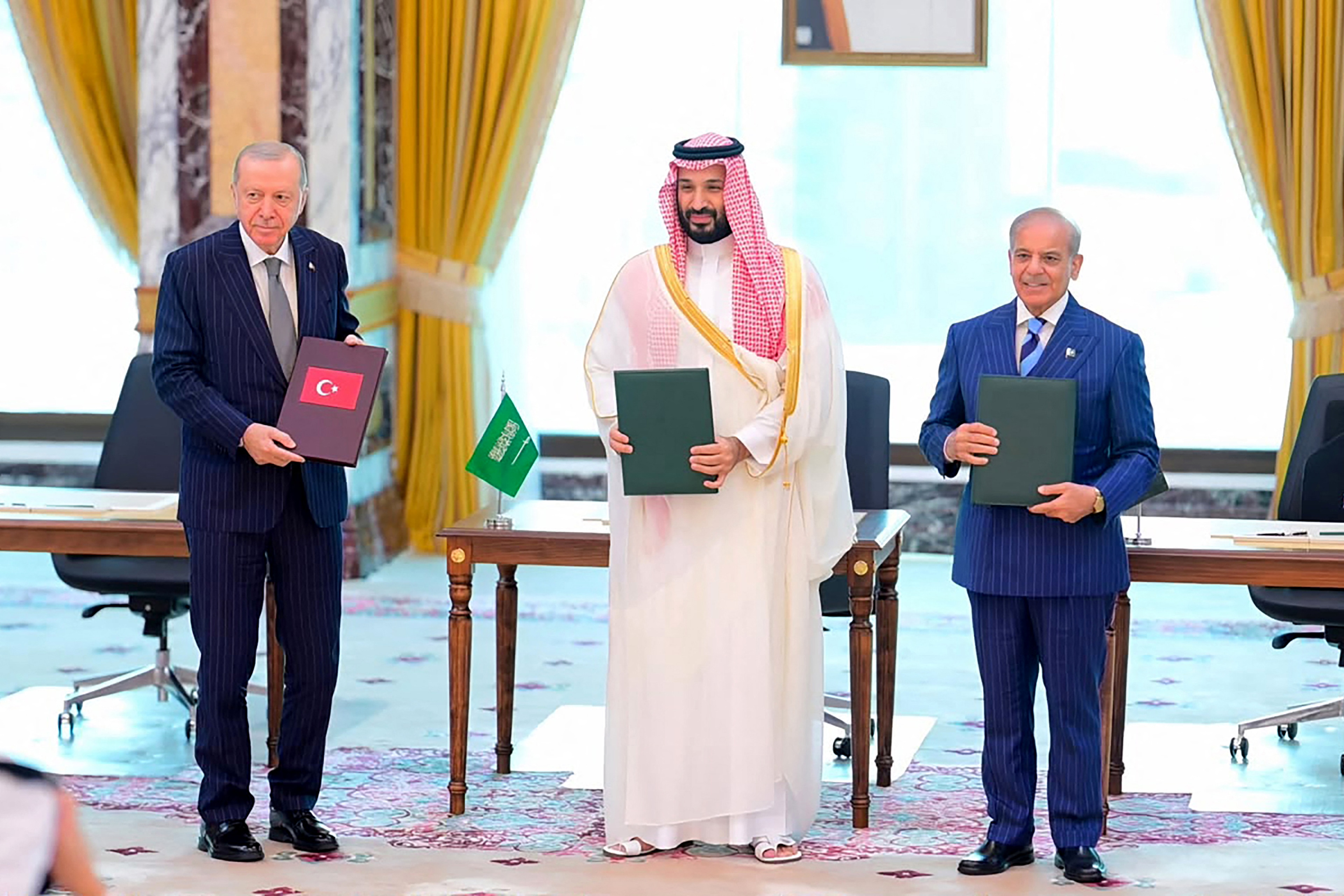
Photo Credit: AFP
The new alliance shows “American deterrence has been significantly weakened and that the Iranian threat will increasingly need to be managed by regional powers,” wrote Ali Shihabi, a political analyst close to the Saudi government.
Since the onset of the war, Saudi Arabia has grown closer to Turkey, with whom it previously had fraught ties, as well as Egypt and Pakistan. The four nations have supported mediation in the conflict.
Saudi Arabia and Pakistan have a history of security ties and had already signed a similar agreement last year.
What’s in it for each country?
“The three countries are unusually complementary,” Andreas Krieg, a lecturer in security at King’s College London, told AFP.
Oil-rich Saudi Arabia has wealth “but limited indigenous military-industrial depth,” he said.
Meanwhile Turkey and Pakistan, both face finance constrictions, but have powerful militaries.
“Turkey has technology and manufacturing capacity but needs markets and investment. Pakistan has manpower, military institutional depth and nuclear deterrence but needs financing and industrial opportunities,” he said.
The trio cannot replace the United States, which remains central to their security. But they are bridging a gap because Washington will not “restrain Israel or insulate Gulf infrastructure from Iranian retaliation”.
It is in Saudi Arabia’s interest to seek “several layers of security rather than one American umbrella,” Krieg said, with the kingdom at the centre of this new alliance.
With these resources combined, the alliance packs a powerful punch, in theory at least.
Will Turkey and Pakistan attack Iran?
The trio are unlikely to attack Iran should it repeat its strikes on Saudi Arabia.
Pakistan has not hit its neighbour despite signing a similar pact with the kingdom last year.
“Turkey and Pakistan will not fight Iran. These countries view themselves as ‘stabilisers’ and want to create a political momentum to push for that,” wrote Asli Aydintasbas, a fellow at Brookings Institution.
For H.A. Hellyer of the Royal United Services Institute, even if it is unlikely for Pakistan and Turkey to hit Iran in retaliation for strikes on Saudi Arabia, “this pact sends a politically symbolic signal to Iran and Israel”.
A new regional alliance?
Saudi Arabia has grown closer to Pakistan and Turkey as deep divisions plague the Gulf, even as it reeled from repeated attacks from Iran and its allies.
Saudi Arabia and the UAE were embroiled in a public rift even before the war, and though they recently appeared to reconcile, the UAE is likely to be wary of the new pact, analysts say.
The United States has long sought to build on the Abraham Accords that saw the UAE, Bahrain and others normalise relations with Israel, pushing for a regional alliance that integrates its close ally.
But the new defence pact consolidates major US allies into an alternative security architecture that rejects Israel’s hegemony, analysts said.
Pakistan and Turkey have been vocal against Israel, while Saudi Arabia has insisted it will not normalise unless Israel agrees to a path to Palestinian statehood.
“Washington would have wanted a security architecture that includes Israel and they’re still keen for Saudi Arabia to normalise ties. This alliance doesn’t point to that in the slightest,” said Hellyer.
The alliance, he said, “shows a desire to interrupt both the project of Iranian hegemony and that of Israeli paramountcy”.
(Except for the headline, this story has not been edited by NDTV staff and is published from a syndicated feed.)