


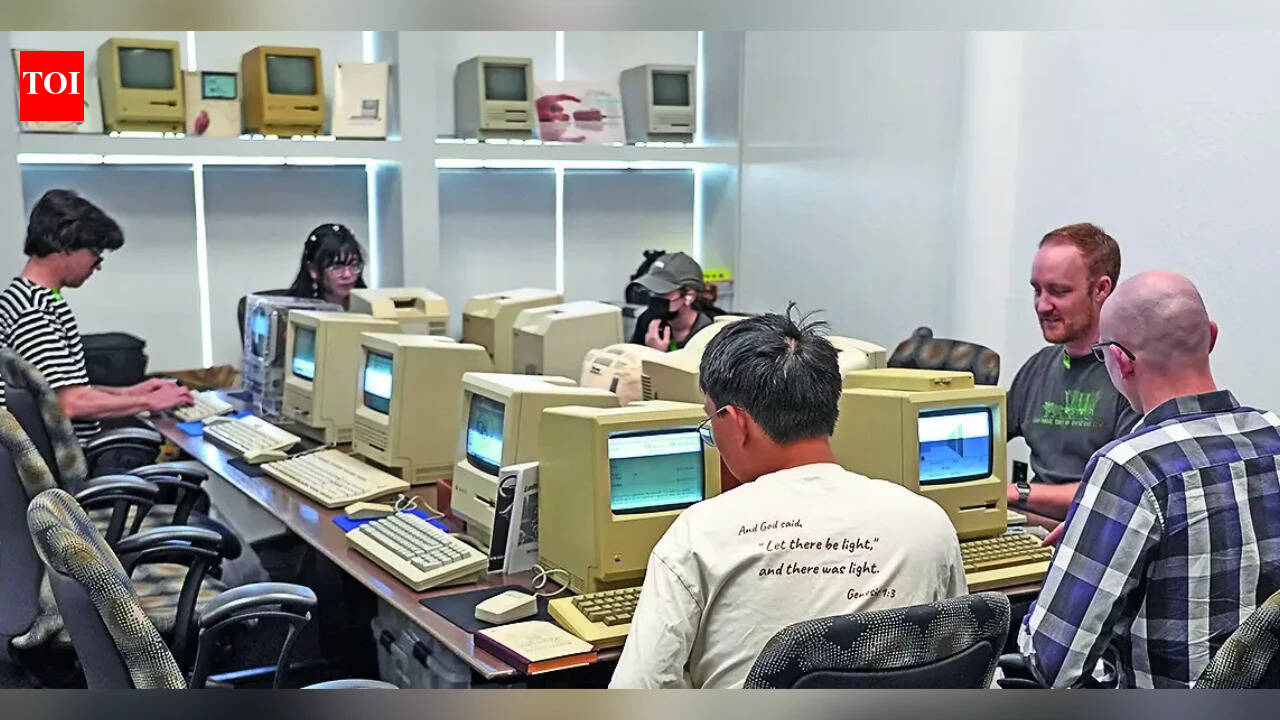
MOUNTAIN VIEW: Software engineer Josh Dersch loves old computers. He spends countless hours tinkering in his garage, trying to coax decades-old machines back to life. He estimates he owns more than 200 vintage computers and devices in his Seattle home. “It’s always been fascinating to me to see the origins of things,” Dersch said. “It’s a fun challenge to debug and repair. You can understand the entire system from top to bottom.”Dersch is part of a growing community of vintage computer collectors who are preserving the classic machines that helped launch the digital revolution. While Silicon Valley has since moved on to shaping the future of artificial intelligence, these hardware enthusiasts are intent on saving the Atari, Commodore and IBM machines that are ancestors to today’s laptops, wearable devices and smart phones.Where others see junk, people like Dersch see artifacts of computer history that are worthy of attention and respect. They delight in hearing the beeps and chimes of their childhood and firing up a low-def game of “Pong” or “Space Invaders”. “The enthusiasm for the history of computers and all the stuff around it is growing,” said Erik Klein, president of the Vintage Computer Federation, which organises an annual festival at the Computer History Museum in Mountain View in the heart of Silicon Valley.This year, more than 3,500 people attended the two-day Vintage Computer Festival earlier this month that celebrated the 50th anniversary of Apple, founded in 1976 in nearby Cupertino, Calif. It featured a panel with co-founders Steve Wozniak and Ronald Wayne reminiscing about the company’s early days as a scrappy startup led by the late Steve Jobs.Over a dozen such gatherings have since sprung up in cities across North America, South America and Europe. Growing interest is reflected in more demand for vintage computers in online marketplaces, Klein said. Iconic computers like the Apple-1 – the company’s first product – can fetch hundreds of thousands of dollars.Klein, a Silicon Valley software engineering manager, was a passionate collector until his hobby overwhelmed his home and family life. He had as many as 150 computer systems crammed into his closets and garage. He said his beloved collection had become an “albatross” and he worried about burdening his family. So he started selling and giving away his machines until he only had a few favourites left at home.Now Klein channels his passion for vintage computers into organizing festivals, repair workshops, swap meets and other events as president of the Vintage Computer Federation. “So it’s really about evangelising that history and evangelising this hobby of maintaining, collecting and enjoying this vintage technology,” Klein said.



