


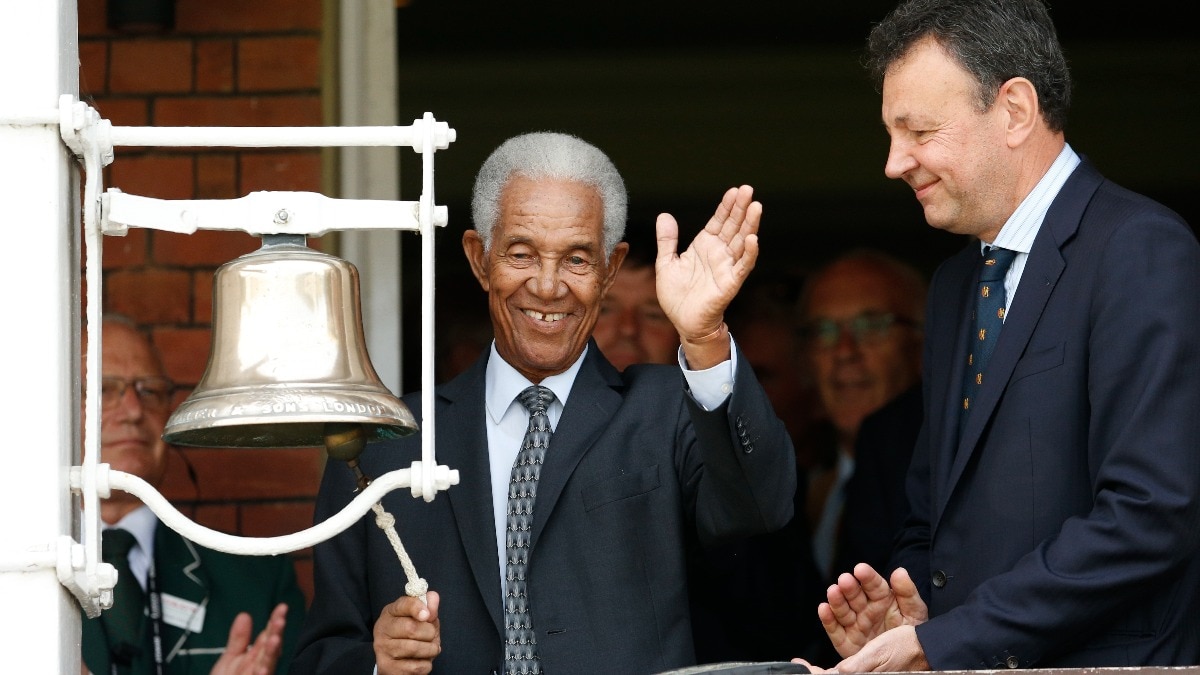
Sir Garfield Sobers remains one of the most celebrated all-rounders in the history of cricket. His ability to contribute with both bat and ball, combined with his outstanding fielding, made him one of the most complete cricketers of his generation. It is fascinating to imagine how he might have performed against some of the leading bowlers of the modern era, including Mitchell Starc, Jasprit Bumrah and Kagiso Rabada. Given his remarkable batting ability, Sobers could have been a formidable opponent for any bowling attack.
Such comparisons are, of course, hypothetical. However, they highlight the enduring legacy of a player whose achievements continue to capture the imagination of cricket fans. His journey from a talented youngster in Barbados to one of the most influential figures in West Indies cricket remains a remarkable story.
Sir Garfield Sobers represented the West Indies in international cricket from 1954 to 1974. During his career, he played 93 Test matches and one One-Day International, scoring 8,032 Test runs at an average of 57.78 and taking 235 wickets. Although his opportunities in one-day international cricket were extremely limited, his achievements in Test cricket established him as one of the greatest players of his era.
One of the disappointments of Sobers’ career was that he did not have the opportunity to play more one-day international cricket. The format was beginning to develop during the latter stages of his career, but Test cricket remained the dominant form of the international game. As a result, Sobers never had the chance to demonstrate his abilities regularly in the shorter format.
It is interesting to consider what he might have achieved had one-day cricket developed earlier. His aggressive batting, versatility with the ball and exceptional fielding could potentially have made him a major force in the format. However, his legacy was already firmly established through his performances in Test and first-class cricket.
Early Days in Domestic Cricket
Sobers’ journey began in domestic cricket in the Caribbean. As a teenager, he emerged as a promising cricketer in Barbados and quickly attracted attention for his performances with both bat and ball.
His early experience against strong opposition provided an important indication of his potential. Playing against established cricketers gave the young Sobers an opportunity to test his skills at a high level and gain valuable experience.
As his domestic career progressed, he became an important member of the Barbados side. His all-round abilities developed gradually, with his performances involving regular contributions with both bat and ball. Although domestic cricket did not receive the same level of media attention that international cricket does today, Sobers’ performances continued to attract recognition.
His ability to score runs and take wickets marked him out as a player with significant potential. His performances eventually brought him to the attention of those responsible for identifying talent for the West Indies team.
By the time Sobers completed his first full year of first-class cricket at the age of 17, he had already gained valuable experience. He later faced the Marylebone Cricket Club at Lord’s in London, where he scored 46 and 27 and took two wickets.
The performance further demonstrated his all-round capabilities. His ability to make contributions in both departments of the game impressed those who saw him play and strengthened the belief that he could eventually succeed at international level.
For a young player, such recognition would have been an important moment in his development. The appreciation of his performances would have provided him with confidence as he continued his journey towards international cricket.
Test Debut for the West Indies
Sobers eventually made his Test debut for the West Indies against England in Jamaica in March 1954 at the age of 17. He was selected for the fifth and final Test of the series after a teammate became ill before the match.
His selection represented a major step forward in his career. For the first time, the teenager had the opportunity to represent the West Indies at the highest level of international cricket.
At that stage of his career, Sobers was primarily regarded as a bowler. His medium-pace bowling was considered one of his main strengths, although he was also capable of contributing with the bat.
In his debut Test, Sobers took 4/75 and scored 14 and 26. The West Indies eventually lost the match by nine wickets, but the young cricketer had nevertheless shown glimpses of the all-round ability that would later define his career.
His early international performances were not yet at the level that fans would eventually come to expect from him. However, they represented an important first step in his development.
The early part of Sobers’ career also demonstrated how a player’s role can evolve over time. Initially selected primarily for his bowling, he gradually developed into one of the most accomplished batsmen in world cricket. His career serves as an example of the importance of recognizing and developing a player’s full range of abilities rather than limiting them to a single role.
Recognition of His Batting Potential
During the West Indies’ tour of Australia in 1954-55, Australian cricketer Keith Miller reportedly recognized that Sobers had the potential to become a better batsman than bowler.
The observation was significant because Sobers had already shown that he possessed natural batting ability. His attacking approach and ability to score runs suggested that he could eventually become a major contributor with the bat.
Recognition from an experienced player such as Miller would have been an important encouragement for the young Sobers. It also reflected the growing understanding that his potential extended well beyond his initial role as a bowler and lower-order batsman.
Over time, Sobers would prove that assessment correct.
The Emergence of a World-Class Batsman
Sobers continued to develop as an international cricketer, and by the late 1950s he had begun to establish himself as a formidable batsman.
In 1958, he scored his maiden Test century against Pakistan in Jamaica. The innings represented an important milestone in his career and marked the beginning of a period in which he would increasingly demonstrate his ability to score heavily at the highest level.
He went on to produce one of the most remarkable innings in Test cricket, scoring an unbeaten 365. The performance established his reputation as an exceptional batsman and demonstrated his ability to produce extraordinary scores on the international stage.
The innings also helped cement his status as one of the leading players of his generation. His performances with the bat showed that he was capable of producing the kind of major innings that could change the course of a match.
Becoming a Complete All-Rounder
By the 1960s, Sobers had firmly established himself as one of the greatest all-rounders in West Indies cricket.
His value to the team came from his ability to contribute in every department. He could score significant runs with the bat, take important wickets with the ball and make valuable contributions in the field.
His versatility was perhaps his greatest strength. Rather than relying on a single skill, Sobers could influence a match in several different ways. His batting could provide stability or aggression, his bowling offered the team another option, and his fielding allowed him to save runs and contribute to the team’s overall performance.
For many cricket fans, his all-round abilities bring to mind the contributions of later players such as Yuvraj Singh, who also demonstrated the value of being able to influence a match with both bat and ball while contributing in the field. Although the two players belonged to different eras, their careers highlight the importance of versatility in cricket.
Leading the West Indies
Sobers’ influence was not limited to his performances as a player. He also became captain of the West Indies and led the team for more than a decade.
He captained the West Indies in 39 Test matches, winning nine, losing 10 and drawing 20. His captaincy tenure, from 1965 to 1974, represented an important period in the development of the team.
As captain, Sobers emphasized the importance of putting the team ahead of individual performances. His leadership was based on the belief that players needed to contribute collectively if the West Indies were to succeed in both home and overseas conditions.
However, the success of a cricket team can never depend on one player alone. Sobers’ leadership was supported by the contributions of his teammates, whose performances with bat and ball played an important role in the team’s results.
His influence as captain also extended beyond statistics. He helped encourage a sense of confidence among his players and promoted an approach in which cricketers could express themselves and play without unnecessary fear.
Although his captaincy did not produce major international tournament victories, his leadership helped establish a foundation of confidence that would become important to West Indies cricket in the years that followed.
A Legacy Beyond Statistics
The impact of Sir Garfield Sobers on international cricket cannot be measured by statistics alone. His legacy is built on the extraordinary range of skills he brought to the game. He was a world-class batsman, a versatile bowler and an outstanding fielder. His performances helped redefine what was possible for an all-rounder at the highest level.
One of the most memorable achievements associated with Sobers came when he became the first player to hit six sixes in an over. The feat demonstrated his exceptional power and attacking ability and remains one of the most iconic moments in cricket history.
The achievement also reinforced the image of Sobers as a player who could combine technical ability with fearless stroke play. His batting style showed that an all-rounder could also be an explosive and highly influential batsman.
His contribution to cricket extended beyond individual records. Sobers represented the ideal of the complete cricketer—a player who could change a match with the bat, ball or in the field.
An Enduring Legacy
For cricket fans around the world, the legacy of Sir Garfield Sobers continues to endure. His career remains an inspiration for players who seek to develop their abilities across multiple areas of the game.
His journey from Barbados to the international stage demonstrates the importance of talent, development and opportunity. His evolution from a young bowler into one of the world’s finest all-rounders is one of the most compelling stories in cricket history.
Future generations will undoubtedly produce outstanding all-rounders, but matching the breadth of Sobers’ achievements will remain a significant challenge. His career set a benchmark for versatility and excellence that continues to influence how the role of the all-rounder is viewed.
The admiration for Sobers is not limited to his records. It comes from the complete nature of his contribution to cricket. He could bat, bowl, field and lead, making him one of the most valuable players of his generation.
For those who follow the history of cricket, Sir Garfield Sobers will always be remembered as a player who represented excellence in its purest form. His influence continues to be felt through the generations of cricketers who have followed him, and his name remains firmly established among the greatest legends of the sport.
His legacy is that of a fearless and versatile cricketer who demonstrated the extraordinary impact one player can have on a team and on the game itself. Sir Garfield Sobers’ place in cricket history is secure, and his contribution to the sport will continue to be celebrated for generations to come.
– Ends



