


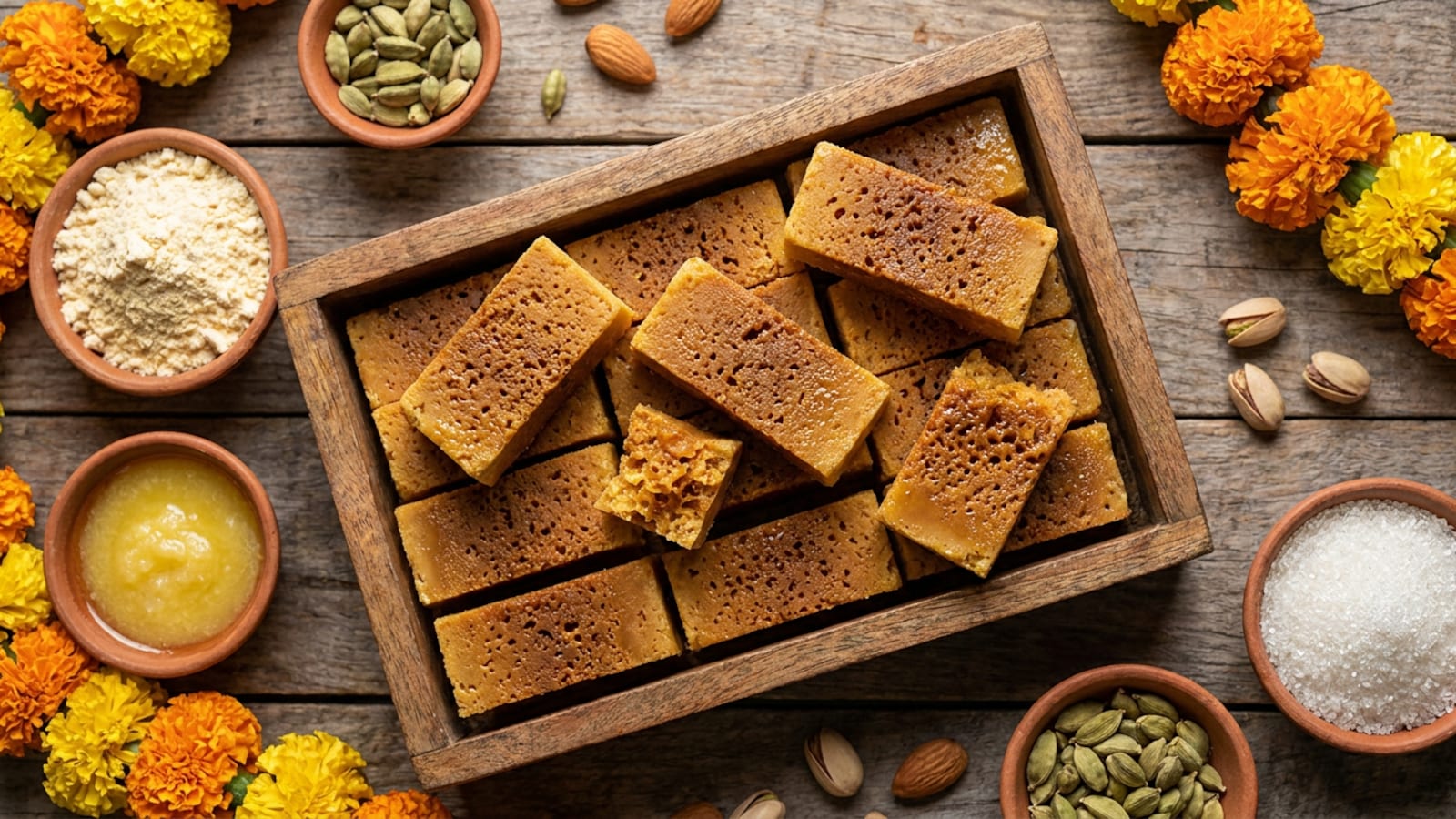
That first bite of Mysore Pak – golden, slightly grainy, dissolving in ghee before it even hits your tongue – feels like it was designed, not discovered. As it turns out, it may have been neither entirely. The story behind its name begins in a palace kitchen, with a cook under pressure and a batch of sugar syrup left on the flame a little too long.
An Apparent Happy Accident In The Royal Kitchen
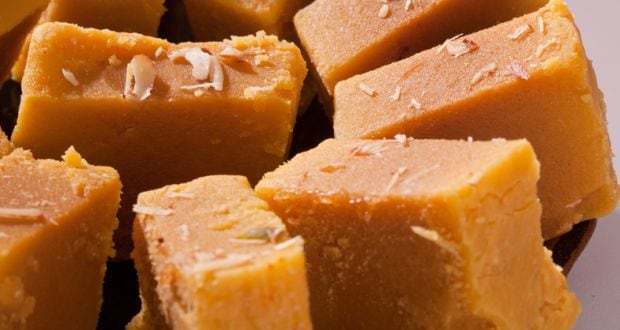
The tale is set in the early 20th century, in the kitchens of the Mysore Palace, during the reign of Maharaja Krishnaraja Wadiyar IV, a ruler known for his passion for the culinary arts, who maintained an elaborate royal kitchen. Palace cook Kakasura Madappa was tasked with creating something new, and reached for just three ingredients: gram flour, sugar and ghee. One version of the story adds a twist – Madappa let the sugar syrup boil a little longer than intended, and the result was a golden, porous block unlike anything the palace kitchen had made before. Whether by design or happy accident, the sweet that emerged had a distinctive golden colour, a soft, fudgy yet slightly crunchy texture, and a rich taste.
Also Read: How A 16-Year-Old School Dropout Turned Paneer Into Rs 10,000 Crore Milky Mist Brand
So, Why “Mysore Pak”?
When the Maharaja asked what it was called, Madappa, as per most sources, didn’t have a name ready, so he simply called it “Mysuru paka,” tying the city’s name to a Kannada culinary term. “Pak” here isn’t a place – in Kannada, “pak” (or “paka”) translates to “sweet,” while the related term “paaka shastra” means cooking procedure or technique. Put together, the name is refreshingly literal – “the sweet from Mysore.” Simple, on-the-spot, and it stuck.
From Palace To Public
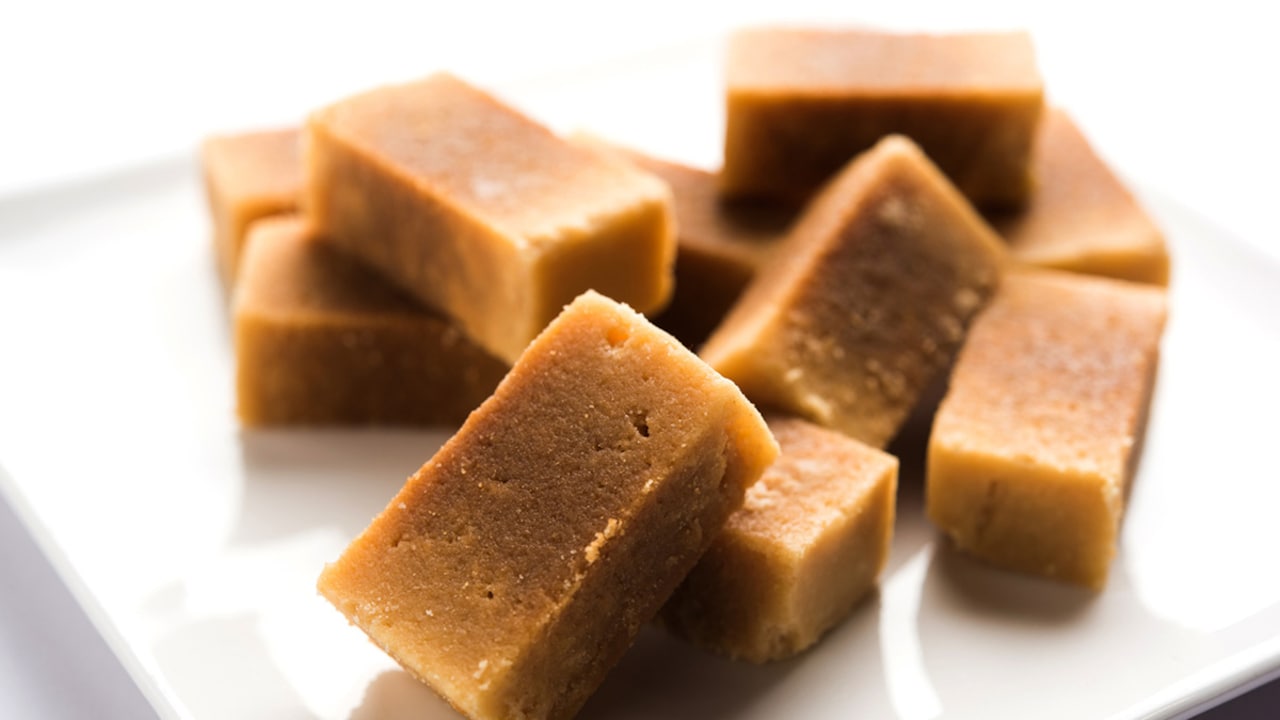
The Maharaja liked it enough to want it shared beyond palace walls, and Madappa is said to have gone on to open a sweet shop outside the palace. According to the current owners of Mysore’s well-known Guru Sweets, that shop was the seed of their own business today, a claim passed down through family history rather than documented record, but one that’s widely repeated in the sweet’s popular lore. From there, Mysore Pak spread across Karnataka, Tamil Nadu, Andhra Pradesh and Telangana, becoming a fixture at South Indian weddings and festivals before winning fans nationwide.
Also Read: ‘Chalta Hai’ Attitude Won’t Be Tolerated: Tukaram Mundhe To NDTV
Hard, Soft, Or Somewhere In Between?
Mysore Pak actually comes in two broad styles. The traditional version is soft with a dense texture that almost crumbles when you bite into it – closer to what Madappa would have made in the palace kitchen. Over time, sweet shops popularised a richer, ghee-heavy take often called “melt-in-the-mouth” Mysore Pak, which has become the more common version in many stores today. Beyond that, contemporary spins like chocolate Mysore Pak have also started showing up in cafes, though these are more novelty than tradition.
What’s worth noting is that there’s no palace record or scholarly source behind this story, it survives almost entirely through oral tradition, retold across sweet shops, food blogs and family lore. A few accounts even disagree on the exact century. So while the story is charming and widely accepted, it’s fair to call it legend as much as history.
So next time you pick up a piece of Mysore Pak, you are not just getting a South Indian sweet, you are tasting a century-old kitchen story, named on the spot by a cook who probably didn’t expect it to outlive the palace itself.



