



Prices for Japan’s corporate goods continued to rise at an elevated pace in July, keeping high cost pressure on companies, as central bank officials continue to consider whether to proceed with additional interest rate hikes to contain inflation.
The measure of input prices for Japanese firms rose 7.2% in July from a year earlier, slightly slower than the revised 7.3% in June that was the highest since March 2023, the Bank of Japan reported Thursday. On a monthly basis, prices climbed 0.1% after an upward revision to 0.5% in the previous month’s result.
ALSO READ: China’s July Factory-Gate Inflation Eases To Three-Month Low As Iran War-Led Oil Shock Eases
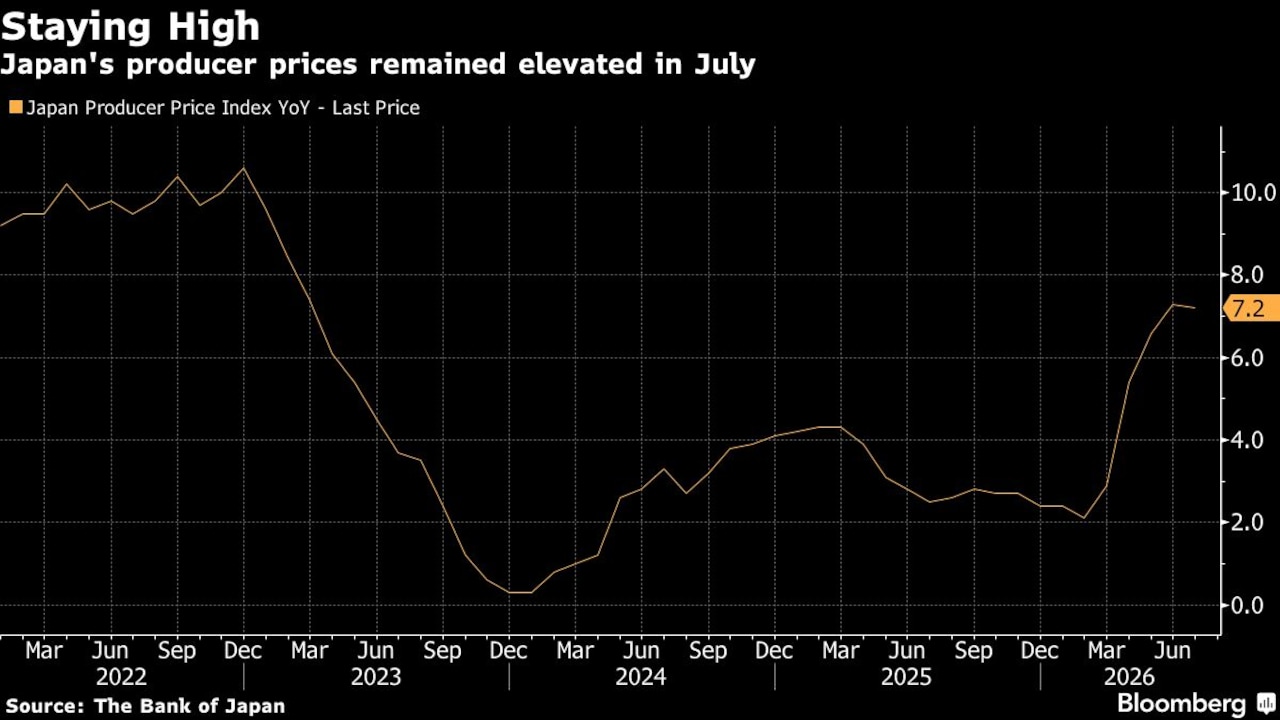
The advance in the producer price index was led by oil and coal products, chemical products and non-ferrous metals.
The data add to signs that pressure remains high on companies to pass cost increases to customers, keeping the BOJ on track to keep raising interest rates. After holding policy settings steady last month, Governor Kazuo Ueda signaled the possibility of the next move coming as early as September, citing upside risks for inflation and the possibility of an accelerated pace of rate action.
In the first half of this year, 556 companies went bankrupt because they were unable to pass on rising input costs to customers stemming from higher prices for fuel, raw materials and other items, Teikoku Databank reported. That was the highest number of so-called inflation-related bankruptcies for a half-year period since records began in 2018. The trend continued in July, when 121 cases were reported, a record for a single month.
In the latest outlook report for prices and growth, the BOJ noted producer prices have surged due to higher oil prices in the wake of the Middle East conflict and rising prices of nonferrous metals and machinery driven by the expansion in global artificial intelligence related demand. A tight labor market has also kept upward pressure on wages as employers compete to recruit and retain staff.
ALSO READ: DA Hikes So Far In 2026: What’s Changed For Government And Bank Employees? Check Full List
The weakness of the yen, which hit a 40-year low versus the dollar last month, has also added upward pressure on import prices of goods and materials. The yen traded around 159.32 per dollar Thursday morning in Tokyo, having pared gains made after joint currency intervention by Japan and the US to support the currency at the end of July.
(This story has not been edited by NDTV staff and is auto-generated from a syndicated feed.)
Essential Business Intelligence,
Sharp Market Insights,
Practical Personal Finance Advice, Daily Fuel, Gold and Silver Prices and Latest Stories — On NDTV Profit.



