


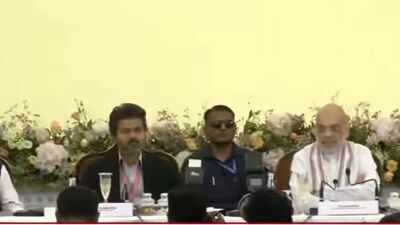
NEW DELHI: Union Home Minister Amit Shah on Thursday chaired the 31st meeting of the Southern Zonal Council in Chengalpet, Tamil Nadu, bringing together representatives of five states and three Union Territories to discuss issues involving the Centre and the southern region.The meeting was held at the Taj Fisherman’s Cove hotel in Kovalam and was hosted by the Tamil Nadu government. Chief ministers and senior representatives from the member states and Union Territories attended the meeting, according to the Ministry of home affairs.The Southern Zonal Council comprises Andhra Pradesh, Karnataka, Kerala, Tamil Nadu and Telangana, along with the Union Territories of Puducherry, Andaman and Nicobar Islands and Lakshadweep.Chief ministers including DK Shivakumar, Chandrababu Naidu, VD Satheesan and Revanth Reddy were present at the meeting.What is Southern Zonal Council?The Southern Zonal Council was established along with four other Zonal Councils under Sections 15 to 22 of the States Reorganisation Act, 1956.Amit Shah is the chairman of the Southern Zonal Council, while Tamil Nadu chief minister C Joseph Vijay is its vice-chairman. The chief ministers of the member states serve as vice-chairman on a rotational basis, according to the Ministry of Home Affairs.The 31st meeting was organised by the Inter-State Council Secretariat under the Ministry of Home Affairs, with the Tamil Nadu government serving as host.Chief ministers, Lieutenant governors and Administrators of the member states and Union Territories, along with two senior ministers from each state, are participating in the meeting. Chief Secretaries, advisers and other senior state officials, as well as senior officers from the central government, are also attending.Issues discussed at Zonal Council meetingsThe Zonal Council has a standing committee headed by the Chief Secretaries of member states. Issues proposed by states are first considered by the standing committee, with matters requiring further discussion subsequently placed before the Zonal Council.The Ministry of home affairs said the councils provide a platform for dialogue on matters involving two or more states, or between states and the Centre.Prime minister Narendra Modi has envisioned ‘TEAM BHARAT’ on the basis of cooperative federalism, and the Zonal Councils have contributed towards this approach, the ministry said.The councils are advisory bodies but have increasingly been used to address regional issues and promote cooperation among states and between states and the Centre.Water, education, infrastructure on agendaThe councils discuss issues of regional and national importance, including the implementation of Fast Track Special Courts for speedy investigation and disposal of rape cases involving women and children.
Share your thoughts in the comments
Be respectful · TOI community guidelines
Other issues can include education, water sharing, civil aviation and projects involving multiple states.The Southern Zonal Council also takes up matters linked to the Andhra Pradesh Reorganisation Act and implementation of the Pradhan Mantri Awas Yojana (Gramin), among other regional concerns.According to the Ministry of home affairs, 69 meetings of various Zonal Councils and their standing committees have been held since June 2014, reflecting their role as a forum for resolving disputes and coordinating on issues involving the Centre, states and Union Territories.


