


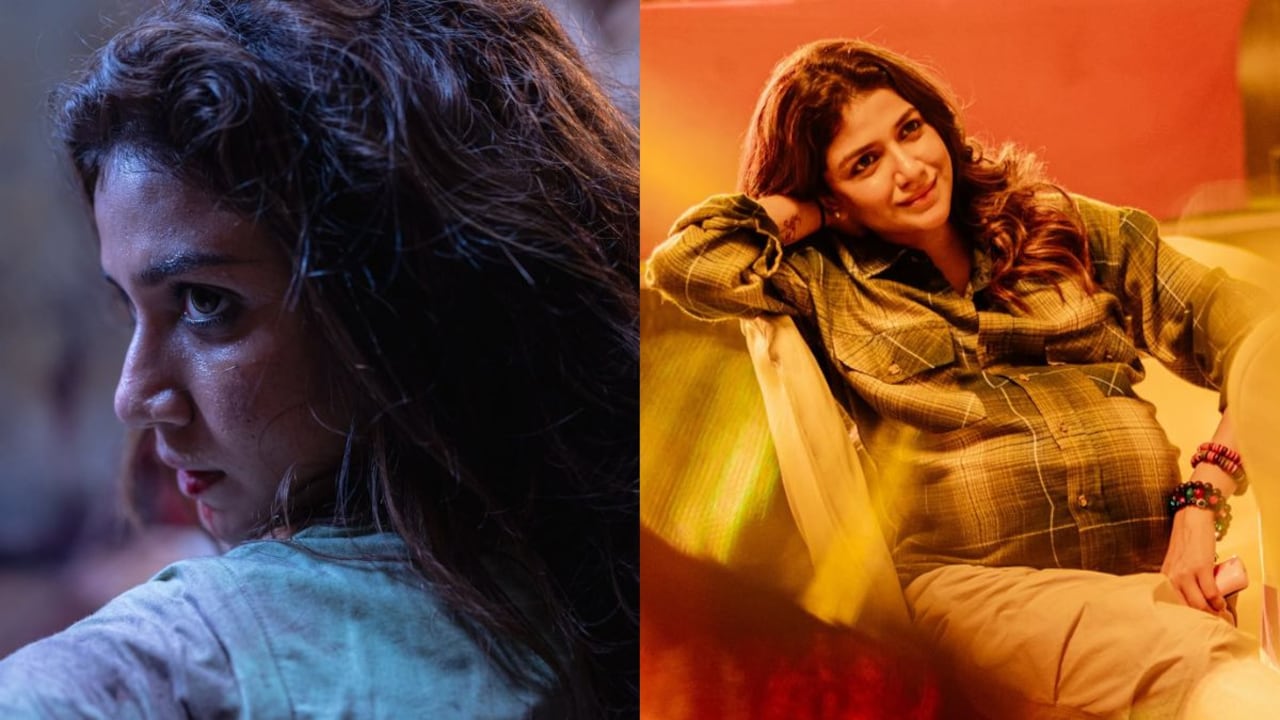
When a trailer is as unhinged and cleverly made like the one we saw of Zee5 Bangla’s dark comedy Nibba Nibbi, expectations are bound to rise. But it clearly plummeted into nothingness in the two-hour-long film that was watched.
Gore and violence paint your screens red right from the first frame; the film comes full circle towards the end, as the first scene makes a lot of sense after the film has been watched, but a lot of things still don’t.
For cinephiles out there, Nibba Nibbi will remind you of the notorious 1930s outlaws, so well popularised by the 1967 film Bonnie and Clyde. They had a big role in completely revolutionising how sexuality and violence were looked at, ushering in the Hollywood era. The lovers-on-the-run trope in a Tarantino-esque crime romance world was an adrenaline high, and those are the flavours generously peppered over what Nibba Nibbi was probably aiming at.
But the film loses its plot too soon.
The good and only redeeming element of the film is Sauraseni Maitra’s brilliant performance. She does what her character Paro, a heavily pregnant, gun-toting ‘maniac’, is written to do. Her screen presence is in top form, as is her brash dialogue delivery. But her apt performance can only do so much with a screenplay that is a ‘bloody’ mess. Rishav Basu as Deva, her partner-in-crime who is a lot less violent, honestly, does a decent job too.
Their chemistry is on point, as is their very toxic love story while on a road trip none of us would want to be a part of.
But that’s all that really holds your attention captive.
Tathagata Mukherjee’s road movie Nibba Nibbi is the story of a volatile young couple. They don’t think twice before flipping their guns out and shooting people down. Having stolen a hard drive with devastating details, dark secrets and criminal details of people with power, they are on the move and on a journey of endless crimes themselves.
It is on this journey that you look at this couple as absolutely cold-blooded. There’s a scene in the very beginning where Sauraseni Maitra’s character Paro simply shoots a waiter after his lascivious gaze follows her until she triggers him and his colours change. While Deva kills everyone present at the roadside eatery, Paro is seen peacefully feeding her ravenous self and walking out, like nothing happened. And it doesn’t end there.
The film continues to build its pace on a trail of endless robberies, gruesome murders and kidnappings while the deadly duo put their lives at stake, combatting ruthless assassins and a corrupt system.
For a brief glimpse, a little backstory of how Paro and Dev met, how they fell in love, and their inner pain and past seems to connect the dots and make sense of the intermittent violence in the film.
But it still looks hotch-potch regardless.
The abuses and slashing of humans maintain their momentum throughout the film, at times becoming a tad too much. Fair to say that the theme of Nibba Nibbi demands it, but for most of the film, the flow is inconsistent and confusing. It is implausible to understand who is after whose life, and why.
That the film had enough potential to be a gritty thriller, yes. But sadly, the bloodshed, string of gaalis and scarring violence replace the basic need of the film – which was a good story and better character arcs.
Tathagata Mukherjee’s vision for his Devdas-coded characters Paro and Deva is commendable. It fits in effortlessly, especially in today’s light of toxic romance which is unfortunately ‘romantic’. But make no mistake, this is no Devdas; it catapults into a tale going off its tracks. And all you are left with in Nibba Nibbi – Rishav Basu and Sauraseni Maitra, who actually carry whatever bits of the salvageable film there are on their able shoulders.
ALSO READ | Sex Worker, Pregnant Woman, Killer Action Star: Inside Bengali Film Nibba Nibbi’s Boldest Character


