


New Delhi:
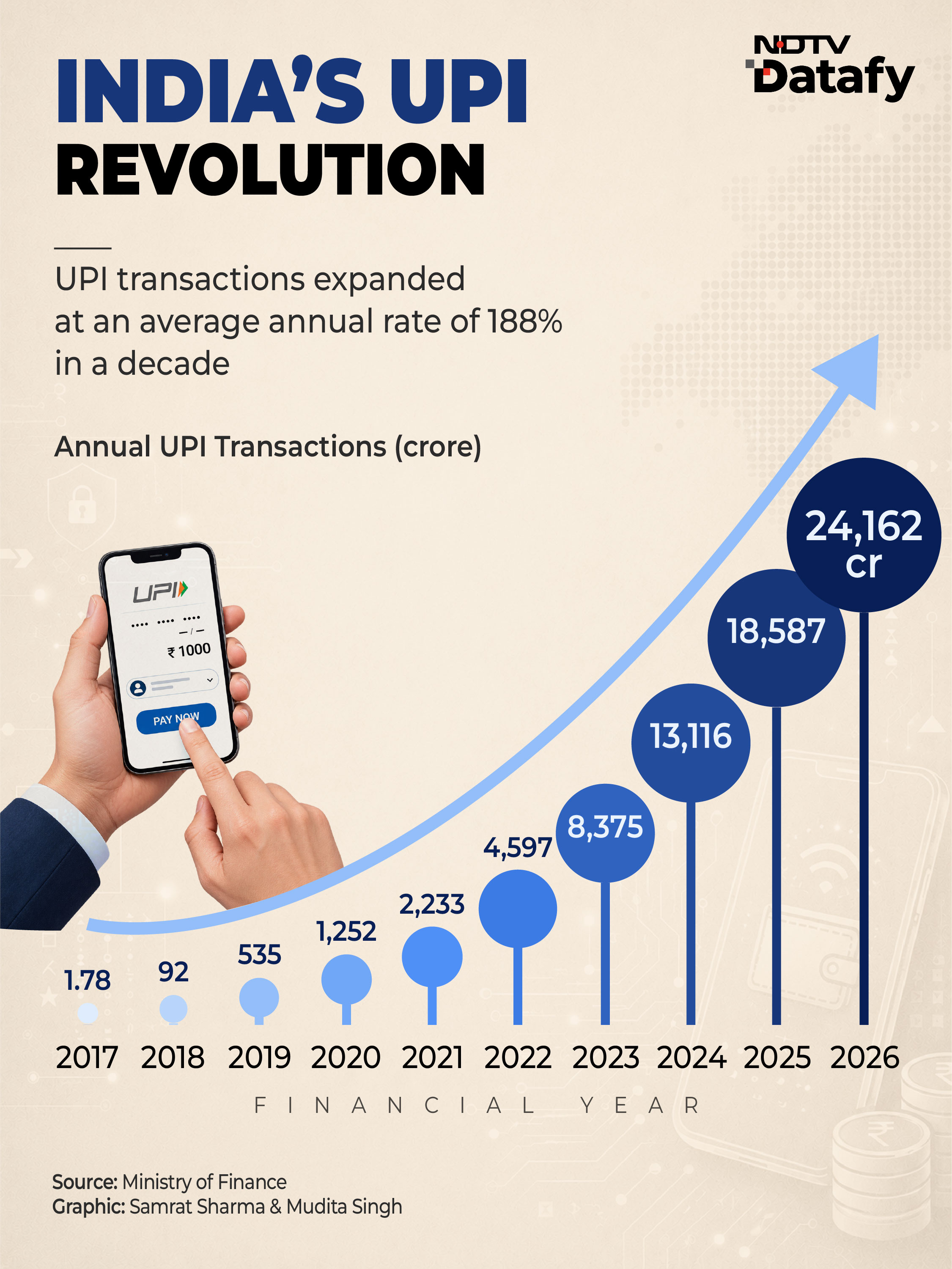
India’s payments landscape was transformed a decade ago when the National Payments Corporation of India (NPCI) launched the Unified Payments Interface (UPI) on August 25, 2016. Today, India accounts for nearly half of the world’s real-time payment transactions. Yet, beneath this success story lies a persistent gender divide.
Despite the rapid growth of digital payments, usage remains significantly lower among women, suggesting that the digital payments revolution is still largely driven by men.
India Closes Gender Gap in Bank Accounts Ownership
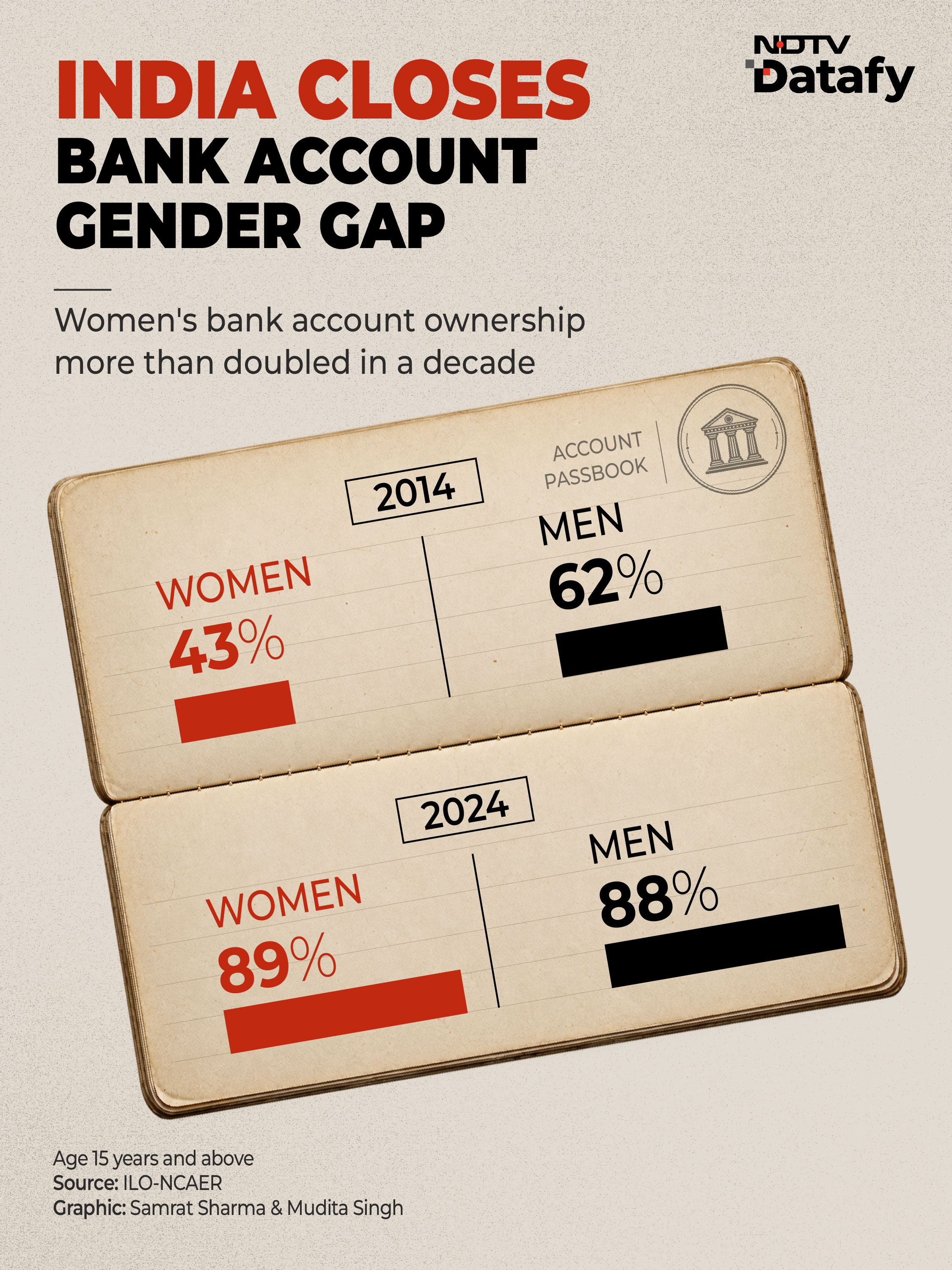
India has largely achieved the first milestone of financial inclusion: bank account ownership. Through initiatives such as the Pradhan Mantri Jan Dhan Yojana (PMJDY), access to formal banking has expanded dramatically, particularly among women.
“Around 43% of women in India had an account at a bank or similar financial institution in 2014, compared with 62% of men, a gender gap of nearly 20 percentage points. By 2024, account ownership had risen to 89% among women and 88% among men, effectively closing the gender gap,” according to an ILO-NCAER report
Usage of Digital Banking and Mobile Money Among Women
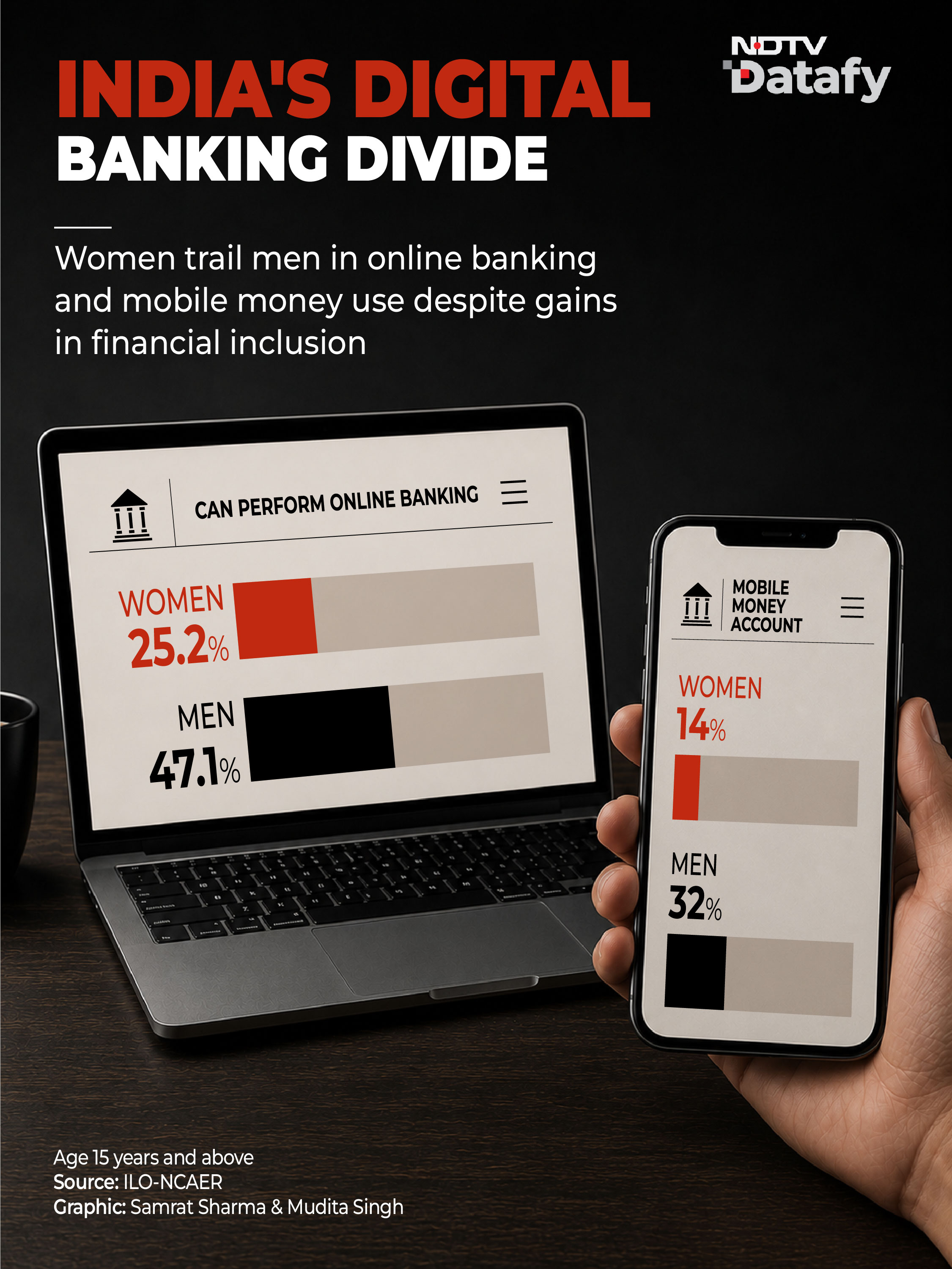
However, the gap widens when it comes to the use of digital financial services. While 47.1% of men could perform online banking, only 25.2% of women were able to do so. Similarly, 32% of men had a mobile money account, compared with just 14% of women, resulting in an 18-percentage-point gender gap.
Mobile money refers to a financial account linked to a mobile phone that allows users to store, send and receive money, make payments and carry out other financial transactions.
India vs Peers: Gender Gap in Digital Banking
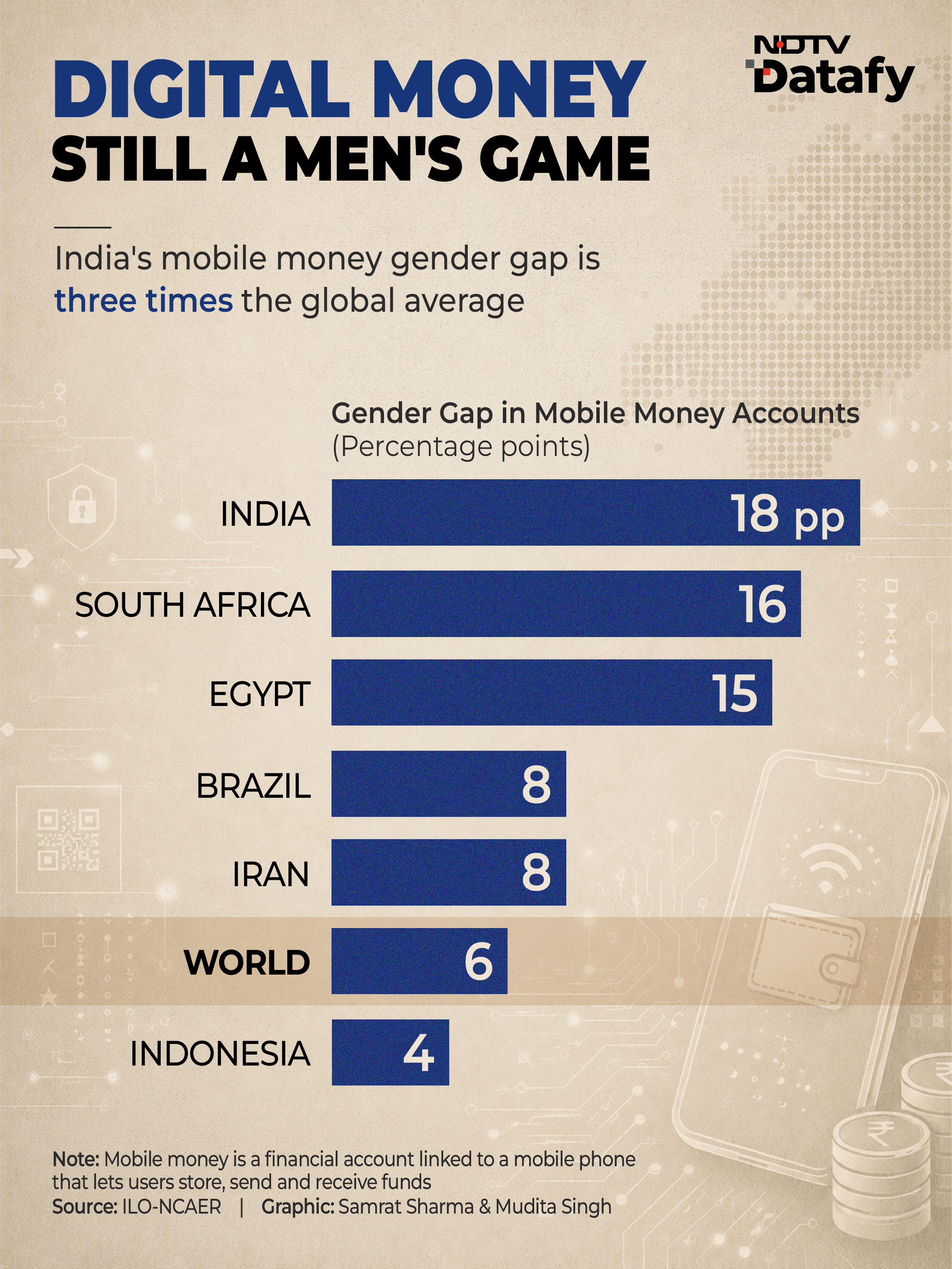
India’s digital banking gender gap is significantly wider than the global average. While the gap stands at 18 percentage points in India, the global average is six percentage points. Comparable gaps are much lower in countries such as Indonesia (four percentage points) and Brazil (eight percentage points).
Despite these disparities, the sharp rise in bank account ownership among women shows that progress is possible when access barriers are addressed. Bridging the digital usage gap through greater digital literacy, smartphone access and targeted outreach could help ensure that the next phase of India’s payments revolution is more inclusive.
The finance ministry said on Tuesday, “The next decade of UPI is poised to drive even greater transformation in India’s digital payments landscape. By bringing new users and merchants to the UPI Ecosystem, the Government of India remains committed to enabling the next phase of UPI-led innovation and strengthening India’s digital payments ecosystem through continued policy support, technological advancement, and greater financial inclusion.”


