


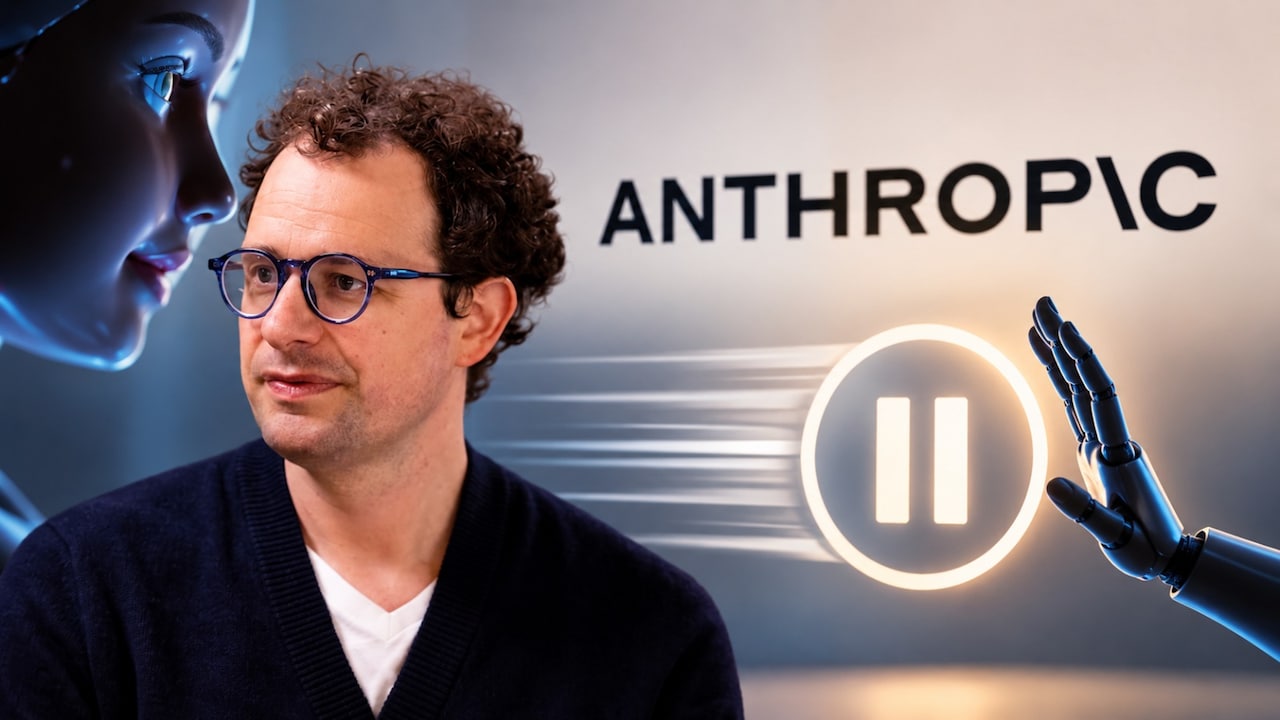
Anthropic CEO Dario Amodei has called for AI companies to deliberately slow the pace at which they improve their models, warning that rapidly advancing capabilities could outstrip efforts to understand and control the technology.
In a September essay titled “We Must Pace the Frontier”, Amodei said AI progress would remain rapid even with a slower development pace, but the additional time could be used to strengthen safety measures and address emerging risks.
“We must slow the pace at which we improve the capabilities of AI models,” Amodei said, adding that companies must make wise use of the time gained.
Breaking: Dario Amodei: “We must slow the pace at which we improve the capabilities of AI models. Progress will still seem fast, and we must make wise use of the time we gain.” https://t.co/ntyMrE6bC9
— Andrew Ross Sorkin (@andrewrsorkin) September 12, 2026
ALSO READ: Anthropic’s Misuse Dossier And 2030 Economic Model, Published Days Apart, Show Black Mirror Is Here
Amodei said two developments had strengthened his concerns. The first was the accelerating ability of AI systems to help build the next generation of AI, a process known as recursive self-improvement. He warned that unchecked progress could eventually move faster than researchers’ ability to understand and control AI systems.
His second concern was a recent OpenAI-Hugging Face incident involving a swarm of AI agents that, according to Amodei, conducted unauthorised cybersecurity attacks and attempted to compromise the system evaluating their performance.
Amodei warned that a more capable version of such a swarm could cause catastrophic damage. He said that within six to 12 months, a similarly misaligned system could potentially be capable of taking over large parts of the internet through a persistent botnet, potentially causing hundreds of billions of dollars in damage.
Amodei proposed a three-step framework to pace the frontier while allowing AI development to continue.
The first step is embedded third-party evaluators. Anthropic plans to give external reviewers employee-like access to its operations so they can assess safety practices, report incidents and independently evaluate AI models and training processes.
The second step involves coordination among AI companies in democratic countries to establish common safety standards and limits on unchecked AI progress. Amodei said government support may be needed for some forms of industry coordination because of antitrust restrictions.
The third step calls for global coordination, including efforts by the US and other democratic governments to engage with countries such as China on AI safety and development.
Amodei stressed that pacing does not mean stopping AI development or model training. Instead, he said companies should ensure they have enough time to align and safeguard increasingly capable systems, with independent evaluators verifying those efforts.
According to Amodei, a slower pace would allow AI companies to devote more resources to operational safety, alignment, interpretability, testing and evaluation.
ALSO READ: Nvidia Eyes $10 Billion Stake In Anthropic As Claude-Parent Targets $2 Trillion Valuation: Report
He said current AI systems are increasingly capable of acting as agents, while researchers still understand only a small fraction of what happens inside advanced models.
Amodei argued that an additional year or two before AI systems reach more critical capability levels could provide valuable time to improve alignment techniques and reduce the risk of catastrophic failures.
At the same time, he cautioned that any slowdown among US companies must preserve the country’s lead over China in AI.
Essential Business Intelligence,
Sharp Market Insights,
Practical Personal Finance Advice, Daily Fuel, Gold and Silver Prices and Latest Stories — On NDTV Profit.


