


American workers are taking home the smallest share of the country’s economic output since the Bureau of Labour Statistics started tracking the figure in 1947. The labour share has gone down to 52.8%, even as corporate profits have grown sharply. The share of wealth workers receive through wages, known as labour share, has been shrinking. At the same time, the S&P 500 index has gained 600% since the beginning of the century, while wages have increased by only 12.5% during the same period after adjusting for inflation, according to Fortune.
In simple terms, companies are making more money, while workers are receiving a smaller share of the gains. The effects of the falling labour share are also being seen in the use of government assistance programmes.
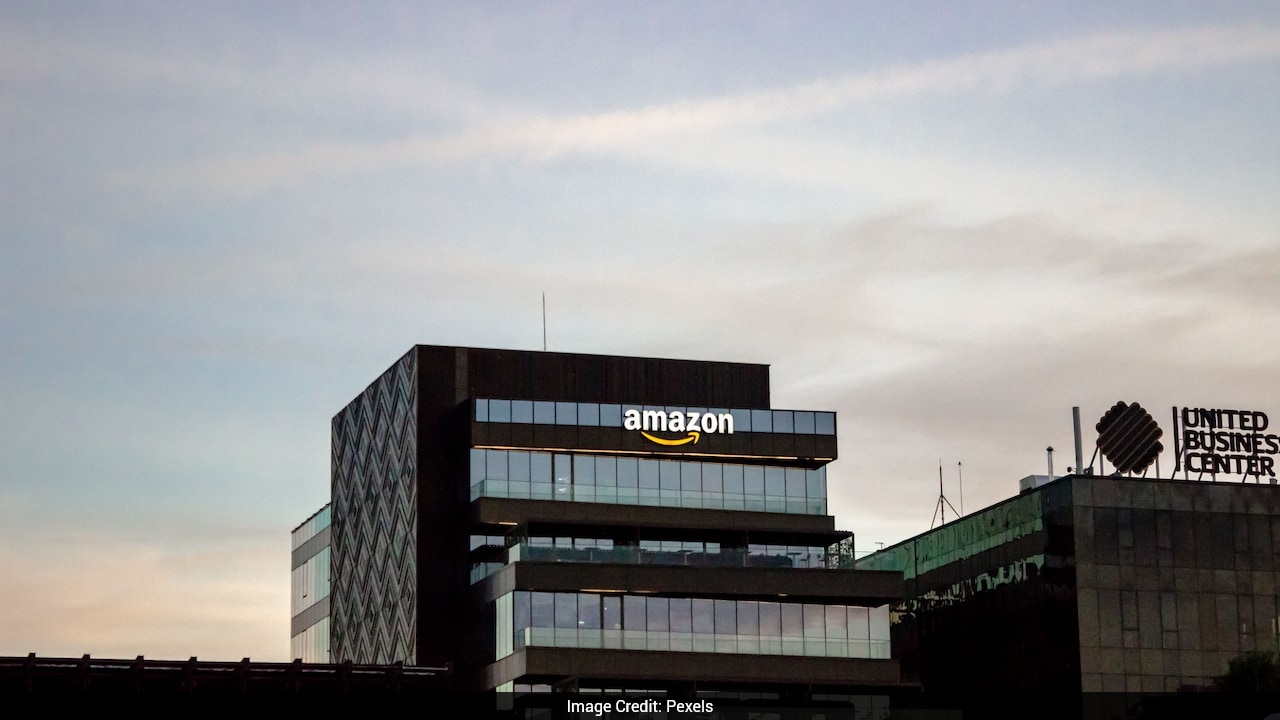
A recent Government Accountability Office (GAO) report found that across 11 states, Amazon had 12,346 workers using the Supplemental Nutrition Assistance Program (SNAP) and 11,338 relying on Medicaid. The number was nearly three times higher than the number of Amazon employees needing federal assistance in 2020.
During the same period, Amazon’s annual profits increased from $11.6 billion to $77.7 billion. The company’s 2025 revenue also rose 12% year-over-year, from $638 billion to a record $717 billion.
Amazon spokesperson Rachael Lighty told Fortune that the conclusion drawn from the GAO report is “wrong.”
“When you look at the facts, you see that Amazon pay is among the best in the industry, regular full-time employees have access to health care from their first day-at only $5 per week with $5 copays for employee-only coverage-and 74% of our regular full-time employees are enrolled in an Amazon health insurance plan, well above the 65% private-sector take-up rate for full-time workers,” she said in a statement.
“We challenge other large retailers to provide the same Day 1 comprehensive healthcare benefits that we do,” she added.
Walmart and FedEx also saw increases in the number of workers using federal assistance programmes.
Kathryn Larin, director for education, workforce, and income security issues at GAO, told Fortune that the data reveals that Americans using social safety net programmes are mostly working, with most of them working full time.
The income limit for SNAP eligibility is about 130% of the poverty line. This means that even though many of these workers have jobs, they still do not have enough money to meet their basic needs.
As quoted by Fortune, Larin said, “What this analysis really points to is the large number of people who have very low incomes and continue to have very low incomes”.
Diane Swonk, chief economist and managing director at KPMG, has warned about the hidden effects of a shrinking labour share.
Swonk mentioned that even though economic indicators suggest the economy is stable, most Americans are facing an ongoing affordability crisis.
“This chart from my recent Economic Compass still haunts me,” Swonk said in a LinkedIn post at the time.
Check Out The Post Here:
According to Anna Stansbury, an assistant professor of work and organisation studies at the MIT Sloan School of Management, the trend has been developing for about 50 years. Fewer workers in the US are represented by unions. The share fell from 20.1% of US workers in 1983 to 10.0% in 2025. Stansbury said this gives workers fewer opportunities to bargain for better salaries and benefits.
However, Stansbury said the bigger reason is the breakdown of the employer-employee relationship.
In the past, a typical employer-employee relationship involved direct employment. A worker for a company would do their work at the company they were employed by. For example, a large bank such as Bank of America once employed a janitor to clean its offices.
“In more and more cases, that’s not actually people’s experience of the workplace, particularly in lower middle-income jobs,” Stansbury told Fortune.
Instead, large workplaces such as retailers and banks hire gig workers to do jobs that were once handled by direct employees.
Companies may hire a security company, which employs a security guard to work outside the company’s office. Delivery drivers may also work as contract workers instead of a full-time employee.
As a result, companies do not have to provide these workers with equity or benefits.
Stansbury explained that large companies are also saving money on benefits and can argue that they are improving efficiency by not spending resources on workers whose roles do not directly drive revenue.


