


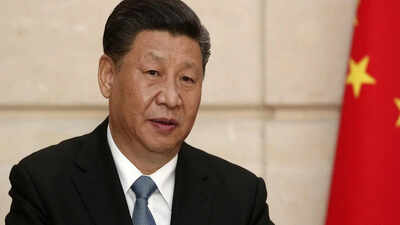
China on Thursday rejected US efforts to pressure countries buying Russian oil and gas, saying its normal trade with other countries should not be subject to interference or coercion by third parties.The response came after the US House of Representatives passed the Lindsey O Graham Sanctioning Russia and Iran Act of 2026. The legislation gives US President Donald Trump the power to impose tariffs of up to 100 per cent on countries that continue to buy Russian oil and gas, including major buyers such as China and India.Chinese foreign ministry spokesperson Guo Jiakun said Beijing opposes sanctions that do not have a basis in international law or authorisation from the UN Security Council.“China consistently opposes long-arm jurisdiction that lacks a basis in international law and is not authorised by the United Nations Security Council,” Guo said at a media briefing.He said China’s trade with other countries was based on equality and mutual benefit.“Such cooperation neither targets any third party nor is subject to interference or coercion from any third party”, he said.
What does the US bill propose?
The US House passed the legislation by a 262-159 vote on Wednesday, after the Senate approved it last month. The bill will now go to Trump for his signature.The legislation is aimed at increasing pressure on Russia over its continuing war in Ukraine. It creates a route for the US president to impose tariffs of up to 100% on the five largest importers of Russian oil or natural gas.Countries could avoid the tariff provision if they import less than 15% of Russia’s natural gas exports and have taken significant steps to reduce those purchases.India and China are among the biggest buyers of Russian crude. The proposed tariffs are therefore significant for both countries and could affect their trade with the US.
China defends Russian energy trade
Beijing has repeatedly opposed unilateral sanctions and has continued economic ties with countries targeted by US sanctions, including Iran.China is also a major buyer of Russian energy. Much of its Russian oil and gas imports are transported through pipelines across the two countries’ land border.Official data cited in the briefing showed China’s imports of Russian oil and gas were worth about $64 billion last year. Imports between January and August this year had already crossed $70 billion.The US tariff measure could therefore put pressure on a major part of China’s energy trade with Russia.
India says energy security remains priority
India also reacted to the passage of the US bill on Thursday, saying it was monitoring developments and would take steps to protect its trade and economic interests.“The government of India has noted the passage of the Sanctioning Russia and Iran Act in the US Congress. We are monitoring further developments on this matter. As stated on several earlier occasions, India remains firmly committed to ensuring energy security for its 1.4 billion people. It will continue to do so through diversified sourcing and on the basis of evolving market dynamics,” the Ministry of External Affairs said.The ministry said the potential impact of the legislation had been discussed with US officials in recent months.“This issue has been discussed at high levels in recent months with various US interlocutors. Its potential implications for not just the bilateral relationship but also the international energy market have been very clearly articulated by the Indian side,” it added.The MEA said New Delhi would take “all necessary measures” to protect its trade and economic interests.“Government will work closely with Indian trade and industry bodies to deal with the implications of these developments,” it said.


