


Four weeks on, search operations for 6,000 missing people continued in Nepal as authorities on Sunday said the death count from last month’s devastating flash floods crossed 1,450.
The deadly floods, originating near the Nepal-Tibet border, destroyed homes and buildings, and devastated towns and villages in the northern and central parts of the Himalayan country.
People, their homes, vehicles, as well as roads and bridges, were swept away in a matter of minutes as the Bhotekoshi River carried the floodwaters downstream.
Nepal continues to reel from the aftereffects of the deadly floods, which not just claimed lives but also damaged significant infrastructure, including hydropower projects.
Over 1,450 Dead
According to a statement by the Nepal Police, the death count of the August 26 flash floods has reached 1,451 as rescuers recovered more bodies from the affected areas.
The highest count comes from the Chitwan district, with authorities recovering 367 dead bodies, the statement said. Another 236 bodies were recovered from Rasuwa, 232 from Nawalparasi East and 222 bodies were found from Nawalparasi West.
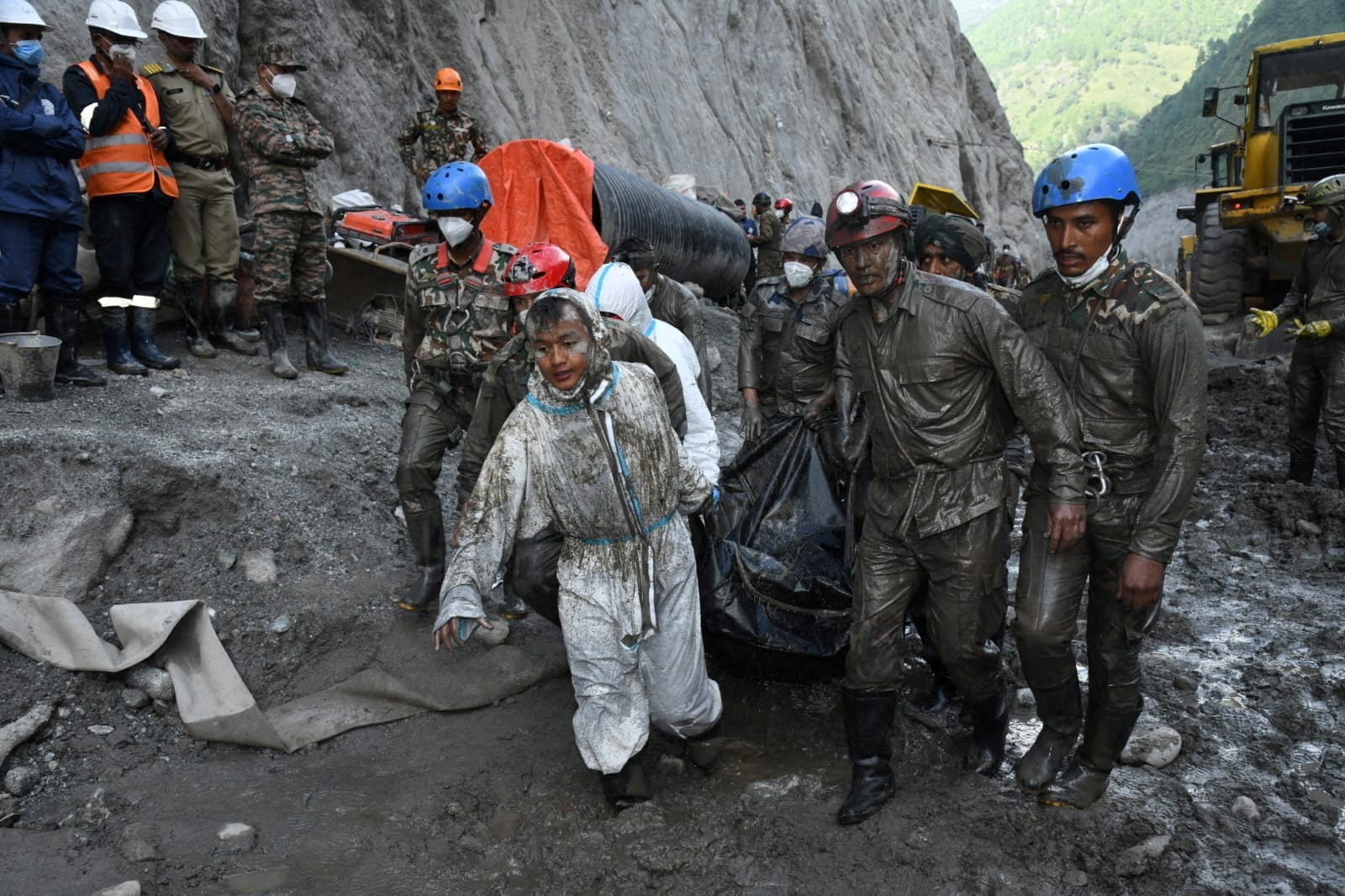
Members of a search and rescue teams carry the body of a victim from the inside the Chilime Hydropower Project tunnel
Photo Credit: Reuters
The statement further said that 203 bodies were recovered from Nuwakot, 79 bodies from Gorkha, 72 bodies from Dhading and 38 bodies from Tanahu. Two people died in a Kathmandu hospital during treatment.
Search Continues
Authorities have estimated that about 6,000 people remain missing in Nepal, with search operations underway.
River stretches, debris fields and damaged hydropower projects in Rasuwa and neighbouring districts are being combed to trace the missing persons, nearly a month after the floods devastated Nepal.
Rescuers have recovered 17 bodies from the Upper Trishuli-1 hydropower project in Rasuwa, trapped in a reinforcement mesh and buried in mud. Rescuers used grinders, gas cutters and rotary equipment to recover the bodies.
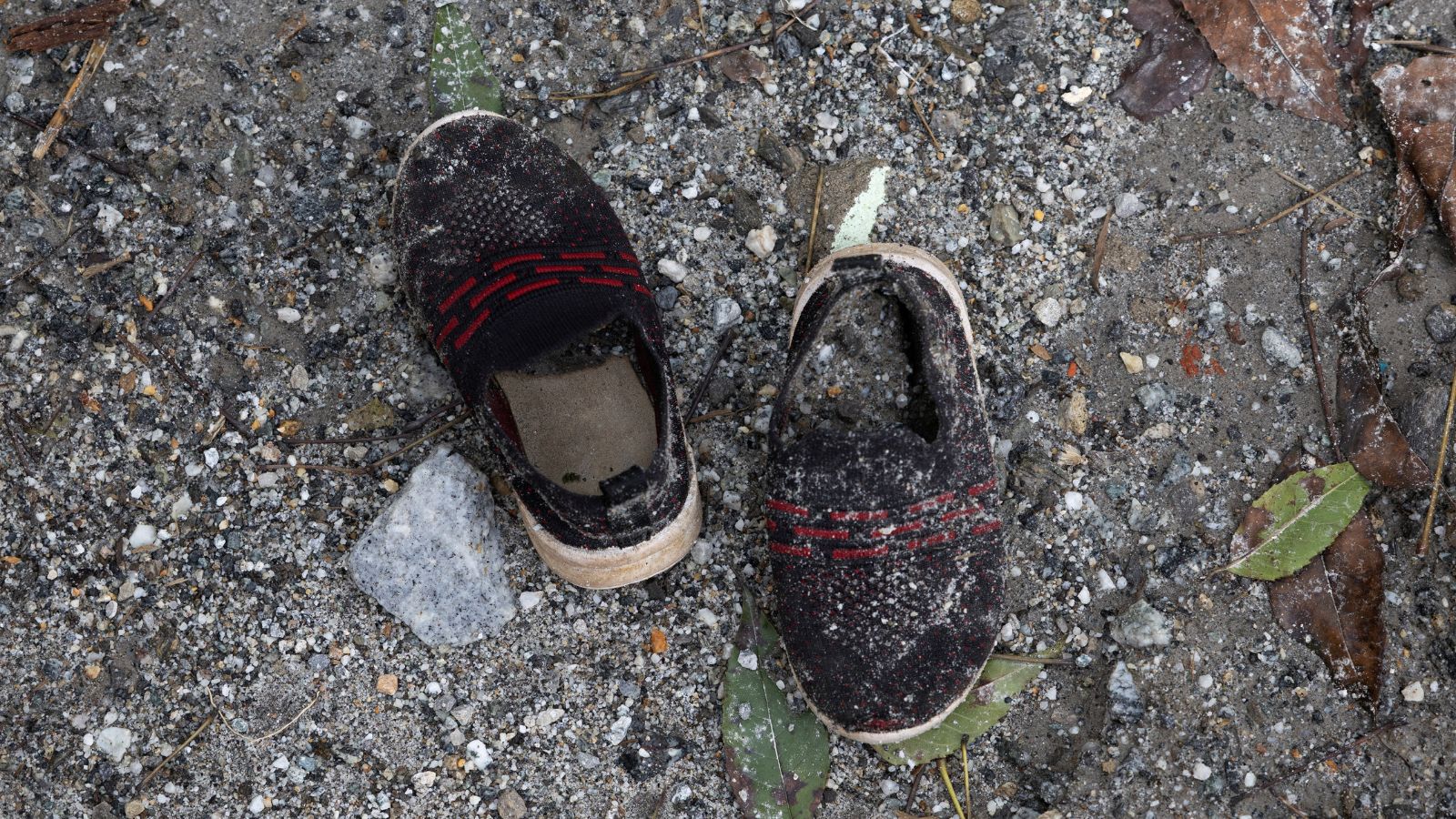
A pair of shoes belonging to a child, covered in sludge, lies on the grounds of Uttargaya Public School following flash floods and mudslides in Angitar, Nuwakot district, Nepal.
Photo Credit: Reuters
Earlier this month, a field commander from the Nepal Army said that it could take three or four months to clear some of the tunnels due to the sheer volume of debris that has accumulated inside them.
While rescue works continue, identifying the bodies has emerged as a challenge. Many of the bodies that have swept downstream have often been decomposed, damaged, or recovered only in parts – making it difficult for rescuers to identify them.
So far, nearly 1,300 bodies have been temporarily buried after their DNA samples were collected, officials said. Only 110 of the recovered bodies have been handed over to families after identification, they said.
Extensive Damage
The flood has also resulted in extensive damage to large parts of the affected areas. People have been struggling with no home to return to, while roads and bridges also remain damaged.
The government has begun repairing suspension bridges along the Trishuli corridor after the Nepal floods destroyed or damaged crossings connecting communities in Nuwakot and Dhading.
Residents are facing difficulties accessing markets, schools, health facilities and other essential services.


