



NEW DELHI: The innumerable voters in West Bengal who were removed from the electoral rolls after special intensive revision (SIR) may not be able to vote for more than a decade as appellate tribunals set up by Supreme Court could take more than 12 years to decide on their appeals for inclusion, going by the present pace of adjudication.An affidavit filed by Election Commission before Supreme Court says 1,26,194 applications have been decided by tribunals in the last five months since they started functioning in mid-April. So, on average, 25,238 cases are being decided by the tribunals in a month when even Saturdays and Sundays are included as working days. The total number of pending cases as of Sept 16, when the affidavit was filed, was 37,05,235. At current speed, if the tribunals work seven days a week, it would take 146 months to decide all cases.
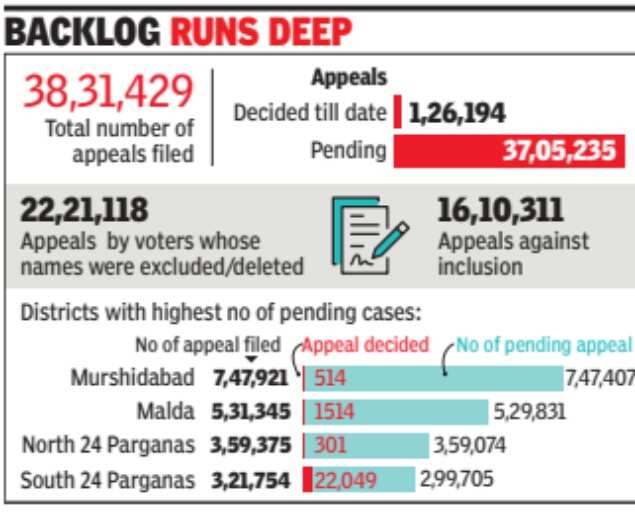
Excessive backlog
Admitting that the present infrastructure and number of tribunals are insufficient to handle the Herculean task of adjudicating 37 lakh cases, the poll panel pleaded with the court to increase the number of tribunals in the state from 24 to 42, almost double the present strength, and allow judicial officers to work from home.“With a view to further streamlining and expediting the disposal of the pending appeals, it is proposed that the number of appellate tribunals in the state of West Bengal may be considered for increase to correspond with the number of parliamentary constituencies in the state, so as to facilitate expeditious disposal of the pending appeals,” said the affidavit, filed in response to a petition from TMC MP Derek O’ Brien. Allowing judicial workers to conduct hearings and undertake other proceedings from home “would assist in expediting the disposal of pending appeals by minimising the time lost in conveyance”, it said.In another affidavit filed in response to a petition on the functioning of the tribunals, the commission said they were constituted pursuant to the directives of the apex court and the standard operating procedure (SOP) governing their functioning has been formulated by the committee constituted for this purpose, comprising, inter alia, former judges of the high court at Calcutta.
Share your thoughts in the comments
Be respectful · TOI community guidelines
“It is humbly submitted that the reliefs sought by the petitioner pertain primarily to the functioning, procedure and accessibility of the appellate mechanism and, therefore, fall within the domain of the SOP governing the functioning of the appellate tribunals and the authorities entrusted with the administration thereof. The feasibility, modalities and implementation… are matters best left to the consideration of the concerned appellate tribunal...” the affidavit said.


