


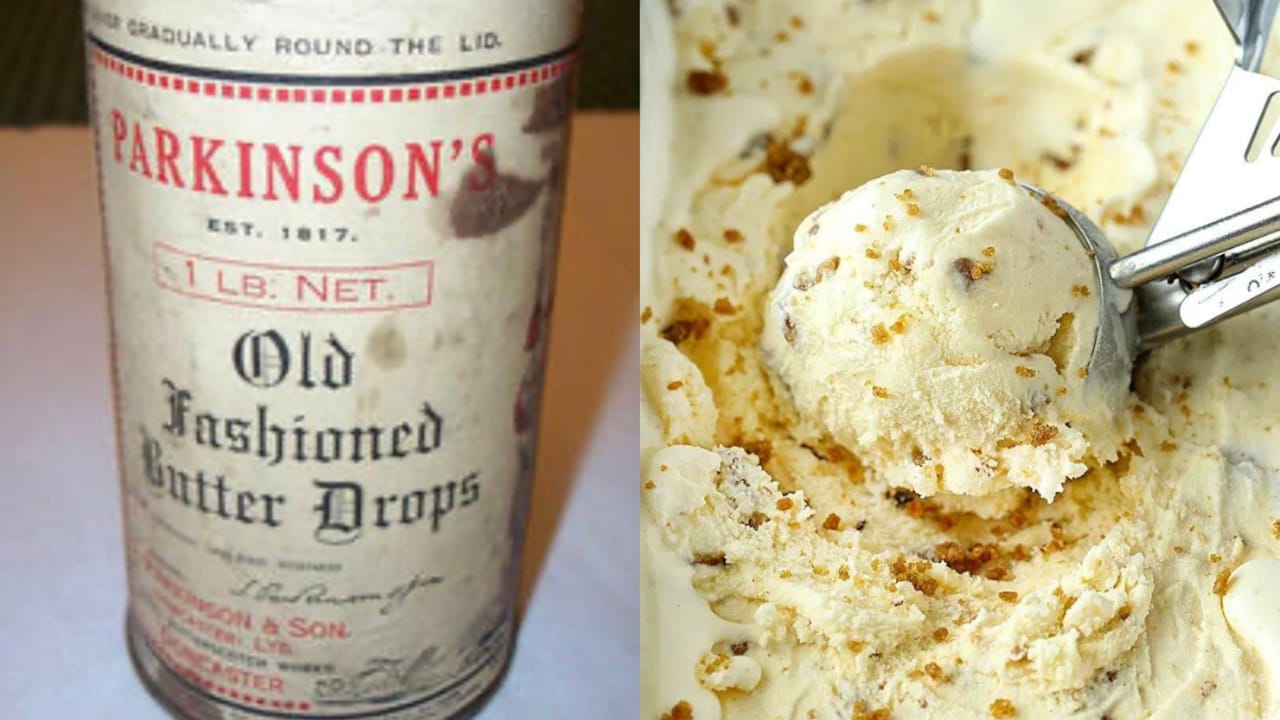
Butterscotch is one of those flavours most of us grew up loving. It is in ice creams, cakes, puddings, and sundaes. For many Indians, the word instantly brings to mind a creamy yellow ice cream topped with crunchy caramelised bits. But have we ever stopped to wonder what “butterscotch” actually means? Does it contain butter? Does it have anything to do with Scotch?
Actor and food writer Tara Deshpande recently brought attention to this sweet confusion with a humorous post on X. She joked that butterscotch ice cream had been “cheating” people for years because it contained neither butter nor Scotch.
In an X post, she wrote, “Shocking! Butter Scotch ice cream has been cheating the public for years. It has neither butter nor Scotch in it!! Can someone let Tukaram Mundhe know.”
The post was a joke, referring to food safety officer Tukaram Mundhe, but it also sparked curiosity among food lovers. Soon after, Tara followed it up with a detailed thread explaining the history behind the flavour.
You May Be Wrong About Butterscotch
Shocking!
Butter Scotch icecream has been cheating public for years. It has neither butter nor Scotch in it!!
Can someone let Tukaram Munde know. pic.twitter.com/jmBgwJieNh— Tara Deshpande (@Tara_Deshpande) September 20, 2026
What we all just assumed as children isn’t true, butterscotch is not a combination of butter and Scotch whisky. On the contrary, original butterscotch was a type of hard toffee made using butter, sugar and treacle, a thick syrup made during sugar refining.
The exact origin of the name remains debated. One popular theory says “Scotch” came from the process of “scotching” or cutting the hardened candy into small pieces before it became completely hard. Another theory links it to Scotland, but there’s not enough evidence to support that.
What we think of as Butterscotch in India is not Butterscotch at all.
My post below was in jest but the food history geek in me can’t help but delve into the caramelly past of this delight.
The origin of butterscotch is vague but what we do know is it never had nuts in it.… https://t.co/I8FJ0ToqCrpic.twitter.com/19kfGQgzok— Tara Deshpande (@Tara_Deshpande) September 20, 2026
According to Tara, the history of butterscotch goes back to 1817 in Doncaster, Yorkshire, England, where Samuel Parkinson began making a candy called butter drops. In reality, his shop was known as “Butter-Scotch”, and not the candy. Tara pointed out that the term was first mentioned in London’s Lady’s Newspaper on March 20, 1847. A year later, in 1848, the Liverpool Mercury published a recipe for “Doncaster butterscotch”, made using butter, sugar and treacle.
Also Read: Video: This Is How Pure Veg And Jain-Friendly Food In China Looks Like
The Butterscotch Indians Know Is A Little Different
The Kwalitys creation of Butterscotch in 1958 by Parekh makes it a unique Indian creation because he added praline to it. The association with butterscotch today for Indians is that of crunchy caramel nuts. If you look at the ingredients on the back of the icecream it reads… pic.twitter.com/3qy2ZSUL1O— Tara Deshpande (@Tara_Deshpande) September 20, 2026
The original butterscotch was simply a candy, but the Indian version we all know and love is quite different. Tara explained that Indians usually associate it with the butterscotch flavour and the crunchy praline pieces. The addition of nuts, especially cashews, is a uniquely Indian twist.
And this connection was truly established when Kwality launched its butterscotch ice cream in 1958.
If you check the ingredients of many butterscotch ice creams today, the description mentions elements like “cashew crackle” and “butterscotch flavour”.
Over time, butterscotch moved well beyond its original form. The flavour became popular in sauces, puddings, pies, sundaes, chips and baked desserts. And eventually, that journey led to one of India’s favourite desserts: butterscotch ice cream.
Also Read: Chinese, Japanese And Korean Chopsticks Look Similar But Are Vastly Different
The Internet Had Plenty To Say
Tara’s explanation received several reactions from amused and surprised users. Many admitted they had always assumed butterscotch literally meant butter and Scotch.
One user wrote, “Thank you for enlightening us. I somehow always thought it had both butter and Scotch.” Another joked, “No wonder eating it never got me high but got me fat instead.”
Some users extended the joke to other Indian foods with confusing names. One person wrote, “Same goes for Gulab Jamun. Na gulab hai na Jamun. Total fake product.” Another added, “Whoever is going to report, please include gulab jamun too.”
One user summed up the sentiment by saying, “Yes, true, but isn’t it the sweetest lie we’ve ever tasted?”


