


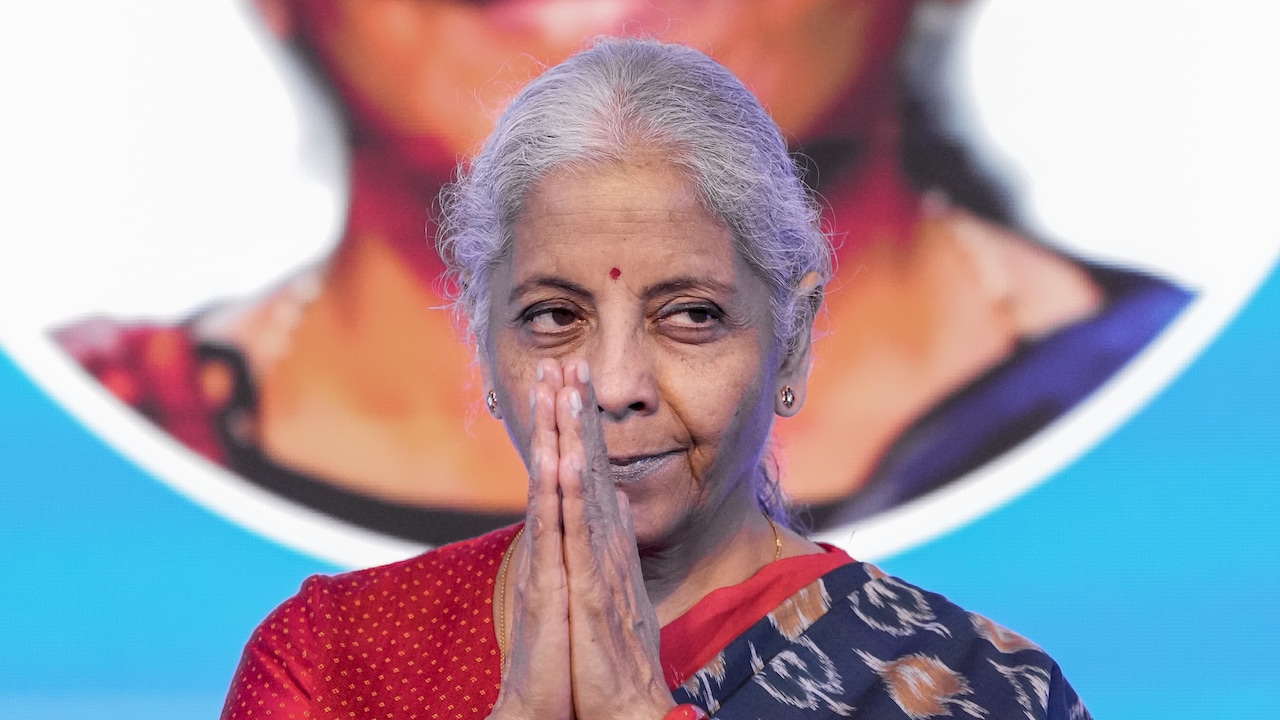
Finance Minister Nirmala Sitharaman on Thursday dismissed concerns that the proposed 0.4% merchant fee on UPI transactions above Rs 2,000 would be passed on to consumers. Clarifying the proposal, Sitharaman said the fee is a commercial arrangement agreed upon by stakeholders in the payments ecosystem, including banks, QR code service providers, point-of-sale (POS) machine providers and other entities involved in processing transactions.
She said the proceeds from the charge would be shared among the National Payments Corporation of India (NPCI), banks, POS providers and merchant-acquiring banks.
The Finance Minister said, “I wish to clarify, so that both traders and citizens are well-informed that this is neither a tax nor a cess. We are not imposing a surcharge, and the funds collected from this will not go into the government’s coffers or treasury. This is a decision mutually agreed upon by the entities involved such as the banks providing POS machines, QR service providers, and collecting banks. Regarding the 0.4% charge applied to transactions exceeding Rs. 2,000, the proceeds will be shared among these four parties: the NPCI, the banks, the POS machine providers, and the merchant banks. I want to make this clear. Even now, traders accept various cards: Visa, debit, or credit cards, on which an MDR (Merchant Discount Rate) is applicable, yet this cost is not passed on to the customer. For instance, if you purchase an item worth Rs 5,000, the bill reflects that exact amount plus GST, of course, but the MDR is not added to it. Traders do not charge the consumer the MDR for other cards, similarly, the cost here will not be passed on to the consumer either. Since this system helps grow their business, the merchants and bankers handle these arrangements among themselves; the government plays no role in this process. If they do not pass the cost on to the consumer for other cards, why would they do so in this instance?”
Also Read | Layoffs Are Rising In Tech, But These Skills Are Helping People Unlock Better Pay
Effective October 15, a 0.4% merchant discount rate will be levied on merchants for UPI transactions over Rs 2,000. However, no charge will be levied on person-to-person transactions regardless of the amount.
Dismissing criticism by Opposition parties, including the Congress, that it is a tax on consumers, government sources said that not a “single penny” from the proposed MDR will go to the government coffers. The collected amount will be shared among banks and other entities in the UPI ecosystem, they added.
Of the total MDR collected, 40% will go to customers’ banks, 30% to payment gateway, 20% to the UPI app and the remaining 10 per cent to the sponsoring bank of the UPI app.
“MDR levy of 0.4% on UPI transactions above Rs 2,000 will not be passed on to the consumers. Banks, as well as the Indian Banks’ Association, will address misconceptions related to MDR charges and their impact on users,” they said.
Sources also clarified that MDR is neither a tax nor a cess or surcharge. The sources further said that fear of consumers shifting back to cash due to merchant fee on UPI is misplaced.
They are also hopeful that the GST Council will review the 18% GST on merchant fee on UPI transactions over Rs 2,000 in the larger interest of consumers, as was done in the case of insurance premium. “IBA will soon run an awareness campaign to dispel various misconceptions and rumours about levy of 0.4% MDR on UPI transactions above Rs 2,000,” they said.
The introduction of a 0.4% MDR on certain UPI transactions above Rs 2,000 is aimed at creating a sustainable revenue framework for the digital payments ecosystem. The MDR is a fee paid by merchants to payment service providers for processing digital transactions.
From October 15, a 0.4% MDR will apply to person-to-merchant UPI payments above Rs 2,000. The charge will be paid by merchants, not consumers, and will be capped at Rs 300 for transactions of Rs 75,000 or more. Payments between individuals, as well as the vast majority of everyday merchant payments, will remain free.
Essential services, such as railways, telecom, fuel and insurance, will attract a flat Rs 5 fee per transaction above Rs 2,000. Capital markets transactions (mutual funds, stockbroking) get a lower 0.02% rate, also capped at Rs 300.
Small merchants collecting up to Rs 1 lakh a month via UPI QR codes remain fully exempt from any new charge and shield about 96 per cent of all merchant transactions.
The NPCI, which operates the UPI platform, on September 15, issued a circular providing for MDR on certain UPI transactions, with the move aimed at creating a sustainable revenue framework for the digital payments ecosystem.
A dedicated fund for promoting the use of UPI by small merchants will be set up, with a contribution of 5% of total MDR collections. This initiative will expand UPI acceptance, encourage sustained usage, and accelerate the inclusion of small businesses in India’s digital payments ecosystem.
Essential Business Intelligence,
Sharp Market Insights,
Practical Personal Finance Advice, Daily Fuel, Gold and Silver Prices and Latest Stories — On NDTV Profit.


