


New Delhi:
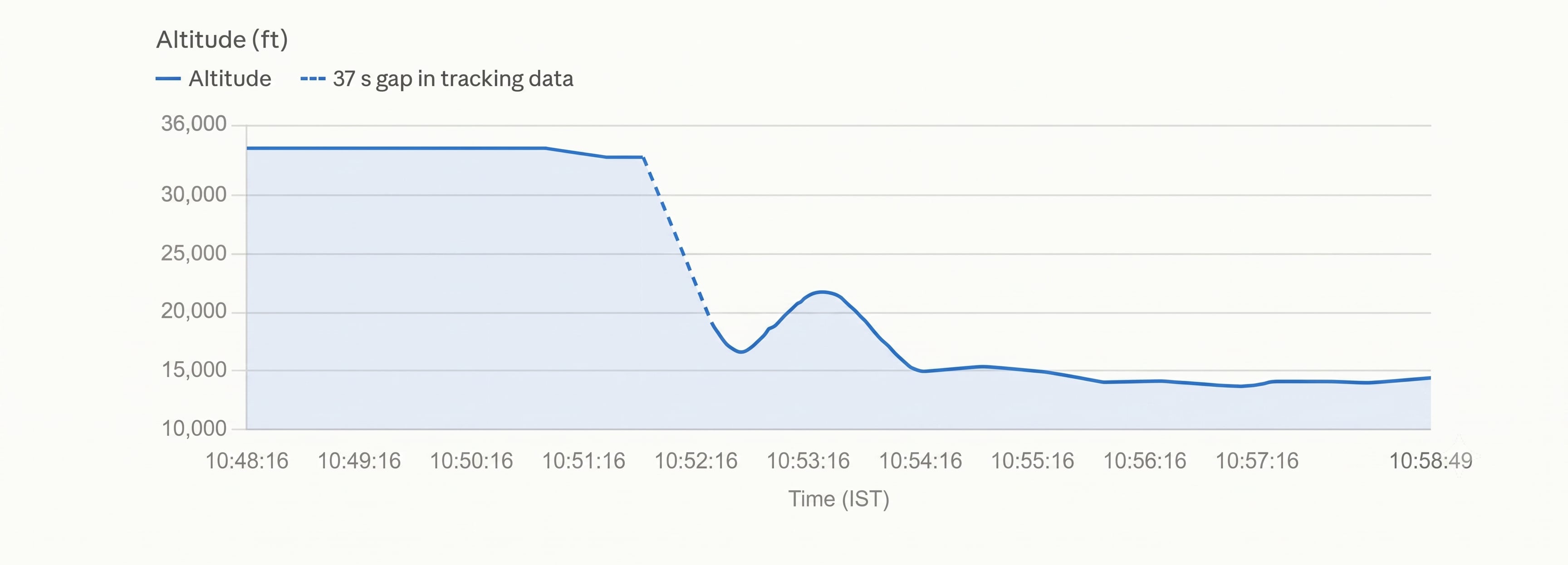
A flydubai passenger aircraft travelling from Dubai to Tel Aviv plunged about 14,300 feet in just 37 seconds during a dramatic mid-air incident over north-western Saudi Arabia on Wednesday, according to data from Flightradar24.
The Boeing 737 was cruising at about 34,000 feet when it began its sudden descent around 10:51 IST. Within seconds, the aircraft was dropping at a rate of roughly 23,000 feet per minute before reaching approximately 15,600 feet.
“The flight began a steep descent, followed by a sharp ascent, followed by another sharp descent. The aircraft then centered its flight on an altitude of approximately 15,000 feet. The aircraft’s altitude oscillated around 15,000 feet and ground speed varied significantly throughout the rest of the flight,” a Flightradar24 report said.
Read | flydubai Hero Pilot Is Indian, Fought Off Colleague Who Stabbed Him: Sources
The extraordinary descent occurred as the flight, FZ1073, was heading towards Ben Gurion Airport in Tel Aviv. The aircraft eventually diverted to Tabuk in Saudi Arabia, where it landed safely. The incident unfolded amid reports that the two pilots had been involved in a physical confrontation in the cockpit. According to reports, one of the pilots tried to sabotage the flight and later stabbed his co-pilot — identified as Indian national Captain Smit Machchhar — before being overpowered by passengers.
The flight carried more than 100 Israeli passengers, according to reports, although figures for the total number of people aboard have varied in early accounts. Flydubai confirmed that the aircraft had experienced an “incident” while en route and said all passengers were safe and accounted for.
What Flight Data Says
At the start of the incident, the aircraft was flying at about 34,000 feet. It subsequently lost approximately 14,300 feet in 37 seconds, reaching approximately 15,000 feet. It then climbed again to roughly 21,700 feet before descending a second time. About five minutes after the incident began, the aircraft had stabilised at around 14,000 feet.
Read | Pilot Tried To Take Control Of flydubai Plane, Terror Attack Not Ruled Out
The descent rate was extraordinary by the standards of a normal passenger flight because an airliner would ordinarily descend at roughly 1,500 to 3,000 feet per minute. Even an emergency descent is generally carried out at a substantially lower rate than the approximately 23,000 feet per minute recorded during this event.
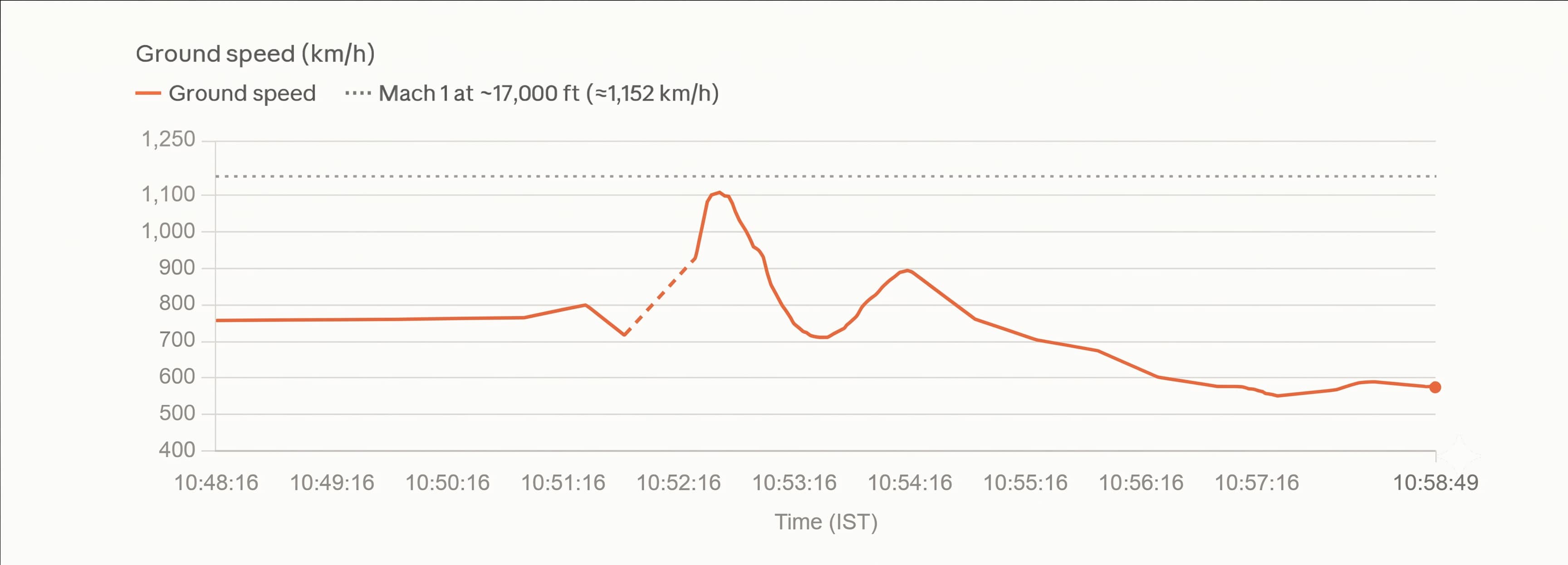
The aircraft also reached a recorded peak groundspeed of about 598 knots, or approximately 1,108 kmph, during the episode.
That figure is close to the speed of sound under some atmospheric conditions. It has led to descriptions of the aircraft as having “nearly gone supersonic”.
Read | “He Attacked Us, We Overpowered Him”: Video Emerges From flydubai Plane
More importantly, groundspeed is not the same thing as airspeed. Groundspeed measures how quickly an aircraft is moving relative to the Earth’s surface. Airspeed measures its velocity relative to the surrounding air. Wind can make the two figures substantially different.
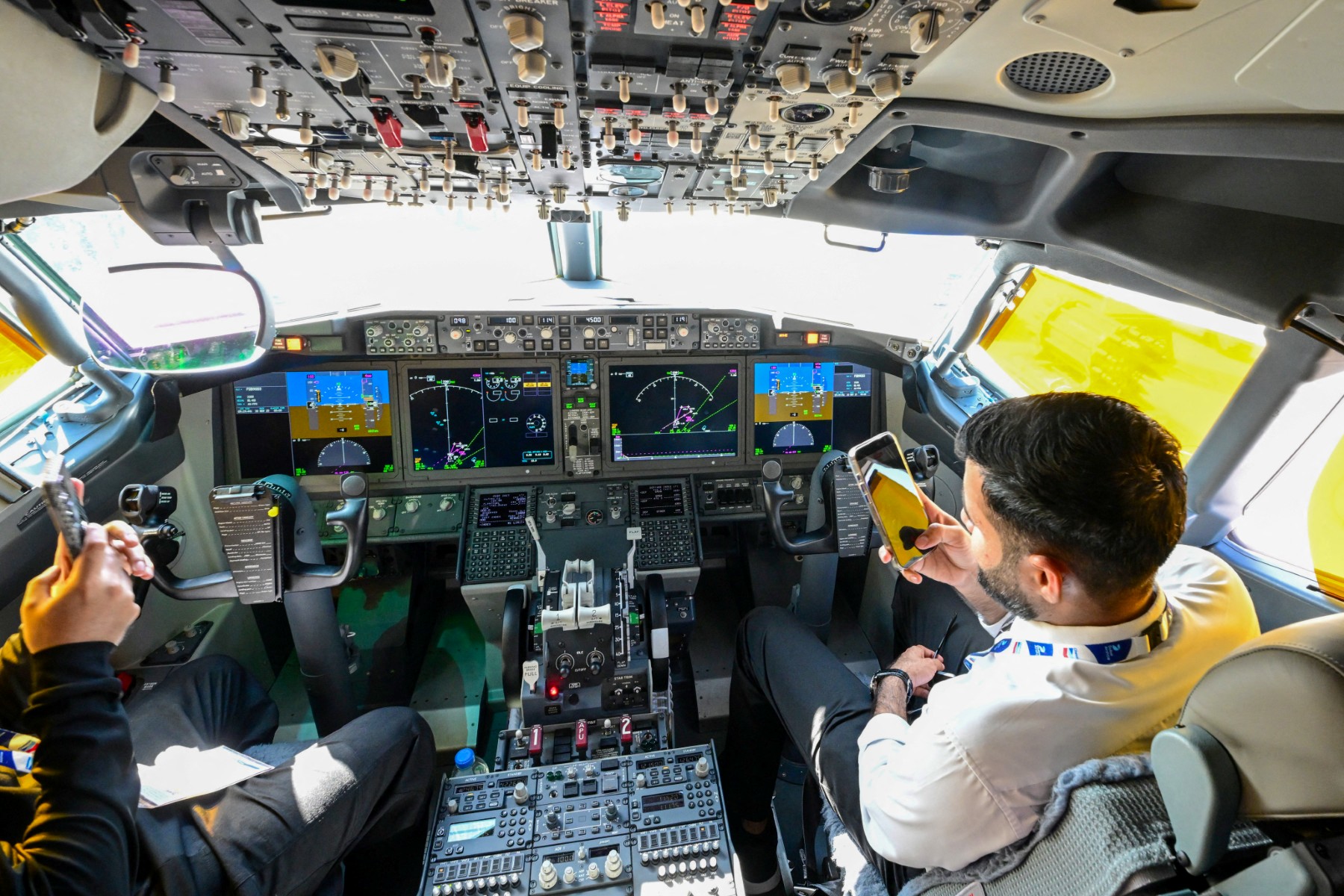
The cockpit of a FlyDubai 737 Max.
Photo Credit: AFP
Mach number is the ratio between an aircraft’s speed through the air and the local speed of sound. At Mach numbers below one, an aircraft is travelling subsonically. As it approaches Mach 1, it enters the transonic regime. Above Mach 1, it is supersonic.
As an aircraft moves faster through the atmosphere, the air around it becomes increasingly compressible. Near the speed of sound, these effects can produce shock waves, affecting the aircraft’s lift and drag. This is one reason commercial passenger aircraft do not normally operate anywhere close to Mach 1.
What Happened Inside The Aircraft
According to Israeli media reports, the two pilots became involved in a physical confrontation in the cockpit. The circumstances of the confrontation have not been fully established by flydubai or Saudi authorities, and the investigation remains underway.
According to news agency AFP, citing passengers and their relatives, one of the pilots attacked the co-pilot — the Indian national — with a knife and the passengers heard shouting. One passenger who went towards the cockpit reportedly saw blood and called for help. Other passengers then entered the cockpit and intervened.
Read | What Is Squawk 7500? Code That Sparked Hijack Fears On flydubai Flight
Israeli media also published images said to show a passenger wearing a bloodied shirt, while reports said passengers had intervened to separate the two pilots.
Flight-tracking data showed that the aircraft transmitted emergency transponder codes, including 7700, the internationally recognised code for a general emergency, and 7500, which indicates a hijacking situation. The 7500 signal prompted fears that the aircraft could have been hijacked, prompting Israel to scramble its jets.


