


Irony just tripped on American hypocrisy over Russian oil.
After threatening India with punitive tariffs for purchasing Russian crude, Trump has announced a deal with Russian President Vladimir Putin to bring Russian diesel to the United States.
The timing could hardly be more striking.
On October 9, Trump announced that Russia would supply more than 300,000 tonnes of diesel immediately, followed by further shipments in the coming months.
In 2025, Trump imposed an additional 25% tariff on Indian goods, explicitly linking the penalty to India’s purchases of Russian oil. The White House argued that the imports supported Russia’s economy and, by extension, its war effort in Ukraine. The additional duty came on top of tariffs already imposed under Trump’s broader trade policy.
Read | In A U-Turn, Trump Signs Oil Deal With Putin, Zelensky Calls Move “Unworthy”
The contradiction becomes even more pronounced when viewed against the latest American legislation targeting buyers of Russian energy.
On October 2, the US passed the Lindsey O. Graham Sanctioning Russia and Iran Act of 2026, giving his administration the authority to impose tariffs of up to 100% on countries that continue purchasing Russian oil and gas.
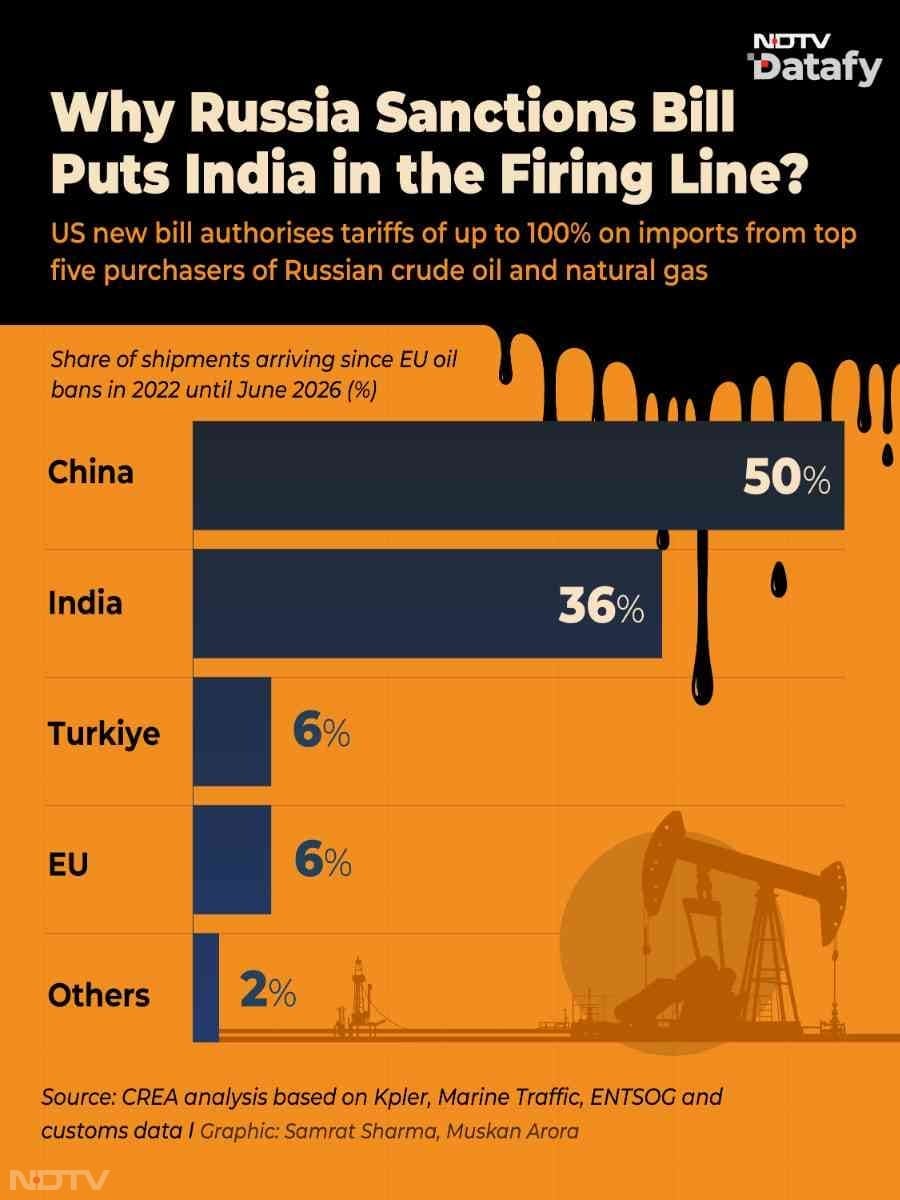
India is one of the countries likely to be exposed to higher tariffs.
The announcement raises an uncomfortable question for Washington: if buying Russian energy helps finance Moscow’s war in Ukraine, as the Trump administration has repeatedly argued, what makes an American purchase of Russian fuel acceptable while an Indian purchase invites economic punishment?
The irony is difficult to miss.
Washington has equipped itself with the legal authority to impose tariffs of up to 100% on major buyers of Russian energy. Yet the American President has now announced a deal to obtain Russian diesel, citing the need to bring down fuel costs for American consumers, farmers and truckers.
Read | Russian Oil Uncertainty Hangs Over India’s Largest Buyers Amid Middle East War
When America Invokes National Interest
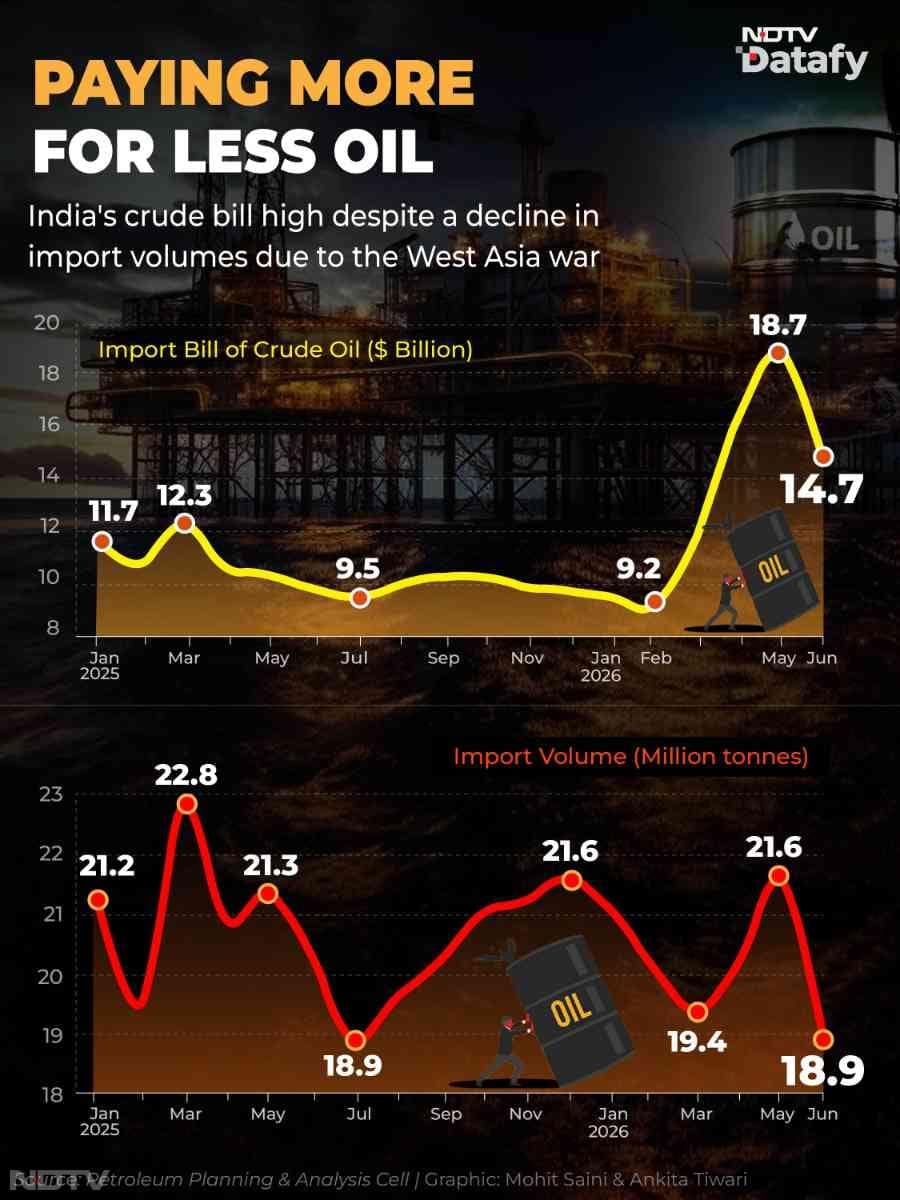
Trump’s announcement makes it clear that the price of fuel remains a political concern in the United States. The Iran war, which began in February, has driven up global energy prices and increased pressure on the US administration to ease fuel costs.
According to the American Automobile Association (AAA), the average US diesel price stood at US$6.28 a gallon, below a record high of US$6.53 recorded at the end of September.
“Diesel prices for Americans and the world will be coming down fast,” Trump boasted as he announced the Russian deal.
What About India’s National Interest
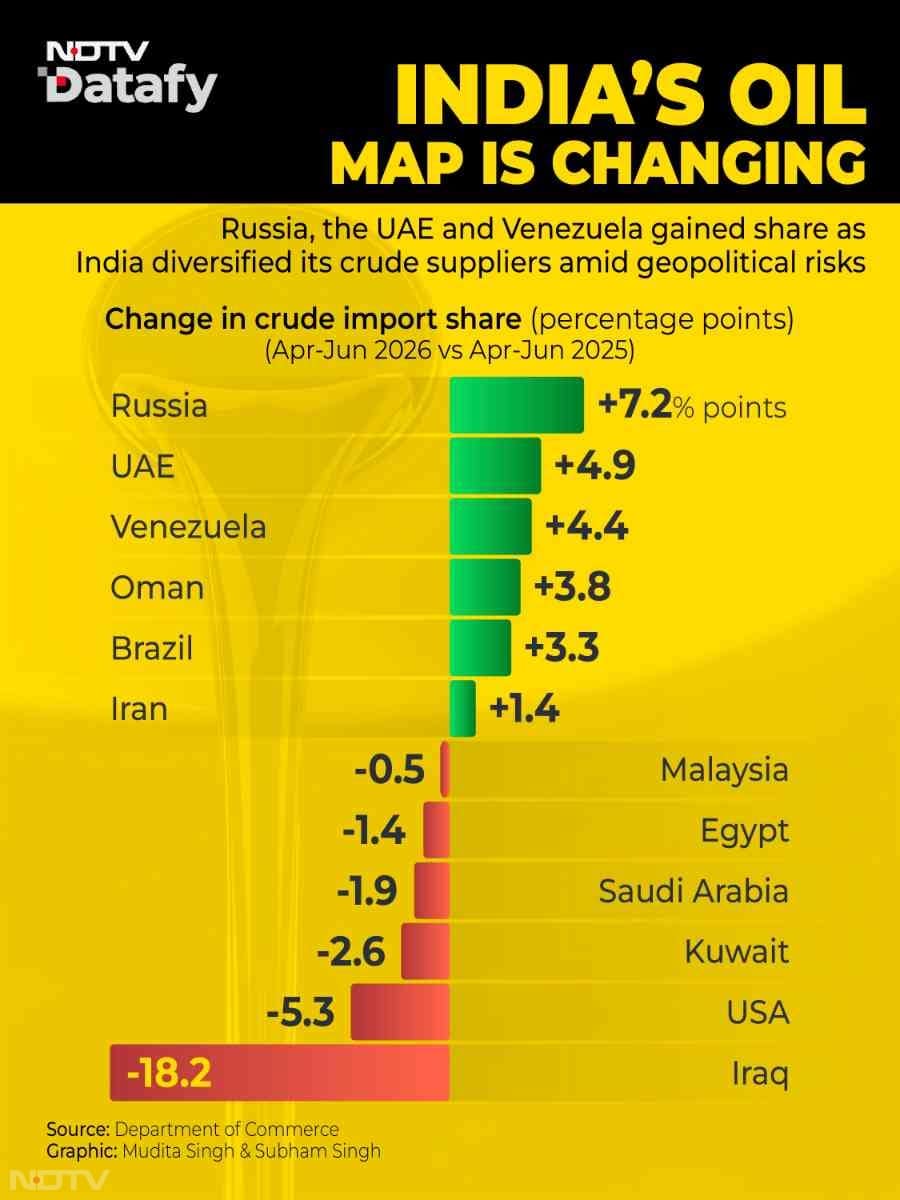
That is a familiar calculation for India as well. India is one of the world’s largest oil-consuming nations and imports nearly 90% of its crude requirements.
New Delhi has repeatedly maintained that its energy decisions are guided by national interest, commercial considerations and the need to ensure affordable supplies for a population of more than 1.4 billion.
China accounted for half of Russia’s crude exports, followed by India at 37%, Turkey at 5% and the EU at 5% between December 2022 and August 2026, according to the think tank Centre for Research on Energy and Clean Air (CREA).
Russia supplied 30.3% of India’s crude imports in fiscal 2026, worth $40.8bn out of a total crude import bill of $134.7bn, according to the Global Trade Research Initiative (GTRI), a Delhi-based think tank. In July, Russian crude accounted for more than half of India’s imports.
Other suppliers lagged far behind: the UAE accounted for 10.8% of India’s July imports, Saudi Arabia 9.6%, Venezuela 6.3%, Brazil 5.5%, Oman 5.3% and the US 2.9%. Russia alone supplied more crude than all six combined.
India Calls Out Western Hypocrisy
External Affairs Minister S Jaishankar earlier this year defended India’s strategic energy decisions, revealing that the United States specifically requested New Delhi to purchase Russian oil in 2022 to stabilise global markets, only to later impose tariffs on those very purchases. Speaking at the Kultaranta Talks in Finland in June, Jaishankar said: “The US specifically asked India to buy Russian oil to stabilise the oil market.”
India has maintained that “the very nations criticising India are themselves indulging in trade with Russia”.
“It is unjustified to single out India,” the Indian government has repeatedly said calling out how EU conducted 67.5 billion euros ($78.02 billion) in trade with Russia in 2024.
Zelensky Slams Trump’s Deal
Trump’s announcement drew criticism from Ukrainian President Volodymyr Zelensky, who argued that easing restrictions on Russian energy exports would help finance Moscow’s war against Ukraine.
“Allowing Russia to sell petroleum products is an investment in a war that must be ended, not prolonged,” Zelensky wrote on social media. He also described the move as an obvious weakness, warning that the revenue would allow Russia to continue its military campaign and inflict further damage.


