

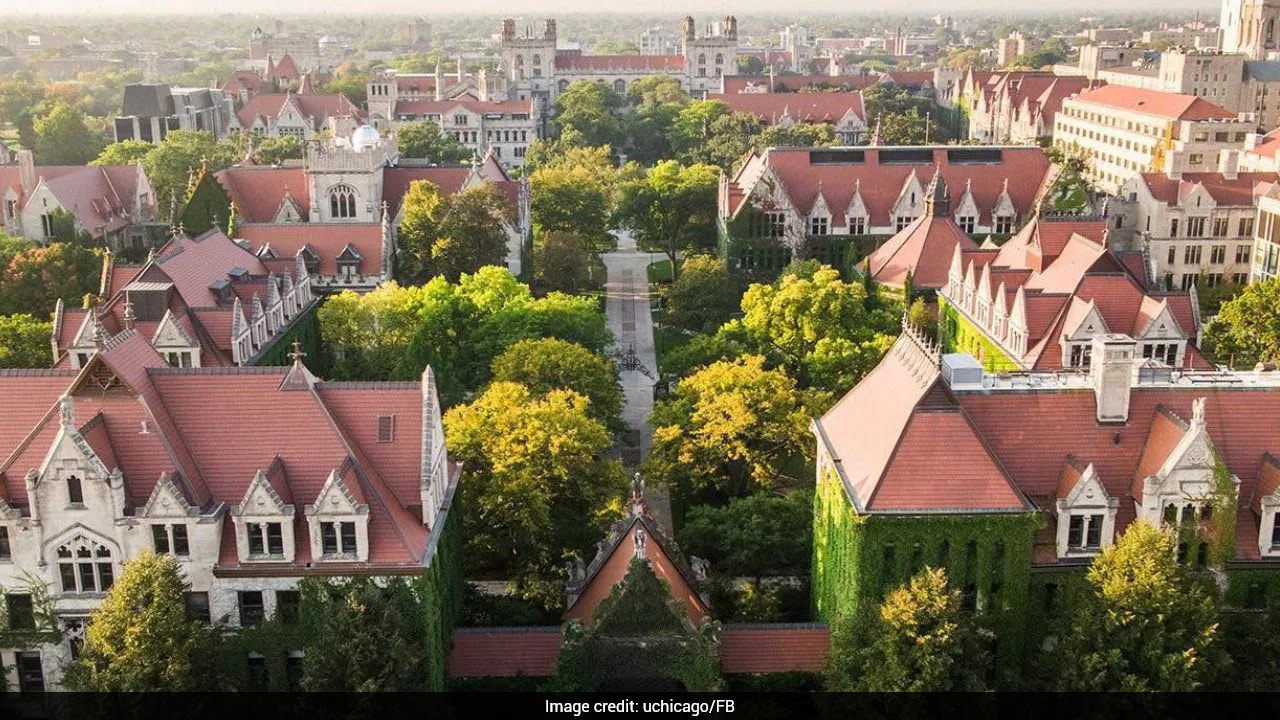
The University of Chicago has launched its first master’s degree programme dedicated entirely to artificial intelligence (AI). The nine-month, full-time Master of Science in Applied Artificial Intelligence will welcome its inaugural cohort in autumn 2027.
Designed for students with a strong technical foundation, the programme combines advanced AI studies with hands-on application, preparing graduates to apply emerging AI technologies to real-world challenges.
According to a university statement, the programme will be offered through the Physical Sciences Division and the Data Science Institute.
Senior Instructional Professor Arnab Bose, the programme’s faculty director, said the course has been developed in response to the rapidly evolving AI landscape and the growing demand for professionals with advanced applied AI expertise.
“As generative AI advances at an unprecedented pace and AI agents become increasingly prevalent, there is a growing need for practitioners who can move beyond foundational machine learning and deep learning expertise and take the next step into the frontier of applied AI,” he said.
“This programme is designed to bridge that gap, equipping students with the conceptual knowledge and practical skills to harness the capabilities of foundational models and AI agents in real-world settings,” he added.
What Does The Applied AI Programme Offer?
The curriculum includes four core courses covering AI foundations and principles, advanced architectures and applications, AI security, safety, and governance, and value creation and leadership with AI.
Students will also choose five electives across three focus areas: AI in practice, frontier AI, and performance AI. They must take at least one elective from each area, allowing them to explore different aspects of the field while tailoring the rest of their coursework to their interests.
Elective options include courses on multimodal agents, production AI, quantum computation, biomedicine, asset management, and an AI practicum.
Practical application will be integrated into the programme from the outset. Students will work on real-world problems throughout their courses and build a professional portfolio demonstrating their skills and capabilities.
“From the first day of class, students are solving real problems, not preparing to someday solve them,” Bose said. “The curriculum weaves together rigorous AI theory and hands-on application, so that every concept learned is grounded in practice and every project is informed by first principles.”