


You spent an entire Sunday afternoon making pizza dough from scratch. You measured the yeast with a teaspoon, you left it to prove, you kneaded it until your arms gave up. The pizza night was a hit. And now there is a sad, cling-wrapped ball of dough sitting in your fridge, slowly losing the will to live. Sound familiar? Here is the thing: pizza dough is one of the most versatile things you can have in your kitchen, and throwing it away is an actual waste of real effort. With a few pantry ingredients and about thirty minutes, that leftover dough becomes something completely new, completely delicious, and honestly quite impressive.
A Quick Word Before You Start
Pizza dough lasts up to three days in the fridge and three months in the freezer. Let refrigerated dough sit at room temperature for 20-30 minutes before use; it becomes pliable and easy to shape. These recipes suit both homemade and store-bought dough, available at Big Bazaar, Nature’s Basket, and major Indian supermarkets.
Also Read: Why Lahori Chana Masala Tastes So Different, And How To Cook It At Home
Here Are 5 Ways To Use Leftover Pizza Dough
1. Homemade Pita Bread

This is probably the easiest and most practical use of leftover pizza dough, especially for an Indian kitchen. Pita pockets are incredibly useful; you can stuff them with leftover rajma, chole, aloo tikki, or even just butter and jam. They puff up beautifully in a hot pan and create that signature hollow pocket that is perfect for stuffing.
What you need:
- Leftover pizza dough (any quantity)
- A rolling pin
- A cast iron tawa or heavy-bottomed pan
- A clean kitchen towel
How to make it:
Divide your dough into portions of roughly 100g each, about the size of a small lemon. If you do not have a kitchen scale, eyeballing it is fine. Roll each portion into a rough circle, about the thickness of a paratha, not too thin. Aim for about half a centimetre. Let the rolled rounds rest under a damp kitchen towel for 20 to 30 minutes. This resting step is important. The gluten relaxes, and the bread puffs better when it hits the heat.
Heat your tawa on medium-high until it is properly hot, you want it almost smoking. Place a dough round on the dry tawa (no oil needed) and leave it alone. In about one to two minutes, you will see it start to puff up. When it puffs, flip it. Cook the other side for another minute or so. The puff is the sign that steam has built up inside, creating the hollow pocket. If your pita is not puffing, your tawa is not hot enough.
Stack the finished pita under a clean kitchen towel as you go, the trapped steam keeps them soft. Slice them open while warm and fill with whatever you have. Leftover dal fry with some onion and coriander is genuinely one of the better things you will eat this week.
2. Garlic Bread

This is comfort food at its most uncomplicated, and using pizza dough means you can get a little creative with the shape. The dough can be shaped into a simple flatbread, small rolls, or even a pull-apart loaf, then topped generously with garlic butter, herbs, and cheese. The result has crisp edges and a soft, fluffy centre that no store-bought garlic bread can replicate.
What you need:
- 200 to 300g leftover pizza dough
- 4 to 5 cloves of garlic, finely minced
- 3 tablespoons of butter, softened
- A handful of fresh coriander or parsley, roughly chopped
- Salt to taste
- 50g grated cheese (processed cheese, mozzarella, or even Amul cheddar all work)
- Optional: a pinch of red chilli flakes
How to make it:
Preheat your oven to 200°C. Mix the softened butter with the minced garlic, chopped herbs, chilli flakes if using, and a pinch of salt. Set aside.
Stretch or roll your dough into a rough oval or rectangle, about 1 cm thick. You do not need perfection here; rustic is fine and often better. Place it on a lightly oiled baking tray. Spread the garlic butter generously over the surface, right to the edges. Scatter the grated cheese on top.
Bake for 12 to 15 minutes until the edges are golden, and the cheese is bubbling and slightly browned in spots. Keep an eye on it from the 10-minute mark, because every oven behaves differently. Pull it out, let it cool for two minutes, then slice and serve immediately. The cheese goes stretchy, and the garlic butter soaks into the dough as it cools. Serve alongside soup, pasta, or just eat it on its own. There is no wrong answer.
3. Cinnamon Sugar Doughnut Bites
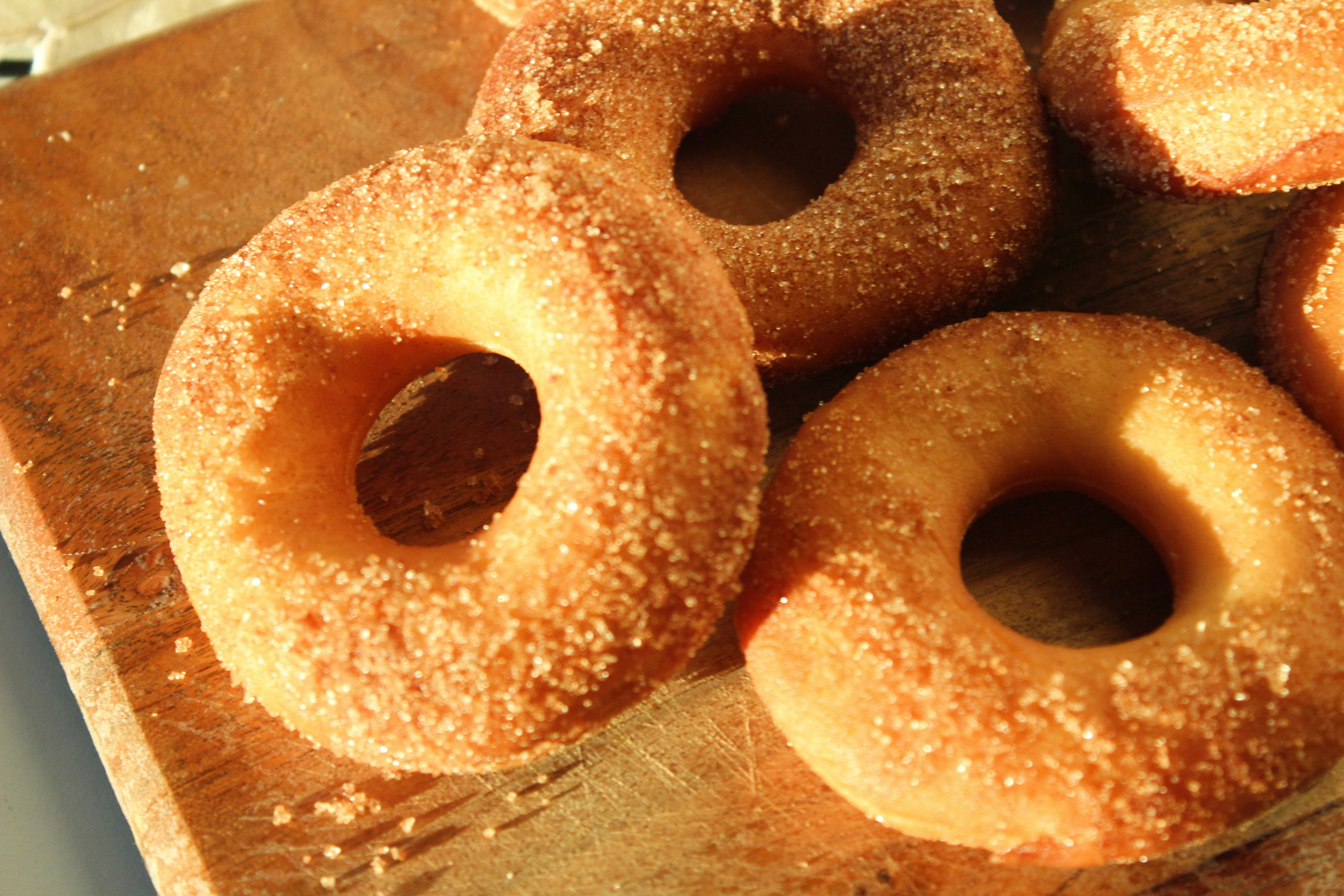
This one surprises people. Most people hear “pizza dough” and think savoury. But sweet pizza dough desserts are genuinely a thing, and these little doughnut bites are the easiest entry point. They require zero fancy equipment, and they are done in under fifteen minutes. Kids go completely mad for them, and honestly, so do adults.
What you need:
- 200g leftover pizza dough
- Oil for frying (any neutral oil — sunflower, refined, or groundnut)
- 4 tablespoons of powdered sugar or regular sugar
- 1 teaspoon of cinnamon powder
- Optional: chocolate sauce, honey, or jam for dipping
How to make it:
Tear or cut the dough into small pieces, roughly the size of a large marble or a small lemon. Roll each piece into a ball between your palms. Do not overwork them; you just want a roughly round shape. Cover with a towel and let them rest for 10 minutes while you heat the oil.
In a deep kadhai or heavy-bottomed pan, heat about 4 to 5 cm of oil to 180 to 190°C. If you do not have a thermometer, drop a tiny piece of dough into the oil; it should bubble actively and rise to the surface within a few seconds. If it sinks and stays there, the oil is too cold. If it browns in under 30 seconds, it is too hot.
Also Read: Food Festivals And Exciting Events To Check Out Across India In May And June 2026
Fry the dough balls in batches; do not crowd the pan. Turn them gently as they cook. They take about two to three minutes per batch and should come out puffed, golden, and slightly uneven in a lovely way. Drain on kitchen paper.
In a bowl, mix the sugar and cinnamon. While the dough bites are still warm, toss them in the cinnamon sugar until fully coated. Pile them on a plate and put out some chocolate sauce or honey for dipping. These are best eaten immediately while they are still warm and slightly crisp on the outside. They go cold quickly and lose their magic, so do not wait.
4. Panuozzo

The panuozzo is essentially a sandwich made from pizza dough, and it is one of the most satisfying things you can eat. It originated in Gragnano, a small town in Campania, Italy, and it has never quite made its way into mainstream food culture in India, which means making one at home feels like a discovery. The dough is baked, then split open and loaded with fillings. The result is crisp and chewy on the outside, pillowy on the inside, and completely different in texture from any regular bread sandwich.
What you need:
- 200 to 250g leftover pizza dough
- 1 tablespoon olive oil (or regular oil if olive oil is not available)
- Fillings of your choice
Some filling ideas that work especially well for Indian tastes:
- Paneer bhurji with caramelised onions and green chutney
- Roasted capsicum, mushrooms, and cheese
- Chicken tikka with hung curd and onions
- Classic mozzarella and basil if you want to keep it Italian
How to make it:
Preheat your oven to 220°C. Stretch the dough out into a rough circle or oval, slightly thicker than you would for a pizza, about 1 to 1.5 cm thick. Drizzle generously with olive oil and fold the dough over itself, pressing the edges gently to seal. It should look like a half-moon or a thick calzone. The oil inside is what stops it from sticking together and creates the hollow interior that you fill afterwards.
Place on a lightly oiled baking tray and bake for 12 to 15 minutes until well-puffed, golden, and developing charred spots on top. Remove from the oven and let it cool for two minutes. Open it carefully along the sealed edge, it should split apart easily, and load the inside with your chosen fillings. The interior will be soft and slightly steamy. Eat immediately.
If you have a paneer bhurji lurking in the fridge, this is the single best use of it. The contrast between the crisp outer shell and the spiced, yielding filling inside is something special.
5. English Muffins
:max_bytes(150000):strip_icc()/6947-EnglishMuffins-DDMFS-2x1-0159-b4476d4421f7445ba2022b814224c206.jpg?im=FaceCrop,algorithm=dnn,width=620,height=350 "Latest and Breaking News on NDTV")
This is the most technically surprising entry on the list, and it is also the most genuinely useful for daily life. English muffins made from pizza dough are not the same as the perfectly fermented, malted originals, the food purists will be the first to tell you, but they are still absolutely delicious, and they are an excellent thing to have around for breakfast. Toasted, buttered, with jam or with a fried egg and cheese, they are a very fine morning.
What you need:
- 200 to 300g leftover pizza dough
- Semolina or fine sooji for dusting
- A tablespoon of butter or ghee
- A flat tawa
- Optionally, a 375°C oven or OTG for finishing
How to make it:
Divide the dough into portions of about 70g each, roughly the size of a golf ball. Gently press each ball flat into a disc about 2 cm thick. Dust both sides generously with sooji or semolina. This is important, it creates the characteristic slightly rough, toasted surface of an English muffin and helps prevent sticking. Place the dusted discs on a plate, cover with a damp towel, and let them rise for 45 to 60 minutes. Do not skip this step. The rise is what gives them their open, slightly airy interior.
Heat a tawa or flat pan on medium-low flame. Add a small knob of butter or ghee and let it coat the surface. Cook the muffins in batches, about six minutes per side. The heat should be gentle; you want the interior to cook through before the surface over-browns. They should turn a deep golden on each side.
If the centre still feels doughy when you press gently, transfer to an oven or OTG at 190°C for five minutes to set the inside. Let them cool completely before you split them. Use a fork to pierce around the equator and pull apart rather than cutting with a knife. The fork-split creates a rougher surface with more nooks and crannies that catch butter and jam in a way a clean knife cut simply does not.
These keep well in an airtight box for two days. Toast from frozen if you have made a large batch.
Also Read: The Spicy Turkish Eggs Recipe You Need To Make This Summer
Using Leftovers
The next time you have leftover pizza dough in the fridge, resist the urge to either force it into another pizza or quietly throw it away. As this list shows, the same dough that makes a Margherita can just as easily become a crisp Italian sandwich, a fluffy pita for your favourite sabzi, a bowl of golden cinnamon-sugar bites, a breakfast muffin, or the best garlic bread you have had in a while. Pizza dough is essentially a blank canvas, and a fairly forgiving one at that. The possibilities are genuinely much wider than most people realise, and the investment of effort is always the same: you have already done the hard part. Now go use it.



