


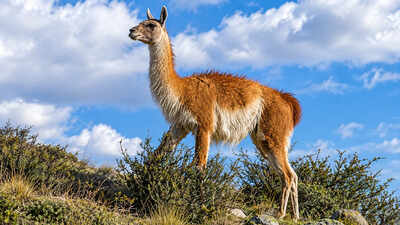
In the late 1930s, a small group of guanacos, native South American camelids, was shipped from southern Patagonia to Staats Island, a remote, treeless Falklands island. Only fifteen animals founded the entire herd. Roughly twenty-five years later, a cull reduced it from about 300 animals to between 10 and 20. Such a herd would be expected to lose much of its genetic variety. Yet scientists who studied the herd more than six decades after its founding found something truly surprising. Their analysis showed the island herd still holds genetic diversity comparable to most mainland populations, despite two severe population crashes.
Why John Hamilton shipped fifteen guanacos to Staats Island in the late 1930s
According to a 2014 study, ‘Maintenance of Genetic Diversity in an Introduced Island Population of Guanacos after Seven Decades and Two Severe Demographic Bottlenecks: Implications for Camelid Conservation’ by Benito González, Pablo Orozco-terWengel, Rainer von Borries, Warren Johnson, William Franklin and Juan Marín in the journal PLOS One, guanacos were brought to the Falkland Islands, also known as Islas Malvinas, in the late 1930s by John Hamilton. He introduced them, together with several other Patagonian species, in an attempt to diversify the local economy.The researchers explain that young animals were plausibly captured near Rio Gallegos in Argentina or Pali-Aike in Chile, then shipped to the islands. Eleven went to Sedge Island and fifteen to Staats Island. Only the Staats Island animals survived. The island covers about 500 hectares at the far western edge of an archipelago of 750 islands, roughly 600 kilometres from the South American coast, and its guanacos have stayed isolated from other populations for more than seventy years.
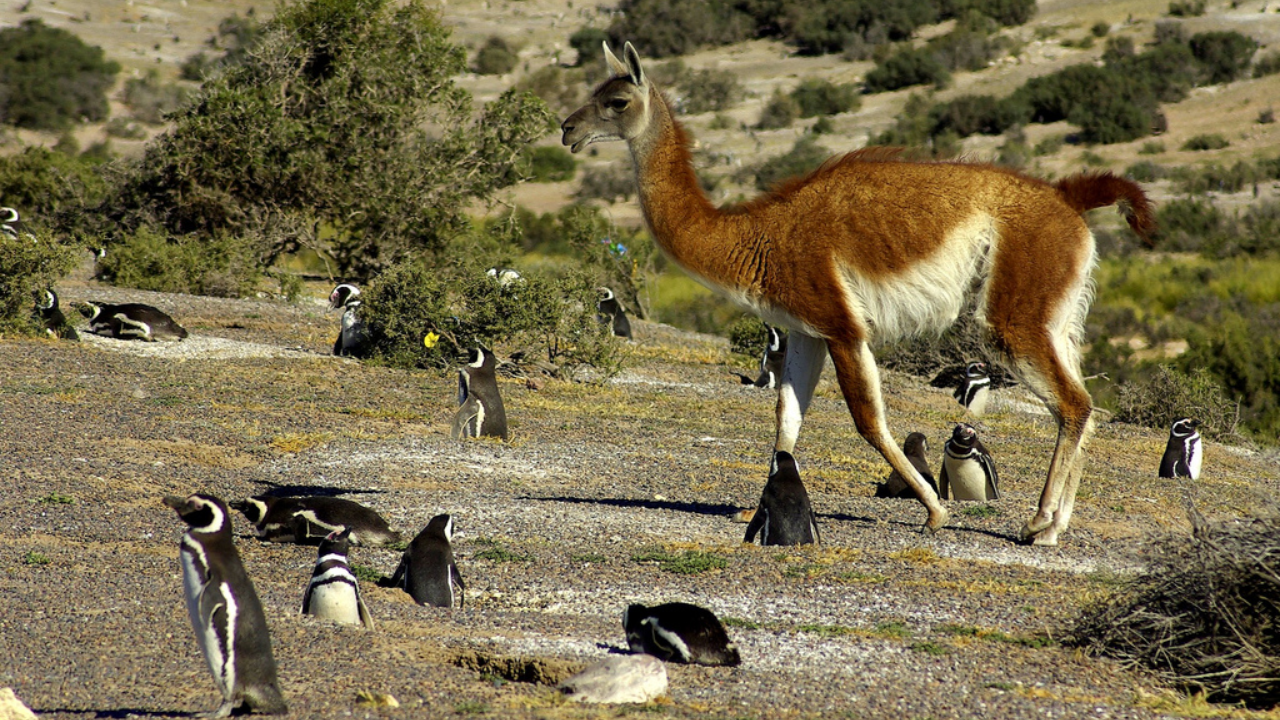
Guanaco sharing a habitat with Magellanic penguins, Punta Tombo (Image: Wikipedia)
How a cull in the late 1950s cut the Staats Island guanaco herd from 300 animals
The herd prospered at first. According to the study, attempts were later made to eradicate it, to reduce overgrazing and convert the island to sheep farming. This severe culling in the late 1950s drove the population down from 300 animals to its smallest size, between 10 and 20 individuals, in the early 1960s.The animals were then allowed to recover, with only sporadic, low levels of poaching and culling. By 2004, the herd numbered about 400. The researchers therefore described a population that had passed through two severe bottlenecks, the founding event and the cull, each time falling below 20 animals. They expected low genetic diversity as a result.
What scientists measured in guanacos from eight localities
To test that expectation, the authors compared the island herd with guanacos from the adjacent mainland and from Tierra del Fuego, using samples from eight localities. They studied two kinds of genetic information, variation in the mitochondrial genetic material and variation at microsatellite markers in the nuclear genetic material. Six research expeditions visited Staats Island between 1999 and 2008, and the island samples were collected in 2004 and 2005. They came from faeces and carcasses, so no animals had to be captured or handled there.The authors also ran computer simulations of the herd’s history, using a simulated mainland population of 10,000 animals that was reduced to fifteen. They compared the real genetic results with those simulations.
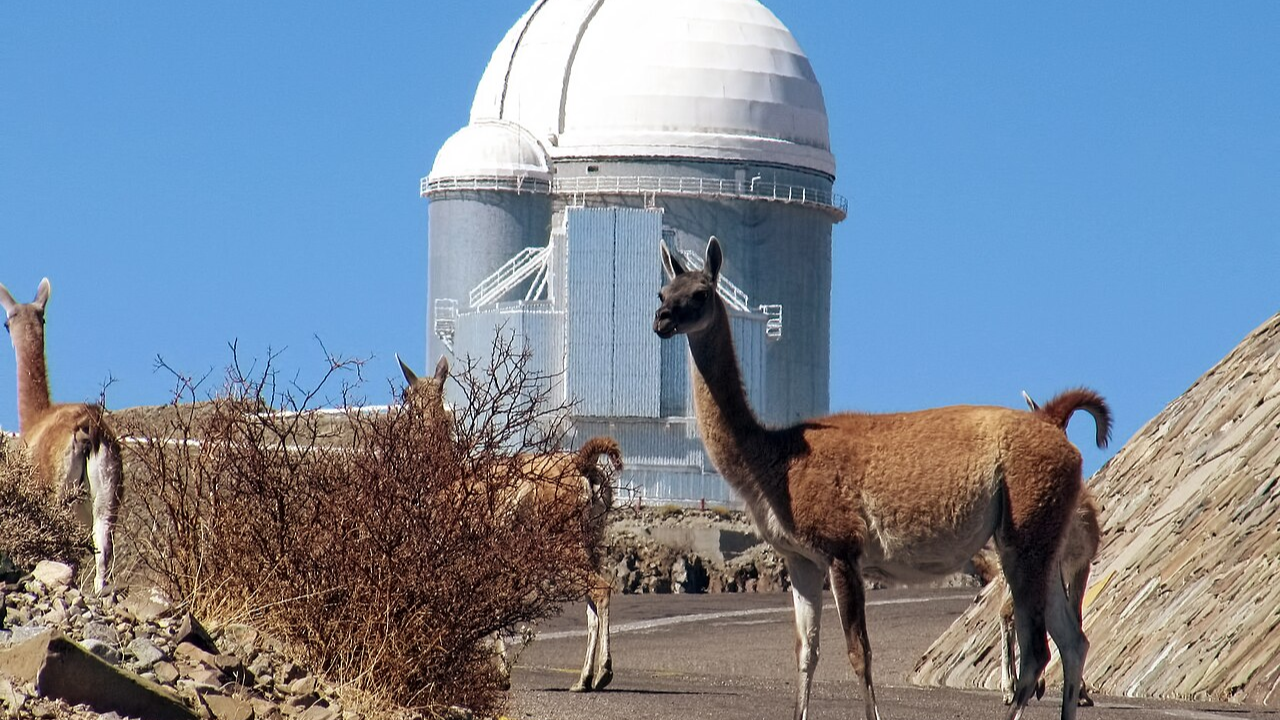
Guanacos near the La Silla Observatory, 2400 meters above sea level (Image: Wikipedia)
Staats Island guanacos match most mainland herds
The results contradicted the expectation. The researchers report that the genetic variation on Staats Island was comparable to most mainland populations and greater than that on Tierra del Fuego. For the mitochondrial genetic material, the island herd’s haplotype diversity was 0.61, against 0.36 on Tierra del Fuego. The study notes that Tierra del Fuego holds a large population of more than 80,000 guanacos.The expected differences in the nuclear markers were not statistically significant between the island herd and the mainland as a whole. The authors explain the contrast with Tierra del Fuego by history. That island’s guanacos were isolated thousands of years ago, roughly 8,000 years before the study, so drift has had far longer to act, whereas the Staats Island herd has existed for only about 65 years. The mitochondrial markers did show that the island herd had drifted further from the mainland populations than the mainland populations differ from one another.
Genetic evidence points to Monte León in southern Patagonia
The study also asked where the founders came from. Of the 23 mitochondrial haplotypes found across all samples, the Staats Island herd carried only three. All three were shared with the Monte León population on the coast of southern Patagonia, the only mainland population that held all of them together. The island’s most common haplotype appeared on the mainland only at Monte León.Assignment tests supported this. The authors report that 19 of the 20 Staats Island animals tested grouped with the southern Patagonian cluster. Monte León lies about 150 kilometres north of Rio Gallegos, the port the animals were shipped from. The guanaco population that once lived near Rio Gallegos has since disappeared locally or moved elsewhere. The authors conclude that most of the island’s genetic background came from Monte León or a similar population, while some variation may have come from neighbouring southern populations, which matches the historical records.
Fast regrowth helped the island herd keep its genetic variety
The authors suggest the most likely explanation is that the fifteen founders were a random sample of a mainland population that was already genetically diverse. They add that both population crashes lasted only a few generations and were followed by rapid growth, which can wipe out much of the genetic trace a bottleneck leaves behind.Their simulation showed the effect on different measures. The first bottleneck cut the average number of gene variants per marker by about 29 per cent, from 12.8 to 9.1, while expected heterozygosity, another measure of diversity, fell by only 3.5 per cent. The second bottleneck reduced the number of variants to roughly 51 per cent of the original, without affecting expected heterozygosity. One statistical test did detect signs of a past bottleneck on Staats Island, but the authors say their analyses did not find a consistent bottleneck signal overall.
What the guanaco findings mean for conservation
The authors call the result surprising and say it offers hope for small, surviving remnant populations on the mainland, which could be holding on to genetic diversity despite low numbers. They stress, however, that this does not mean severe culling or hunting would leave a population’s fitness untouched. They add that guanacos on Staats Island are currently suffering neonatal malformations and mortality, and they warn against letting either the island or the Patagonian populations fall to severely low numbers.The study also points to the pressure on mainland guanacos. They were hunted to free up land for sheep and for their pelts. Chile exported about 35,000 pelts during the twentieth century, and Argentina exported 223,000 in only four years, from 1976 to 1979. The authors note that guanaco wool is worth 60 to 80 United States dollars per kilogram, that the Staats Island guanacos are privately owned, and that their future is unknown. They call for genetic assessments of critically small and isolated guanaco populations across the species’ range.


