


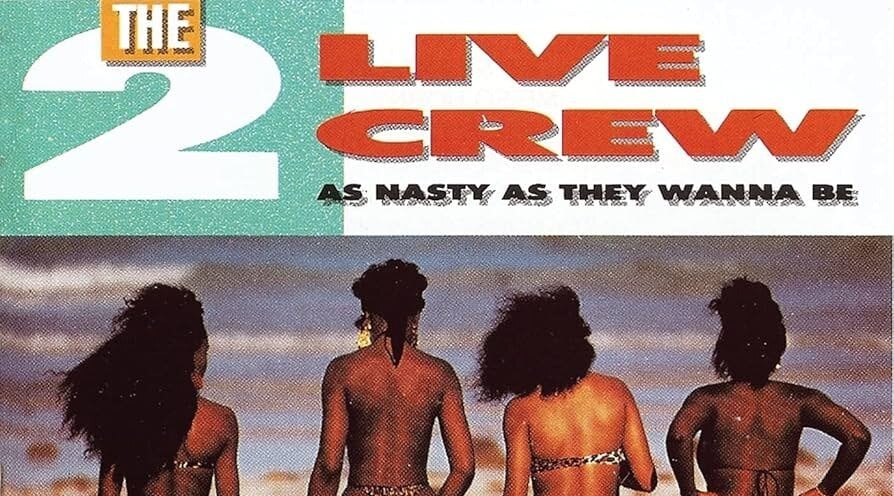
A US federal appeals court has overturned 2 Live Crew‘s high-profile victory in their long-running fight to reclaim the copyrights to their catalog, handing the masters back to the label that has held them for three decades.
In a published opinion issued on Tuesday (June 2), the US Court of Appeals for the Eleventh Circuit reversed an October 2024 jury verdict that had cleared the pioneering Miami hip-hop group to recapture five of their albums under US copyright law’s termination right.
The full opinion can be read here.
The court ruled that the group’s 2020 notice terminating their copyright grants was ineffective, meaning the recordings stay with Lil’ Joe Records, owned by Joseph Weinberger, which acquired them out of the 1995 bankruptcy of 2 Live Crew leader Luther Campbell‘s label, Luke Records. (MBW previously reported the purchase price at around $800,000.)
“Because a majority of 2 Live Crew did not exercise their termination interests, Luke Records still owns the copyrights to these five albums,” Circuit Judge Andrew Brasher wrote for a three-judge panel that also included Judges Jill Pryor and Robert Luck.
The decision reverses the judgment of the US District Court for the Southern District of Florida and sends the case back for further proceedings.
At the heart of the dispute is Section 203 of the US Copyright Act, which lets authors, including recording artists, reclaim copyrights they previously signed away, typically 35 years after the grant.
2 Live Crew had four members: Campbell, the late Christopher Wong Won (Fresh Kid Ice), the late Mark Ross (Brother Marquis), and David Hobbs. The law required a majority of them to sign a termination notice for it to take effect.
Three did.
In 2020, Campbell, Ross, and Wong Won‘s heirs served a notice on Lil’ Joe seeking to claw back the five albums the group recorded between 1986 and 1989, among them their incendiary 1989 release As Nasty As They Wanna Be.
But the appeals court found that one of those three signatures didn’t count, because of a bankruptcy Mark Ross had filed two decades earlier.
Ross filed for Chapter 7 bankruptcy in 2000.
Under the Bankruptcy Code, the court held, his termination interest was swept into his bankruptcy estate.
Because that interest was never scheduled, administered, or formally abandoned in the case, it remained the property of the estate, not of Ross himself, when he signed the 2020 notice.
A debtor has “no right to … control” property of the estate while it stays in the estate, the court explained, and only the bankruptcy trustee can control such unscheduled assets. Ross, therefore, “could not exercise” the interest when he signed.
Strip out Ross, and the notice carried only two of the group’s four members, one short of the majority the statute demands.
“So two out of four interests is one interest short of an effective termination,” Brasher wrote.
Notably, the panel did not rule on whether the recordings were “works for hire,” the question the 2024 jury decided in the group’s favor.
It simply assumed they were not, and held that 2 Live Crew lost anyway on the bankruptcy point. The court was explicit that copyright law’s rule making termination rights personal and inalienable does not keep them out of a bankruptcy estate; federal bankruptcy law sweeps them in “notwithstanding” any such restriction.
The panel described the case as “a question of first impression at the intersection of copyright and bankruptcy,” and was careful to limit its reach. It said it was “not address[ing] how termination interests should be treated in bankruptcy” generally, and was “not decid[ing] … what Ross‘s heirs need to do to exercise those interests in the light of his bankruptcy.”
That language appears to leave the group a potential route back, for instance by addressing the rights through Ross‘s bankruptcy estate.
2 Live Crew could also ask the full Eleventh Circuit to rehear the case, or petition the US Supreme Court.Music Business Worldwide



