


There is an old saying that necessity is the mother of invention. Few countries understand that better right now than Ukraine.
Since Russia launched its full-scale invasion more than four years ago, Kyiv has found itself perpetually short of the weapons it needs to survive. Shells, drones, long-range missiles, air defence systems, the list has rarely shrunk. But one item has sat near the top almost throughout: the Patriot.
President Volodymyr Zelensky has appealed for the American-made system repeatedly, and as recently as last week. Following one of Russia’s deadliest attacks in months, which killed at least 22 people and injured dozens more, involving 656 drones and 73 missiles of various types overnight, Zelensky urged the United States for more support. “Assistance from the United States in supplying missiles for Patriot systems is absolutely necessary,” he said. “Europe needs its own anti-ballistic defence so that this war can finally be brought to an end.”
The Patriots are not coming in the numbers Ukraine needs. And Kyiv decided it cannot wait any longer.
Also read: High Demand, Slow Output: Why Patriot Missiles Supply Can’t Keep Up With Wars
Ukraine Tests Homemade Interceptor: FP-7.x
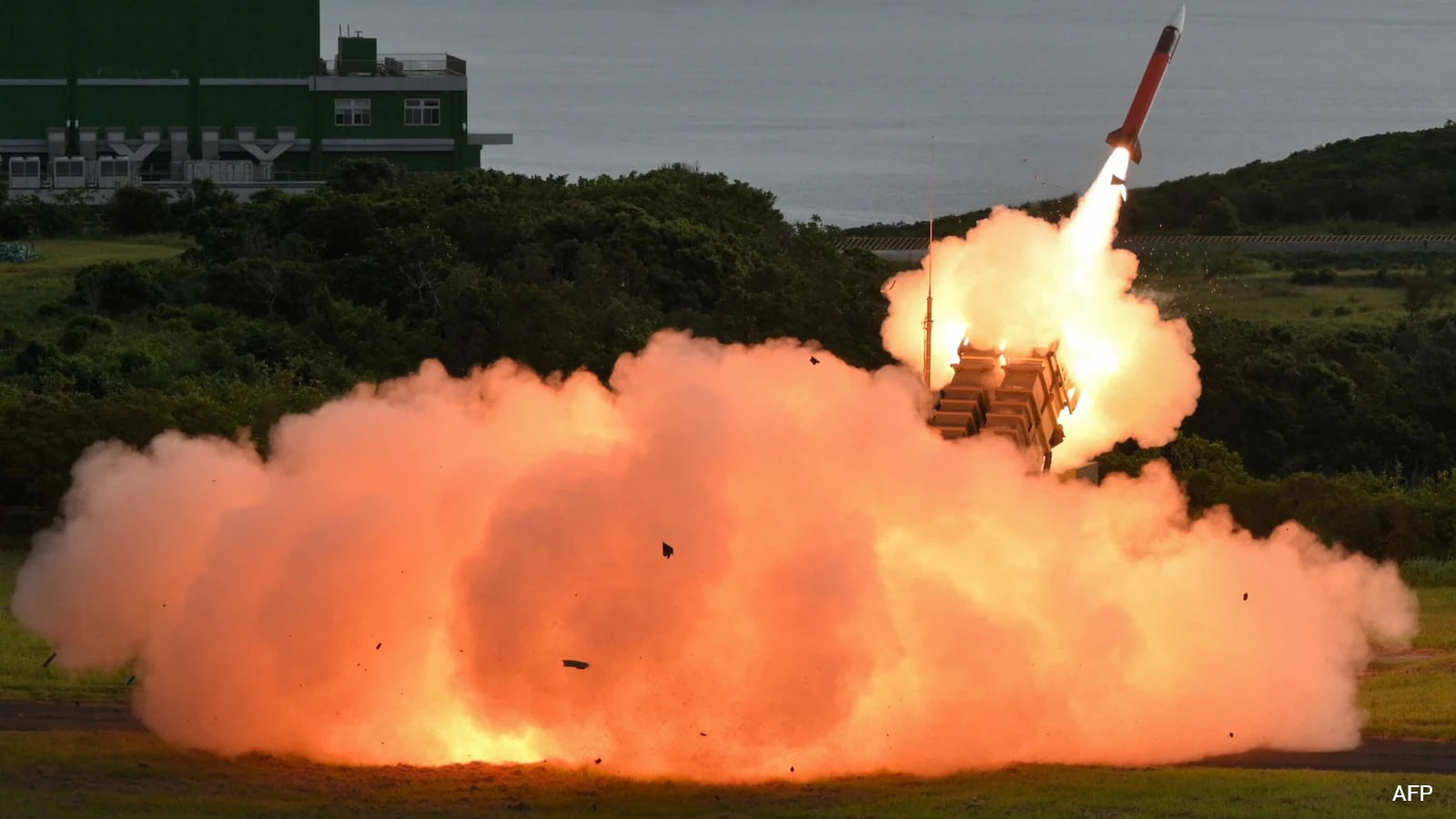
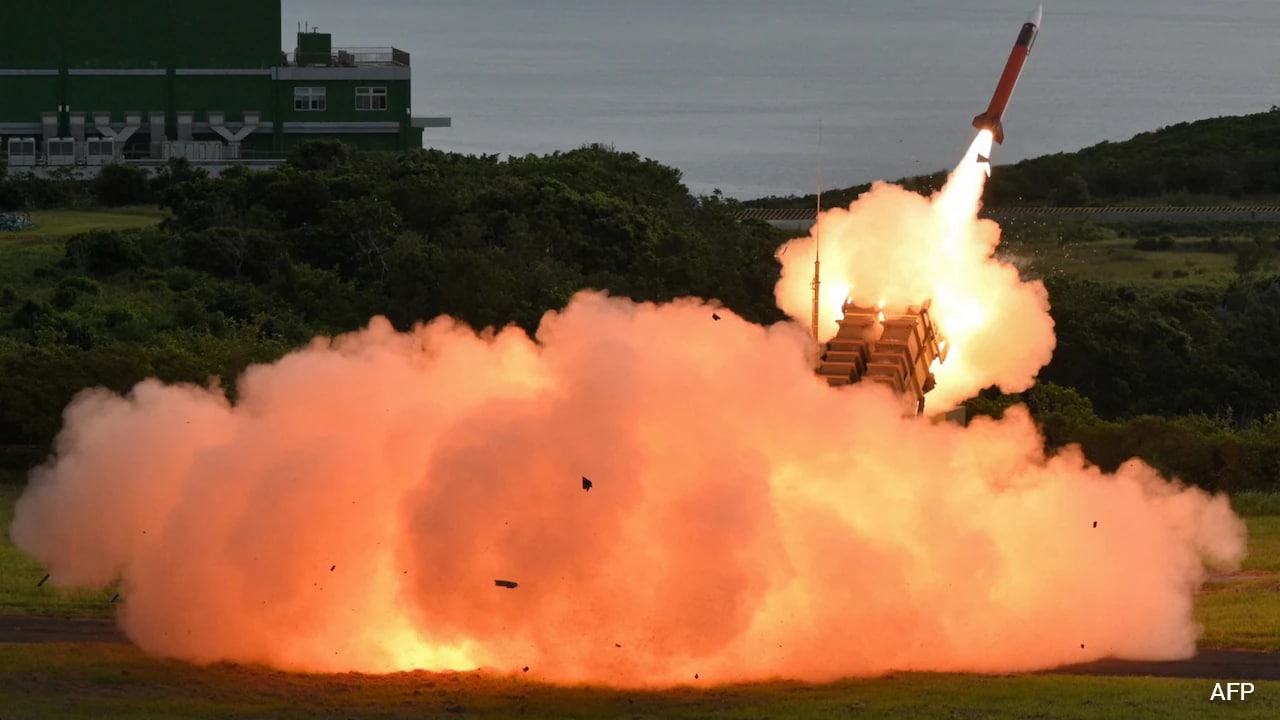
Ukrainian arms manufacturer Fire Point last week carried out the first flight test of a new surface-to-air missile developed as a more affordable, mass-producible alternative to the United States’ Patriot system
Ukrainian arms manufacturer Fire Point last week carried out the first flight test of its FP-7.x surface-to-air missile. Co-founder Denys Shtilierman told Financial Times that it went “pretty successful.”
The FP-7.x is designed to intercept Russian ballistic missiles and drones. It operates at an altitude of around 25 kilometres — comparable to the Patriot, and is built, like the PAC-3 variant, to be fast enough to engage ballistic threats. Like the Patriot, it uses radar guidance for most of its flight, but switches to a heat-seeking infrared seeker for the final approach.
The broader air defence system, which Fire Point has named Freyja, will incorporate radars and command-and-control technology sourced from European partners. The company has reportedly held discussions with Germany’s Hensoldt and France’s Thales for radar, Italy’s Leonardo for tracking and target acquisition, and Norway’s Kongsberg for command and control.
The Cost Gap Is Striking
The price difference between the two systems is striking. Shtilierman told the FT that each interceptor costs around $700,000. According to 2026 budget estimates published by the US Army, a single Patriot PAC-3 missile costs approximately $3.8 million. That makes the FP-7.x is roughly five times cheaper.
Fire Point says it could manufacture three missiles a day from August, pending delivery of the infrared seeker component, which it is hoping to source from Germany’s Diehl Defence. The completed missiles, with seekers attached, would be ready by 2027.
Ukraine’s war economy has helped make this pace possible. “Today we have probably the least bureaucratic approach to the production of anything in aerospace,” Shtilierman told the Financial Times.
Why The Patriot Shortage Matters So Much
The Patriot, manufactured by Lockheed Martin, has long been considered the gold standard of air defence, capable of intercepting ballistic missiles at range. Ukraine has relied on the system to protect its cities and critical infrastructure from Russian strikes.
But the supply has gone down sharply. US military involvement in the war with Iran has placed further strain on Patriot interceptor stocks that were already low by more than two years of fighting. Replenishing those stocks to pre-Iran war levels will take at least three years and more funding than the US Congress has so far allocated, according to analysis by the Centre for Strategic and International Studies in Washington.
Orders from US allies are also at record highs, meaning Ukraine is competing for a limited supply.
Zelensky himself has also acknowledged the shortfall. “Whatever we could, we replaced with our own domestic production, but we still cannot replace PAC-3,” he said, adding that Ukraine was working with “several countries on the development of European anti-ballistic capabilities”.
Experts Unsure If FP-7.x Can Replace The Patriot
Not everyone is convinced the FP-7.x can fill the gap left by the Patriot. Tom Karako, a missile defence expert at the Centre for Strategic and International Studies, told Financial Times that the FP-7.x could be a useful addition to Ukraine’s existing air defence arsenal, which currently includes ageing Soviet systems, US Hawk missiles and German IRIS-T interceptors, but he warned against overstating its role. “‘Supplements’ may be a better formulation than ‘substitute’,” he said. “The Patriot is a very exquisite capability. When you’ve got that full spectrum of threats, you need a lot of different tools.”



