


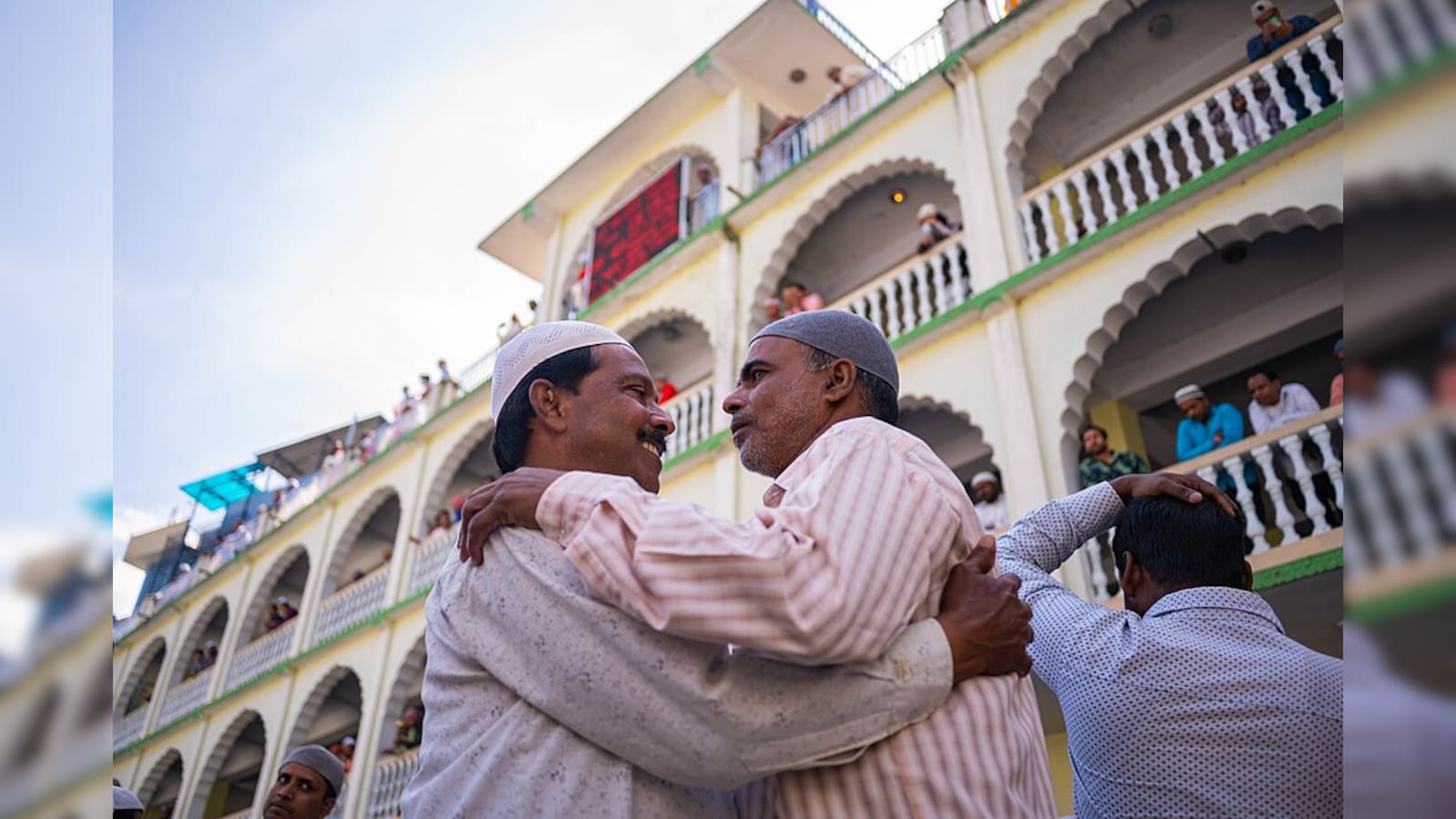
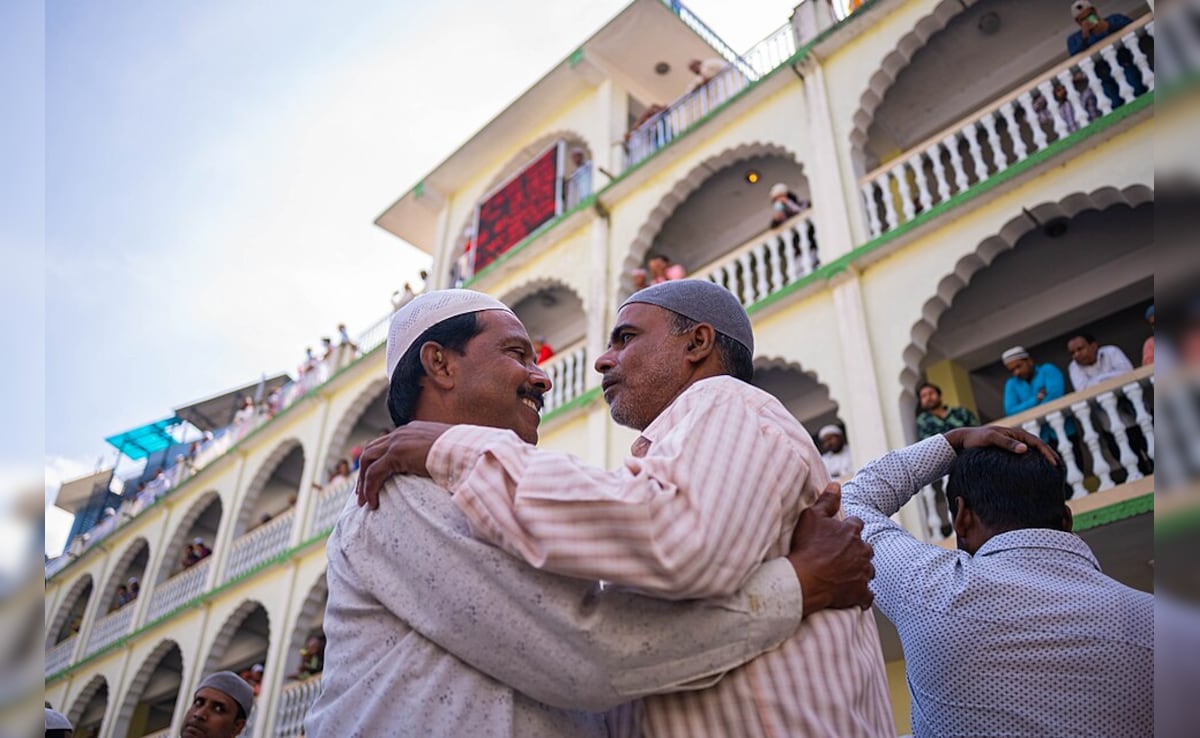
As the second of the two major Islamic holidays, Bakrid, also called Eid-ul-Azha, is quickly approaching, preparations are underway for lavish celebrations. The first is Eid al-Fitr, also called the Festival of Breaking the Fast or Meethi Eid.
On the 10 day of Zil Hijjah, the 12th and last month in the Islamic lunar calendar, Bakrid is observed. Eid al-Fitr is celebrated at the start of Shawwal, the 10th month, following the conclusion of the month-long fast from dawn to sunset of Ramadan.
ALSO READ: Hajj 2026: Millions Gather Despite War — What To Know About Mecca
Interestingly, Bakrid is celebrated two months and nine days following Eid-ul-Fitr. The moment at which the crescent moon is seen varies, even though both dates are determined by the lunar observation. Bakrid falls during the Hajj pilgrimage and is observed on the 10th day following the moon sighting.
The Shawwal moon (hilal), the new crescent, which is visible on the last day of Ramadan, the last day of fasting, determines the date of Eid al-Fitr, in contrast to Eid al-Adha. Because the moon is visible the night before the start of the new month, Eid al-Fitr is observed on the first day of Shawwal.
On May 18, the crescent moon for Bakrid was observed in India this year. As a result, the festival will take place on May 28 instead of May 27, which was previously scheduled as a public holiday. After the crescent was spotted on March 20, Eid-ul-Fitr was observed on March 21 this year.
Although both three-day celebrations are pleasant occasions when Muslims from all over the world gather to conduct dawn prayers, they are fundamentally different.
Eid al-Adha honours Prophet Ibrahim’s readiness to offer his son Ismail as a sacrifice in order to submit to God. However, Prophet Ibrahim later received a divine instruction to offer a cattle for sacrifice, instead of his son. To commemorate this holiday, Muslims give animal sacrifices and share the meat with their loved ones, friends, relatives, and the underprivileged.
ALSO READ: Hajj 2026: From Key Dates To Rituals, All You Need To Know
On the occasion of Eid al-Fitr, the preachings of the Prophet Muhammad are emphasized, and tales of the Prophet’s life are recalled to consider his teachings of compassion. The scriptures state that Prophet Muhammad received the first revelation of the Holy Quran during the month of Ramadan. It is, therefore, a period of self-control and spiritual dedication.
Since Muslims observe the Islamic lunar calendar, the date of the Eid celebration varies by roughly 10 to 11 days every year. The sighting of the crescent moon, or “hilal” in Arabic, marks the start of the 12-month Islamic calendar, each of which lasts 29 or 30 days. This sighting marks the beginning and conclusion of each month.
Different parts of the world may celebrate Eid on different dates because crescent visibility is dependent on geography, weather, and time zones. Although Saudi Arabia and India usually celebrate Eid one day apart, there have been a few exceptional occasions when both nations celebrated Eid on the same day.
Essential Business Intelligence,
Continuous LIVE TV,
Sharp Market Insights,
Practical Personal Finance Advice and
Latest Stories — On NDTV Profit.



